Embargoes get broken all the time. What’s unusual is when a media outlet admits it.
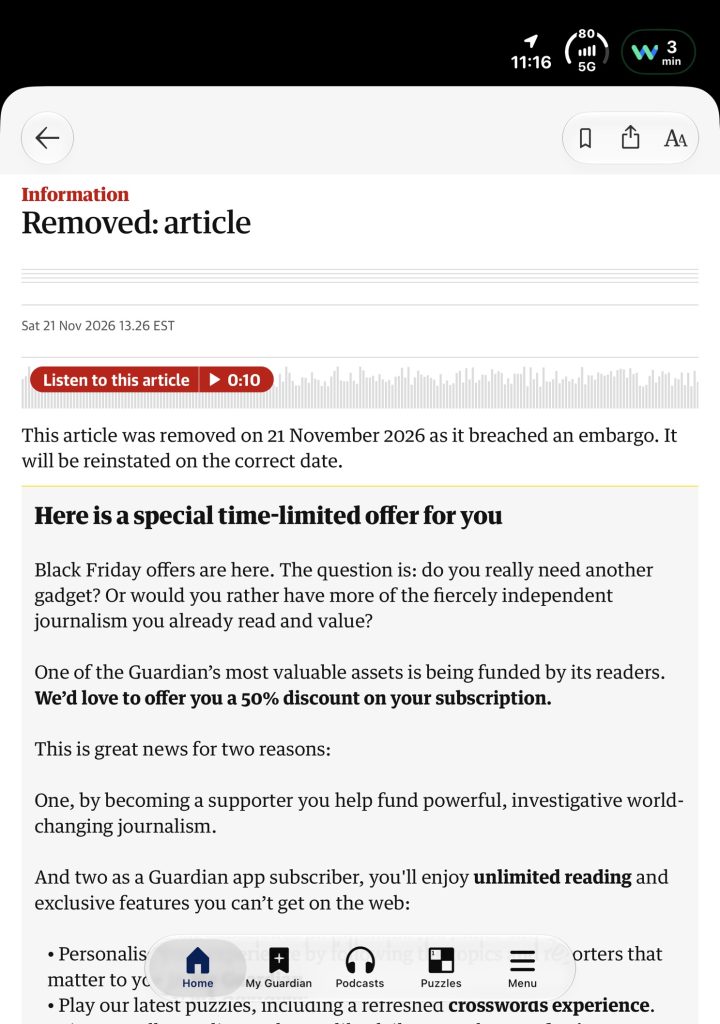
On Saturday, The Guardian did just that. After publishing its review of Prime’s Blade Runner 2099 two days before the agreed review date, the paper pulled the story and posted a notice explaining that it had breached an embargo. It even promised to put the review back on the correct date.
For those of us in PR, this was a rare public glimpse into something that usually happens behind the scenes. Embargoes are built on trust, and when one breaks, the damage can extend well beyond a single prematurely published story.
This incident is worth examining, not because an embargo was broken, but because of what happened next.
Breaking Bad: The Embargo is Breached
Fans have been waiting four years to see Blade Runner 2099. Ridley Scott is executive producer of the science fiction series. Oscar winner Michelle Yeoh, one of my favorite actresses, plays a dying replicant opposite Hunter Schafer. Prime Video premiered it for 6,500 fans in Hall H at San Diego Comic-Con, and all eight episodes drop the day before Thanksgiving.
The press embargo lifts today. When The Guardian pulled its review within hours of the Saturday posting, it broke tradition by not having it vanish quietly. Instead, the paper posted a notice saying the article had been removed “as it breached an embargo,” with a promise: “It will be reinstated on the correct date.”
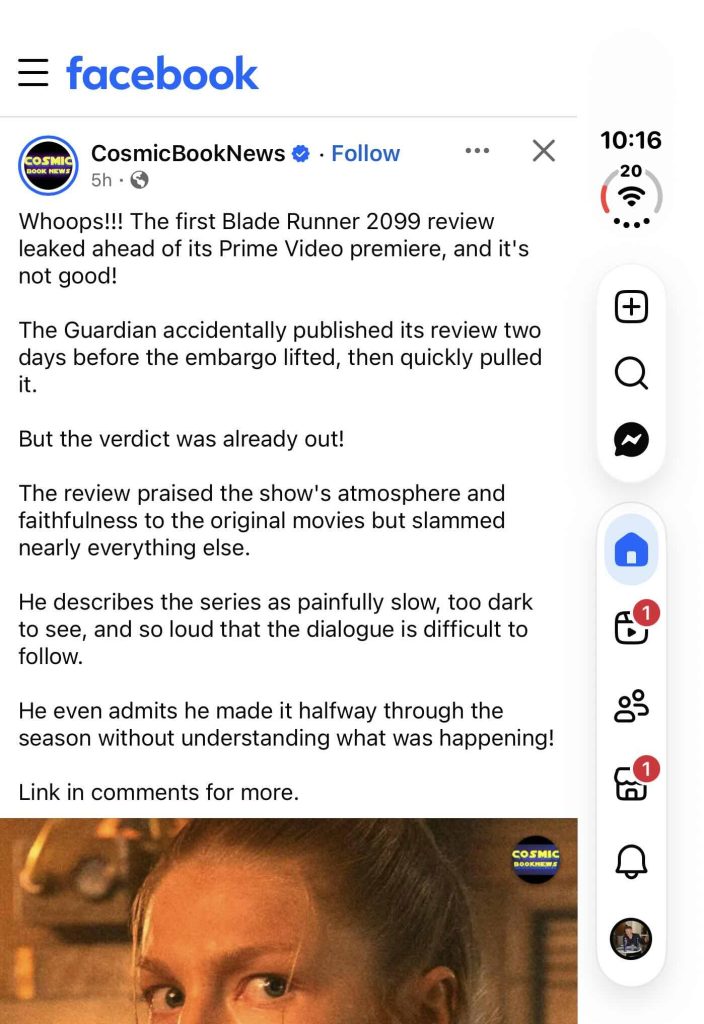
Too late. By Sunday morning, fan sites had already told their followers what the review said, and it wasn’t kind. The comments included “painfully slow;’ “too dark to see,” and “sound mixed so loud you lose the dialogue.”
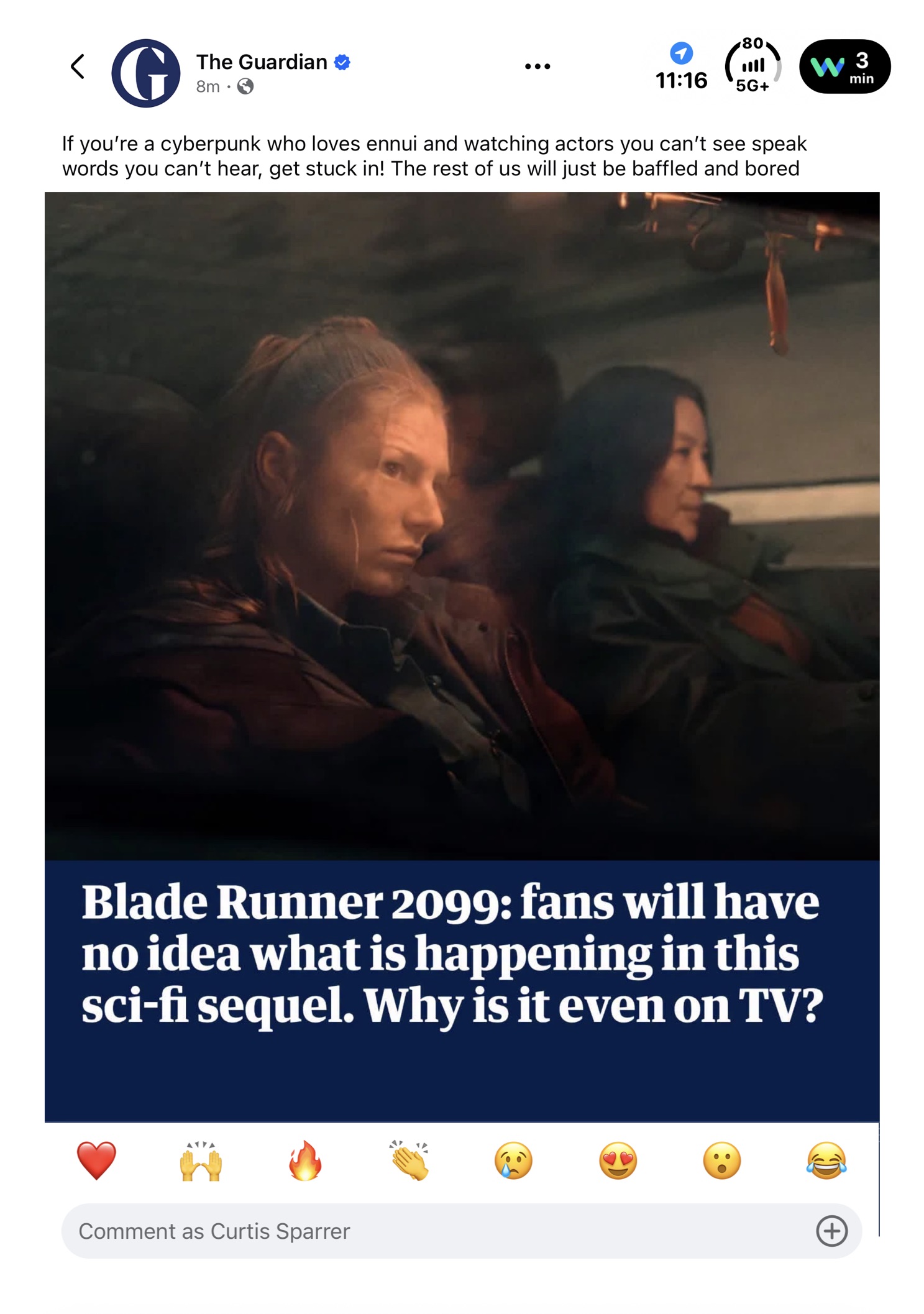
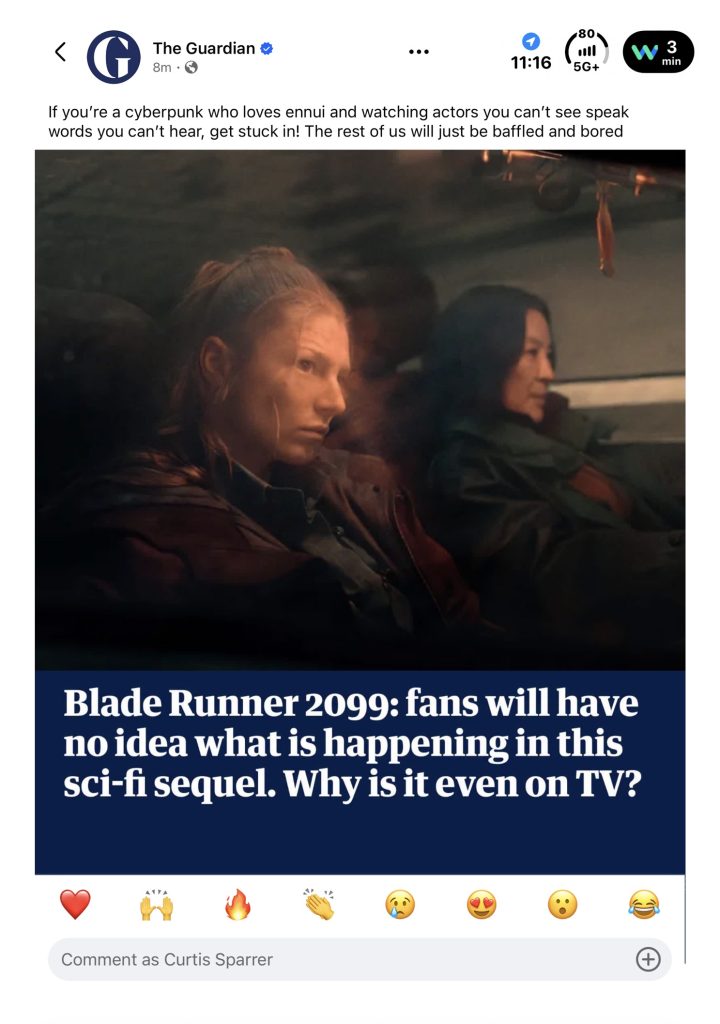
One aggregator reported that the critic got halfway through the season without understanding what was happening. And while the article was gone from the paper’s site, the Guardian’s Facebook account was still promoting it Sunday morning, asking of the show, “Why is it even on TV?” and warning newcomers they’d be “baffled and bored.” The link went to the takedown notice.
Why Embargoes Exist
An embargo is a handshake: Journalists get access to news before everyone else, and agree to hold it until a specific date and time. It’s a pretty simple bargain, but again, it depends on trust.
Before I co-founded Bospar, I spent years as a TV news executive producer, so I’ve been on both sides of this handshake. It generally holds up because it works for everybody. Reporters get to compete on quality instead of speed, communicators get a coordinated moment, and readers get thoughtful articles with unique commentary and insights. When it works, nobody notices. (Our blog What Is an Embargo, Anyway? covers the mechanics.)
When CEOs ask me why an embargo is necessary, I walk them through the coverage math. News only breaks once. When one reporter gets a story first, many others decide a me-too piece isn’t worth their time, and what could have been 20 stories becomes one. Skip the embargo and your launch can fall into a predictable pattern: which reporter will lead, who’s going to follow the leader and who’s going to walk away. With an embargo, every outlet can publish at the same moment and treat the story as its own. That’s why it’s standard practice for funding rounds, M&A, partnerships and FDA milestones.
The Damage Was Already Done
Once something is published, it’s public. Aggregators read the Blade Runner review, screenshotted it and summarized it before the correction went up. So, yeah, the text came down. Unfortunately, the verdict did not.
The versions of the review shared on Reddit and social media were harsher than the original. The pulled review by Guardian columnist Rhik Samadder reportedly praised the show’s atmosphere and how faithful it is to the films. The re-posted summaries kept the insults and dropped the compliments. Aggregators are not known for nuance.
The takedown became its own news story. The notice confirmed the review was real and told everyone exactly when it was coming back. “Whoops!!!” wrote one fan site. A review that might have reached the Guardian’s TV readers turned into news on sites that cover leaks for a living. Now the show gets two negative news cycles instead of one: the leak over the weekend, and the review again when it’s reinstated today. Now that the review is once again live, compare the real thing with the summaries that spread and notice what got left out.
An Accident Isn’t a Betrayal
This was almost certainly a mistake, as are most embargo breaks. Someone schedules the story for the wrong date in the CMS or miscalculates the time difference between a London desk and a Los Angeles publicist. The social team works off a different calendar than the editors, which is why that Facebook post outlived the article.
Deliberate breaks are rare, and for good reason. A reporter who breaks embargoes on purpose could stop getting news from anyone, and every reporter knows it. Accidents deserve some grace. I’ve never seen a relationship get better because a publicist treated a production error like a betrayal. The reporter who broke your embargo is already mortified. The outlet pulled the piece without being asked, which is exactly what a good-faith partner does. Make a note, fix the process and move on.
And sometimes a break isn’t a break. Once information becomes public some other way, the embargo no longer applies. Funding news is the classic example: the moment a company files its paperwork with the government, any reporter who finds the filing can run the story. That’s why we tell clients to hold the filing until the story is out.
Next Steps After an Embargo Break
So what are your options when an embargo breaks?
Don’t overreact to an accidental breach and publicly humiliate the outlet or the reporter. Yes, they messed up. But you’ll want to protect your relationship with the outlet. PR depends on those relationships.
Your PR team will already be on the case asap, working with the outlet to take down the information. They will also monitor how widely the story is circulated.
If one outlet breaks, lifting the embargo for everyone is usually the right move. Every outlet that plays by the rules has already been scooped. Holding them to a date that’s already blown hands the whole cycle to the leak and the summary sites. Let the outlets with the full, nuanced reviews publish.
Revisit launch protocols, and discuss those “what ifs.” Before the embargo starts, decide who gets a call if it breaks, whether you’ll release everyone else and what you’ll say publicly. The worst time to figure that out is while the aggregators are already typing.
And be discriminant about how you use embargoes. Each one adds coordination and risk, so save them for news where simultaneous coverage really matters, and keep the window short. The longer the hold, the more chances a scheduler has to get it wrong.
We are honest with clients about what an embargo can and can’t do. It can line up coverage for a single day. It can’t guarantee the day holds. Plan your launch so a 48-hour slip bruises it instead of breaking it.
Embargoes aren’t perfect. They depend on people, processes and a shared understanding of the rules. And sometimes, despite everyone’s best intentions, something goes wrong.