Marketing teams spent years collecting social data, mostly from text-based content. But that’s only a partial solution as audiences only catch a brand when a creator tags it or names it in a caption.
In an age ruled by TikTok social listening and real-time marketing, that’s a missed opportunity that startup Plot is looking to fill. Think of Plot as a social listening tool that analyzes video content. It uses AI agents to uncover details about the product, who is using it, how they apply it and any available sentiment. And while agents have made such critical intelligence easier to come by for brands and creators, the value lies in what teams do with it.
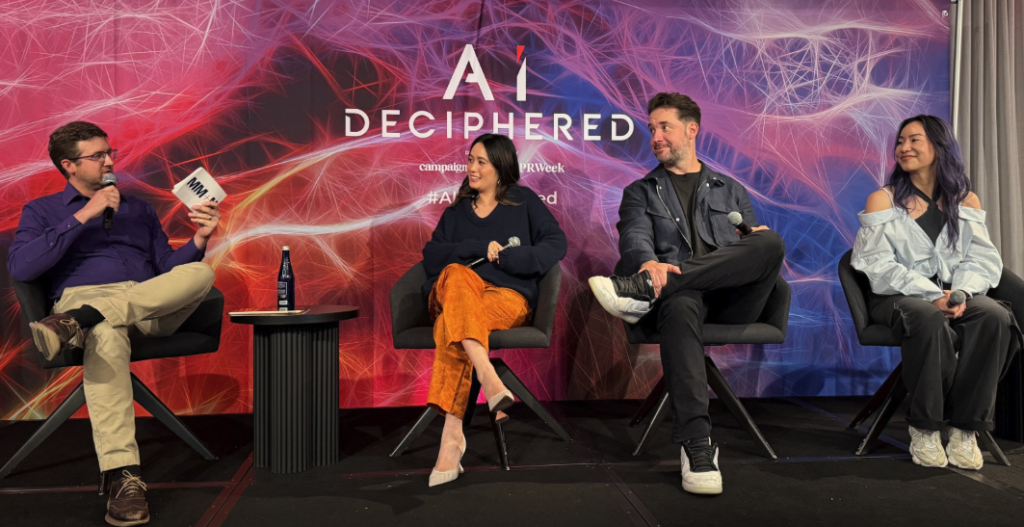
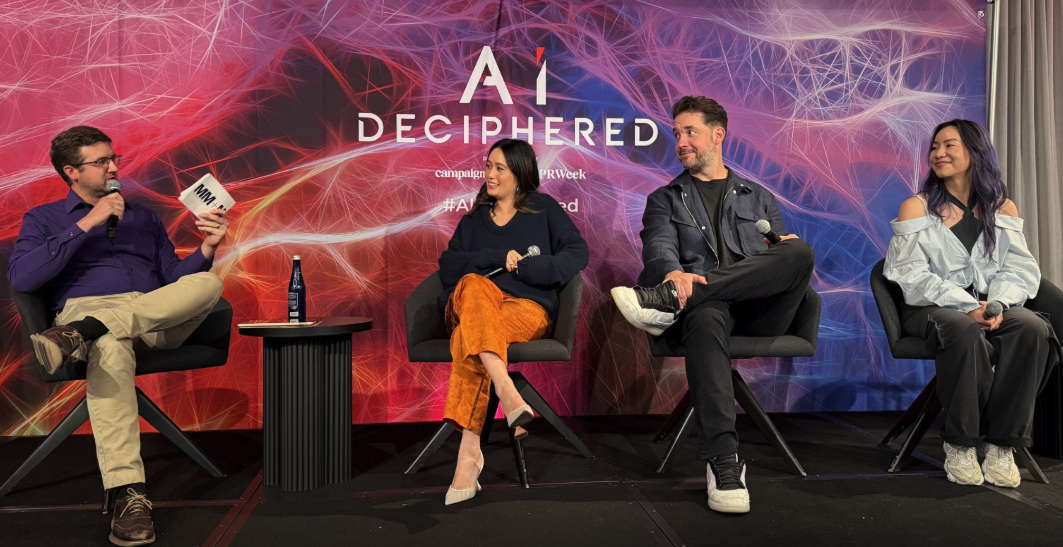
Plot was the centerpiece of “The Age of Agents, What Comes Next for Marketing,” a Nov. 12 panel at the AI Deciphered event in New York City, where co-founder and CEO Megan Duong said Plot analyzes social video without requiring tagging. A creator may include 10 products in a single clip and tag none of them, without losing amplification opportunities.
“We actually can see who’s using your product and why,” said Duong, who spoke on the panel with Nanette Wong, vice president of global marketing and communications at Fenty Beauty, which is using Plot, and Alexis Ohanian, co-founder of Reddit and founder of VC firm 776, a Plot investor.
Duong said 35% of Fenty’s video mentions were untagged. That matters for measuring ROI on influencer gifting because “a creator has no obligation to actually tag you,” Duong said.
Wong remembers the manual alternative, where her team had teams of people watching Instagram stories of people Fenty gifted, then calculating ROI by hand. In an age of agentic commerce, software now does that work. This makes for a fine beauty brand influencer marketing case study.
In a sector fueled by agents, speed is still a competitive advantage
In the social listening space, speed is a critical differentiator. Wong said the window to react has shrunk, and interest-based feeds make it harder to discern a real trend from an algorithm quirk. “Is this actually a trend, or is it just because the machine knows I love looking at puppy videos?” Wong said.
In one recent example, a creator used Fenty’s Diamond Bomb highlighter on her hair for a holiday look and reached 27 million views in two days. Fenty spotted it within about six hours, and the team met her in person a few days later.
Such data is a revelation for brands and a significant opportunity for creators. Ohanian, for example, said he spent years urging brands to work this way. “Campaigns used to be measured in months, quarters, years,” he said. Brands don’t have the luxury of that time on the Internet.
Fenty’s most instructive case was what the industry called “eye patch gate.” Fenty announced an under-eye patch with new packaging, and two other brands announced near-identical products the next two days. The first reactions were positive, but sentiment turned as the story became a “war” among brands led by women of color.
Contention and controversy in commerce
“It just didn’t sit right with us that it was becoming this war,” Wong said. The team kept monitoring while legal questions played out, then posted a meme acknowledging the overlap. “Beauty is really there to have fun with.”
She said a neutral read on sentiment made that call possible. Without one, “it can really feel like the world is ending.” With it, “you can make a more rational decision.”
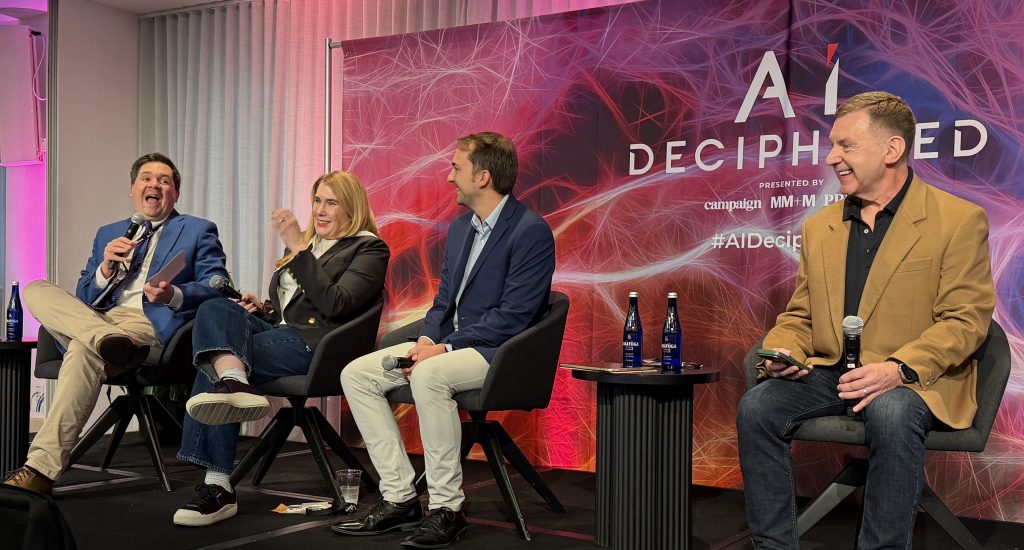
Panel moderator Jameson Fleming, editorial director of MM&M and Campaign, mentioned a Forbes article predicting that bots will soon buy from bots, a contentious topic that strikes to the core of where humans and AI converge in commerce.
Ohanian said he agreed with part of it. “Bots are going to do a majority of the commerce,” he said, referring to form-filling and checkout. But he said the agent buys for a person, and “what that agent is buying on your behalf is informed, by and large, by the things you care about.”
Those preferences still come from other people, he said, and that matters more as AI-generated content fills feeds. Creators stand out because they are “provably human.” Or as Duong said: “I want to buy skincare from a real person who has skin.”
The bottom line
There’s a valuable lesson here for media professionals on how to pitch an AI startup catering to brands and creators to journalists.
Lead with a number about the gap a product reveals. For a startup like Plot, “AI-powered video analysis” gives a journalist little to write, but a stat like “35% of Fenty’s video mentions were untagged” lends itself to data-driven PR pitches. If you’re pitching clients like creator-focused startups, find a salient figure, such as how much creator activity brands never see or how much gifting goes untracked, then build the pitch around that number. That will make journalists more open to understanding the tech.
Demo execution with a customer story. Agentic startups face a credibility problem because “agent” is a crowded claim; a named customer provides critical validation. For example, this session resonated because Wong could say what happened and how fast with “eye patch gate,” with the tool informing a judgment call in real time. Where possible, put the customer on stage or in the byline, as this panel did.
Pitch the AI-human labor balance rather than the replacement. Recall how Ohanian noted that creators stand out because they are “provably human.” This runs counter to media narratives about how AI and creators often assume one displaces the other. A startup that positions its agents as the layer that surfaces creators but does not supplant them as the asset gives reporters better, less predictable storylines to pursue.