Somewhere, Dieter would approve. “Now’s the time on Sprockets when we dance,” except this time everyone meant it.
Anyone who grew up watching Saturday Night Live in the ’90s remembers Dieter, Mike Myers’ deadpan host of a fictional German talk show, who ended every broadcast the same way: a jerky, monochrome dance number performed like it was a serious act of art.
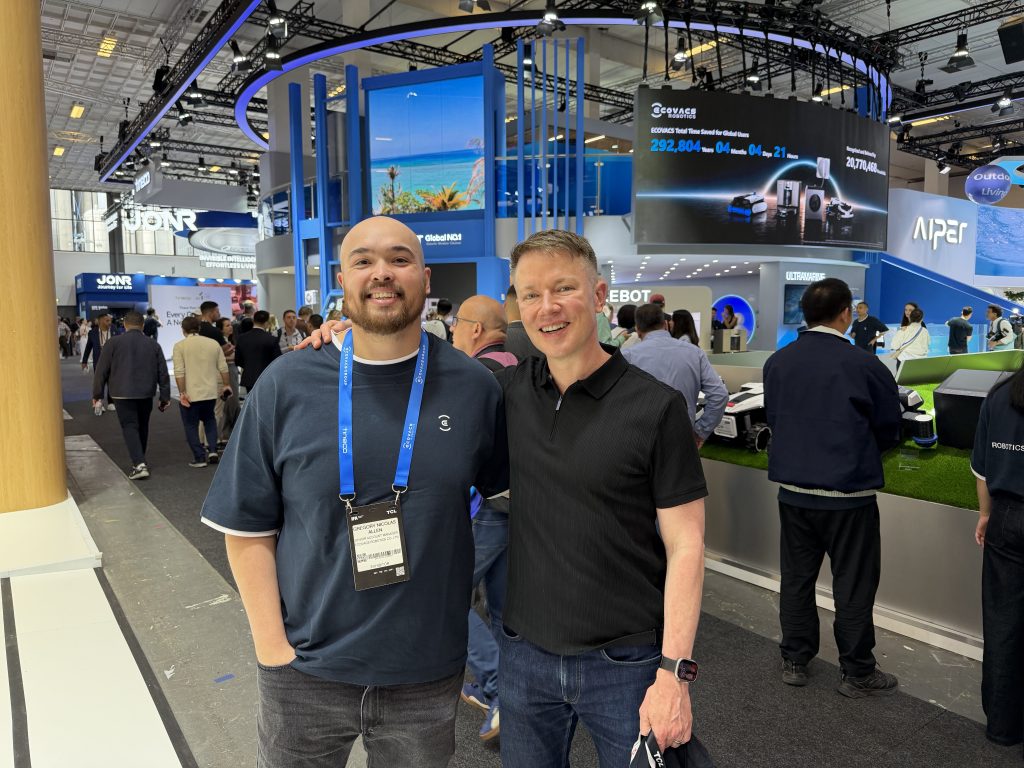
I’m German by descent, at least half, and I’ve had complicated feelings about that joke for most of my life. Then I spent time in German clubs and bars, and in a Berlin store called Darklands, and the joke stopped feeling like a punchline. It’s satire of something real.
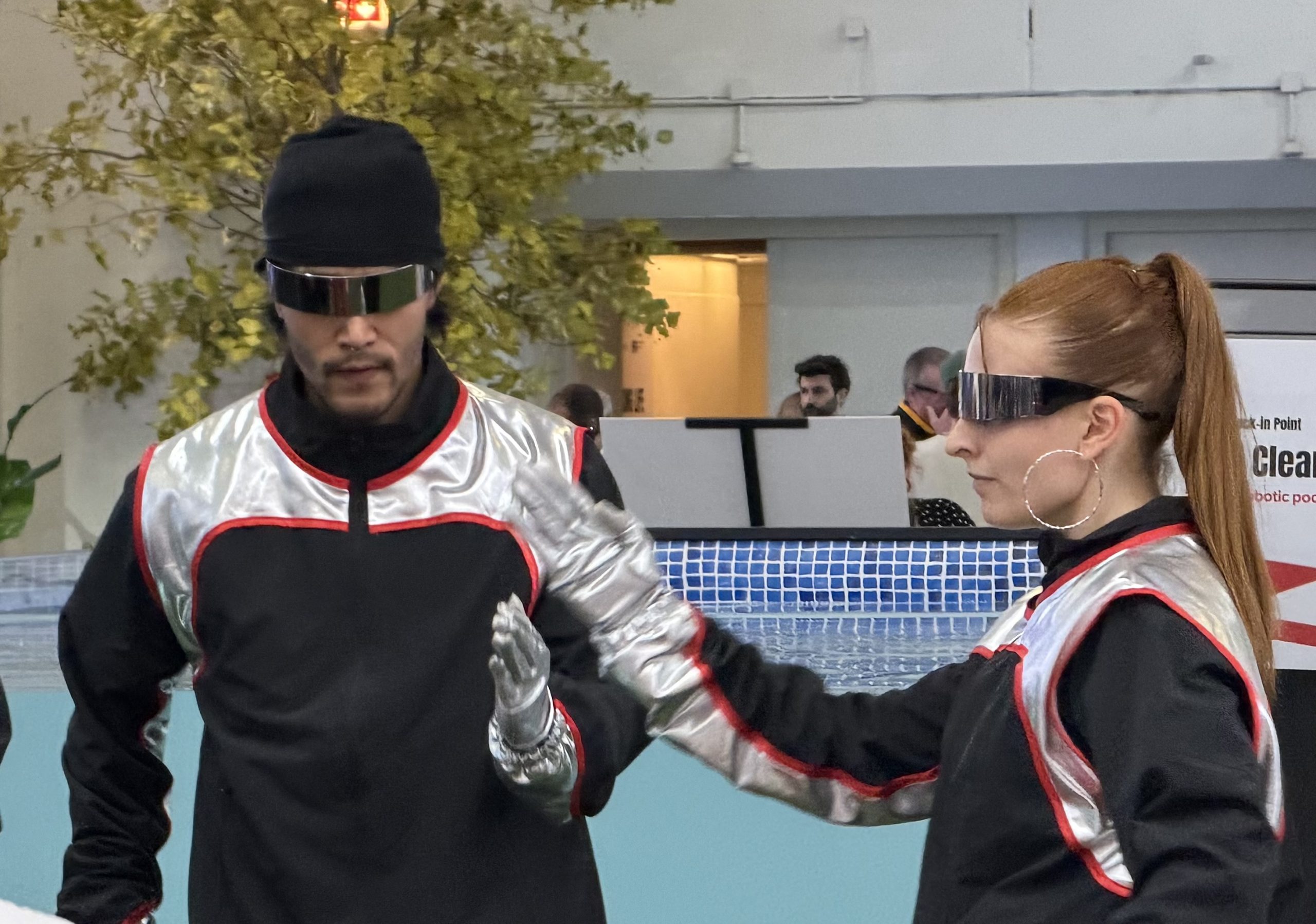
Germany has built a genuine, specific community around that severe, monochrome, industrial aesthetic, one you cannot find anywhere else in the world at that scale. The dance troupe on the IFA floor, in matching black outfits, silver piping and wraparound glasses, was pulling from that same well. They just looked like they were having a great time doing it.
IFA stands for Internationale Funkausstellung, German for International Radio Exhibition, a name left over from when the show was about radios instead of robot vacuums. It is Europe’s largest consumer electronics and home appliance show. Run annually out of Berlin since 1924, that draws crowds that rival CES in Las Vegas. CES skews industry and press. IFA sells public tickets, so the floor looks less like a trade conference and more like a very large fair for gadgets.
My phone put a number on the scale: 19,653 steps and 8.86 miles by the end of one day walking the halls. That is the maze this show unfolds into. Inside that maze were robot lawn mowers, AI-powered karaoke machines, motorized suitcases and more brands calling themselves “the world’s number one” than anyone could count.
The robots were genuinely impressive. What actually held people’s attention was other people.
That pattern showed up everywhere I walked.
- At every headphone booth, whether it was QCY or Sounder, people tested the audio with their eyes closed, a tic I saw at booth after booth and never quite figured out.
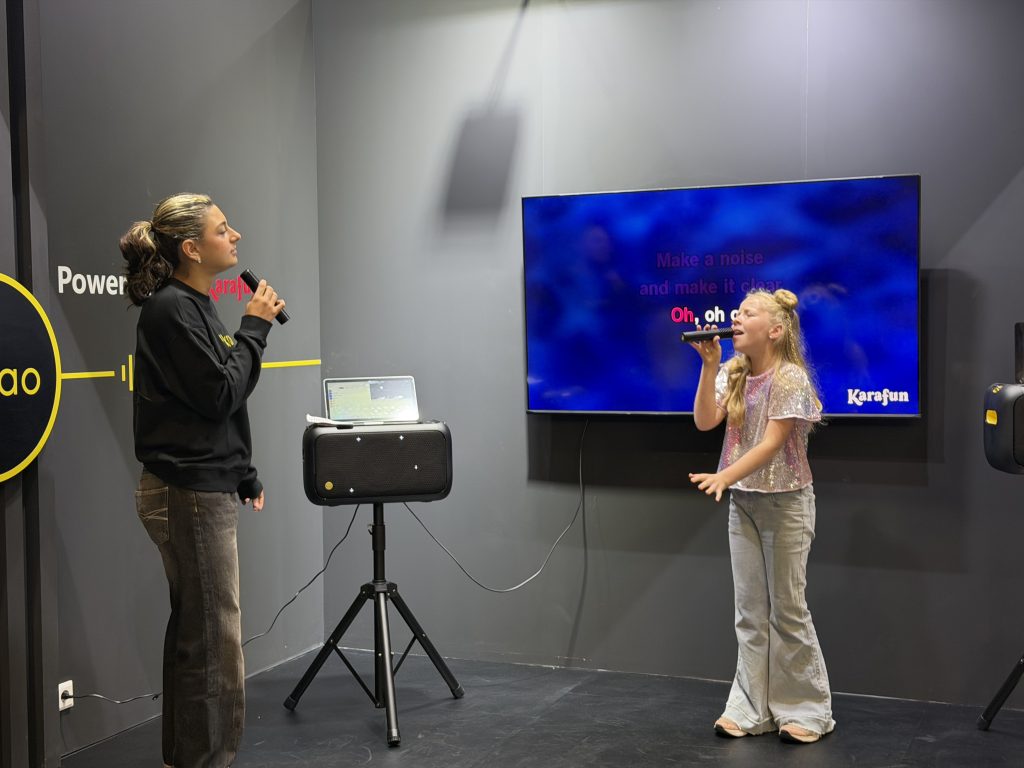
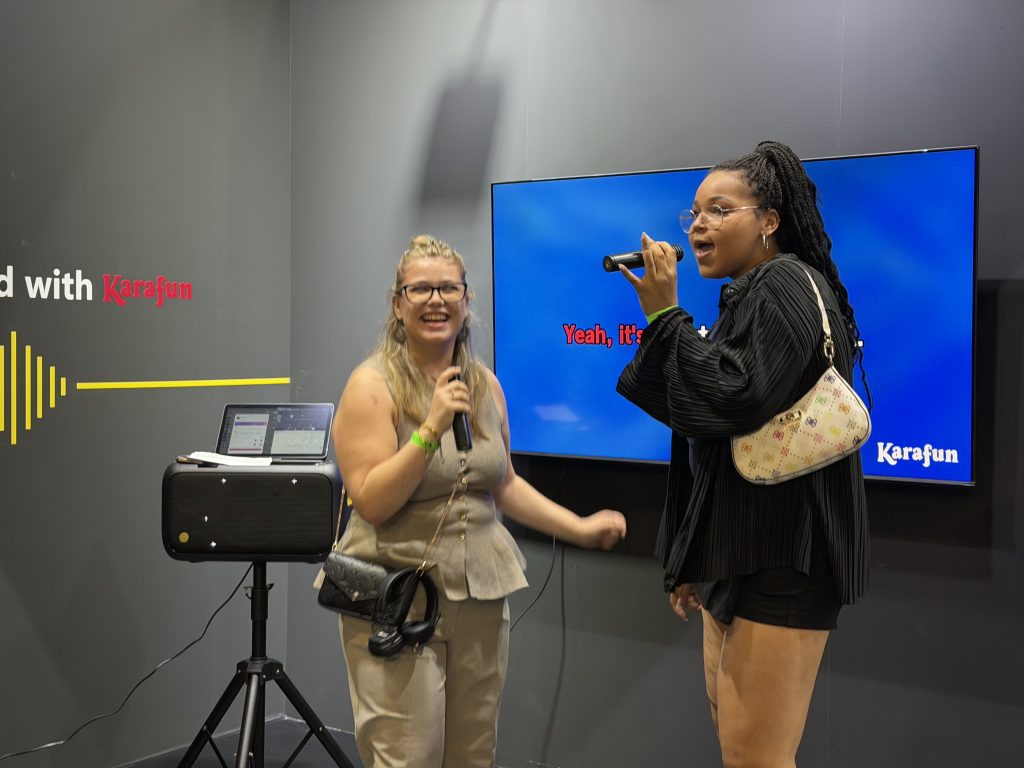
- Ikaro’s karaoke booth billed itself as “the world’s number one AI party system.” AI stayed in the background. A young girl spent the day in the booth belting out songs. She was clearly a hired performer, talented and the reason a crowd gathered there all day.
- Elsewhere in Hall 9, a dance troupe in wraparound glasses, black shirts and silver piping put on a routine that drew more engagement than any robot demo on the floor.
The volume of press and creators on the floor was its own show. Videographers, photographers and creators were everywhere, more than at any trade show I’ve covered. It felt like everyone was either being interviewed or interviewing someone else. One guy worked the floor dressed as a cowboy, boots and hat included, until he opened his mouth and spoke Spanish, then Italian. It was a costume, not a background, one more performance on a floor full of them.
With that much competing noise, the booths that actually landed were the ones that gave people something to watch.
Everyone Is Number One
The recurring claim on banners across the floor was some version of “number one.” AndaSeat called itself the world’s leading gaming home brand. Ikaro had its number one AI party system.
IFA’s own theme this year was “The Future Is Now,” a line that could describe just about any tech show that ever existed. Exhibitors and journalists said as much when asked directly: The superlative has stopped meaning anything, because everyone is using it.
A claim that used to signal something has become floor decoration.
A Show for the Whole Family
The other surprise was who was actually there.
IFA had children, infants, and couples who appeared to be on dates, a mix I have not seen at CES. Home robotics seemed to be the draw for families specifically. The robot vacuum and lawn care category was the most physically ambitious part of the show. Machines climbed artificial hills to mow turf, washed windows and cleaned the bottoms of small display pools in front of live crowds. Having spent a chunk of my childhood in Texas mowing lawns by hand, watching a machine climb a hill to do it for you landed harder than it probably should have.
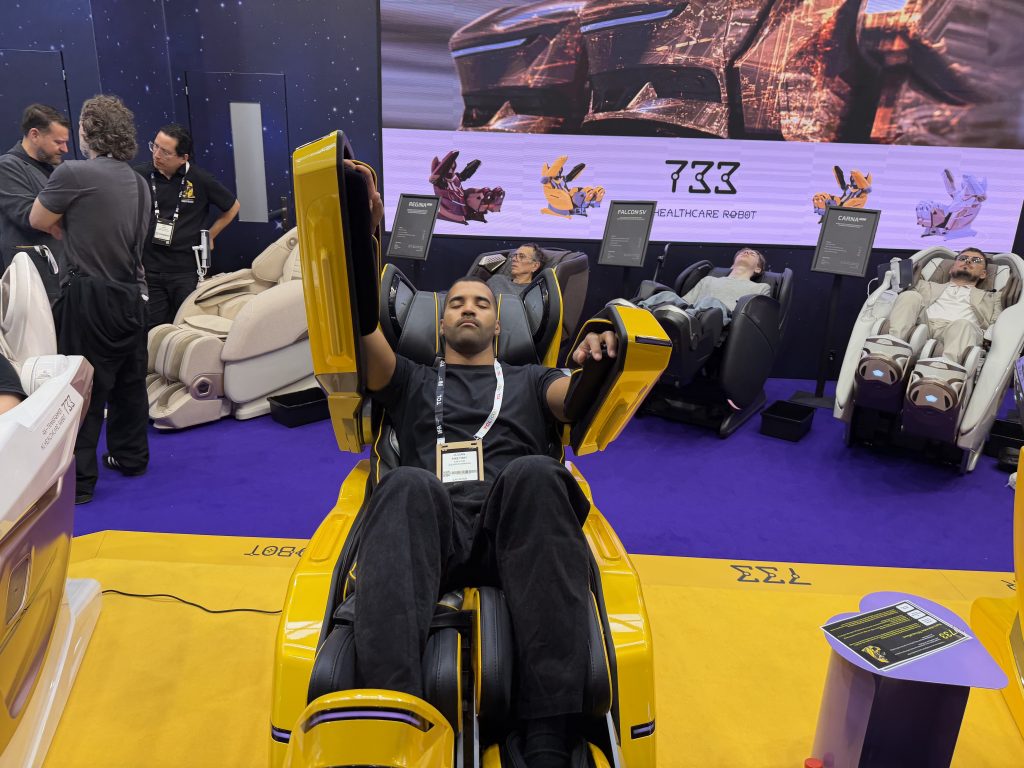
The show leaned hard into “home” as a category well beyond cleaning. Massage chairs with articulating arms that lifted your arms and legs drew long lines. Hair and makeup stations populated the floor, something I have not seen at CES. One booth offered an at-home urine test that checks hydration, magnesium, sodium, calcium, protein and several other markers from a single sample, a product with, as far as I could tell, no direct competitor on the floor.
A few booths leaned into a different kind of message entirely. One speaker brand simply pitched: developed and made entirely in Europe. It’s a pointed message right now; plenty of European brands are looking to rely less on American ones. It is a small signal, but on a floor this crowded, the exhibitors who said something specific were the ones people remembered.
Learning the Labyrinth
Getting around the event was its own event.
- Hall 10 had an upstairs and a downstairs, marked 10¹ and 10² on the signage, actual exponents, not decimal points.
- Hall 9 didn’t split that way.
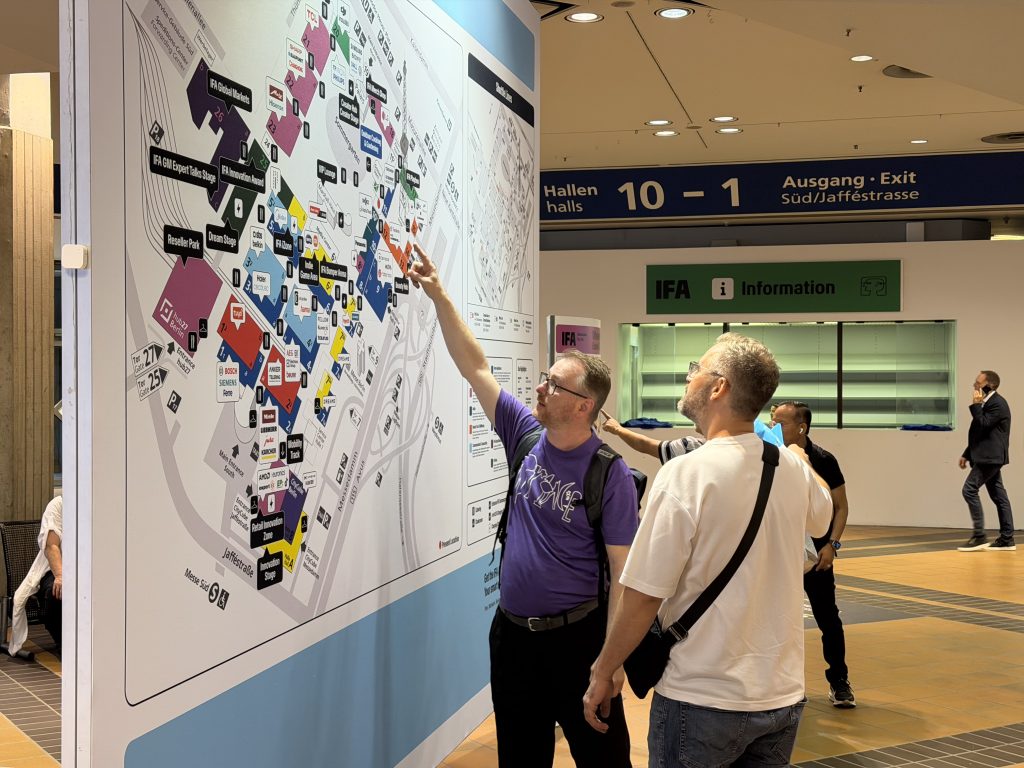
- Some of the “you are here” maps scattered through the halls were taller than the people standing in front of them, less a map than a monument to how big the show actually was.
- Cutting through the parking lot was often the fastest way between halls.
Germans get credit for order in most things. This was not one of them.
A Walk to Remember
None of that took away from the show.
If anything, it reinforced the same lesson the karaoke booth taught: At a show built around technology, the moments people actually remember are the ones a machine couldn’t fake.