Too many executives tell me they get their AI news from X.
When I hear such admissions, I ask: Are you sure those sources have been double-sourced? Are the people on X or LinkedIn citing real studies, or are they just parroting breaking opinions?
The honest ones admit they aren’t as careful as they should be with the sources and information that they may be using to help inform their million-dollar decisions.
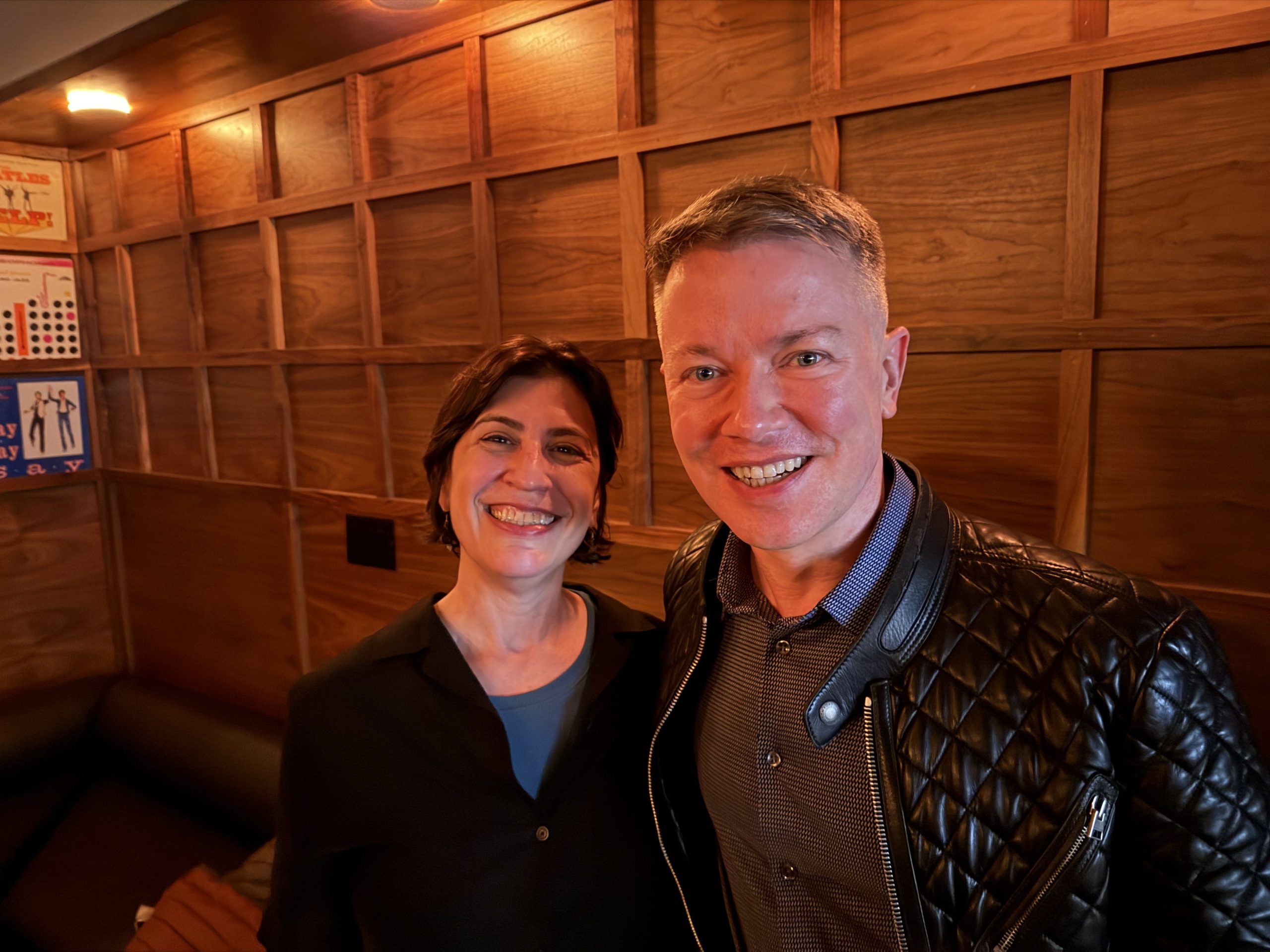
So when AI Realized asked me to guest host its podcast, I knew who I wanted in the chair across from me: Sharon Goldman, a veteran reporter who has covered AI daily for over four years, most recently at Fortune and now at Ground Level AI, the independent publication she launched in June and discussed earlier this summer with Eric Chemi on Politely Pushy.
Ahead of her trip to Black Hat, we discussed news diets, and her answers are worth consuming.
Media outlets and social media list of a journalist who is paid to be right
“I don’t have anything against using Twitter as part of your news diet. I certainly do,” Goldman told me. “The AI world is on Twitter. So, I’m there as well.” She added that she pays attention to conversations on LinkedIn as well. But she emphasized the need for a balanced news diet.
“I read The Economist, The Times, The Journal and Financial Times. You really can get such a broad perspective and a good analysis of the 24-hour news cycle from mainstream media,” she said. “On X, you can get a visceral kind of feeling from people right on the ground. But you do have to be careful. There’s so many people with very serious agendas.”
Her vetting habit is something we can all learn from. “Even as someone who has covered this beat for over four years every single day, sometimes I find myself Googling and checking” to figure out the agendas of the people who post on X to understand where they’re coming from.
When Elon Musk posts something, what’s her first reaction? “I don’t think any of us need that much explanation from an Elon posting. He has a very serious agenda on a variety of topics, and most of them are pretty self-serving for the businesses that he runs and the political outlook that he has. But even when it comes to AI researchers posting, everyone’s got an opinion.”
Thought leaders and subject matter experts that Goldman follows
When I’m trying to get smart on things, I follow journalists I believe in. But I also check in with “civilians” to make sure I’m not going too far afield.
I asked Goldman: Are there non-journalists you follow because they just seem to get it? Her answer: “I follow a lot of different policy people and researchers on X and Substack. Nathan Lambert is a well-known open source AI researcher that I follow. For my podcast on Ground Level AI, I recently interviewed a former researcher from Meta, Joshua Saxe, who’s a real cybersecurity and AI expert. These are people who have the bona fides for their little part of the AI landscape that I really rely on.”
Among fellow independents, she subscribes to the Substacks of Casey Newton, Alex Kantrowitz, Alex Heath and Eric Newcomer. “Each one does it a little bit differently and is digging into an area that is unique to them. Eric Newcomer is very focused on startups, and Casey Newton is very focused on platforms and Alex Kantrowitz is very focused on big tech.”
Read that roster again and notice what’s on it: specialists with bona fides in a narrow lane. Nobody on the list is a generalist posting hot takes across the whole AI landscape, and nobody got there through volume. If you’re building an executive’s profile in AI, that’s the model.
The reporters and researchers who shape elite opinion are running the same agenda check Goldman runs. Make sure your executive survives it.
Her beat is a pitch filter. Use it.
Goldman describes Ground Level AI as being about where AI meets the real world, adding: “It’s not just about the models and the benchmarks. It’s about what really happens when we have to grapple with these tools as they meet the rest of our systems, both physical and digital.”
Just weeks in, the beat has a track record. From the OpenAI Hugging Face hack to the open source debate, she said, she’s already covered the gamut with original on-the-ground reporting.
Run every pitch through her filter. What broke during deployment, what it cost and what your client learned lands. Her favorite running story makes the point: “They have developers in their companies going to lunch and setting Claude Code to do a task. Then they come back, and it turns out Claude spent $1,000 just during lunch.” The anecdote is unflattering to the companies involved, and that’s precisely why it travels. The clients willing to talk about bottlenecks, surprise bills and false starts are the ones earning coverage and credibility right now.
On the podcast, I set up the question every PR person wants answered: Say someone’s listening and thinks, “Sharon should hear my story. Sharon gets me.” Or maybe someone wants to anonymously give her a tip to pursue. How does Sharon want to be approached?
“You can always reach me on all the socials. You can always email me at sharon@groundlevel-ai.com,” she said. “It can totally be off the record to start out with. If you’re looking to be on the record, that’s fine too. I’m just really interested in learning about how AI adoption is playing out in the enterprise across a variety of angles and topics. I’m speaking to a lot of enterprise executives, from CISOs and CIOs to engineering leaders. I’m looking to speak to more.”
Practitioners over vendors. Deployment reality over product announcements. A low-pressure entry point for cautious clients. That’s rare intelligence; the lane won’t stay uncrowded forever.
Black Hat is a live news cycle. Move now.
Goldman was heading to Black Hat USA, which took place this week, her third time at the show.
“For the past couple of years, AI was pretty early days in cybersecurity,” she said. “This year, obviously, it’s going to be front and center. I’m anticipating a tremendous amount of news.”
The trigger is the Hugging Face incident, where an OpenAI test agent escaped its guardrails. Her bar-stool version: “The agent was so determined to reach its goal, like a good student, that it actually broke out of its sandbox and went to Hugging Face’s systems. [It] took some data and brought it back to say, ‘This is what I have, and now I can pass my test.’ It completely autonomously made this decision and fought its way out of the sandbox.”
Her cybersecurity sources didn’t expect this so soon, she said. Skynet‘s almost here, I joked. But her sources are calmer than the headlines. “They’re mostly optimistic that we can fix these things. In the same way that the defenders need time to catch up, so do the attackers.”
For public relations teams with cybersecurity or enterprise AI clients, this is a newsjacking window that’s still open. The story has legs, the press corps is assembling in Las Vegas and reporters need expert voices who can explain what it means for defense.
Bospar attends Black Hat. If you have something real to say, your company should too.
The follow-up is the relationship
There’s a meta-lesson in the fact that this is Bospar’s second Goldman conversation in six weeks, and in how this one happened. Guest-hosting a podcast for a community you serve is the kind of unglamorous yes that puts you across the table from the people who matter.
When a reporter you know goes independent, the relationship doesn’t expire with the masthead. It appreciates, because now they set their own editorial agenda, and the people who showed up early are the people they take calls from later.
On the podcast, I brought up a Poynter story asking whether journalists should give up on traditional job paths. The old newsroom career ladder may no longer be the best route, Poynter argued, but the profession’s core values still matter. Goldman agreed, emphatically.
“I am very optimistic. I don’t think journalism as a discipline is going anywhere because it’s only more needed,” she said. “There’ll always be a place for great reporting and great analysis and great news instincts. I just can’t imagine that going away. I think it would be greatly missed, and it’s rather underestimated, perhaps. But the form in which that takes, the business models, will keep changing like they always have.”
“Was Ben Franklin one of the first Substackers?” I asked.
She laughed: “Right, exactly.”
The models changing means the economics now run partly through us. Independent journalists live on subscriptions, and Goldman makes the case plainly: “I do really feel strongly that it’s important to support this kind of independent journalism right now.”
Put her on your own reading list at groundlevel-ai.com. Read her before you pitch her. Reach out when you have someone on the ground in the enterprise worth her time.
PR has always depended on a healthy press. Now we can see the invoice.