As AI experiments give way to enterprise AI deployments, my reading preferences have shifted.
Whereas I was once geeking out over faster, smarter models, small vs. large models, larger context windows and ducking discussions about tokens (zzzzzzz), I’ve been paying more attention to the fullness of production-grade, AI infrastructure stacks.
This requires knowledge about not only the foundational infrastructure, but the enterprise AI software running atop them (agentic systems, etc.).
Most AI trade publications are great here, but to help brush up on that I’ve been reading more Runtime, or should I say The Stack? Or Runtime on The Stack?
Why “Stacktime” is relevant for enterprise AI fans
In one of those mini acquisitions, The Stack acquired Runtime earlier this year, and it quickly became one of those rich media targets for AI infrastructure vendors. I’ve been reading the combo more closely, enough that I have nicknamed it Stacktime.
As a long-time chronicler of content that enterprise IT leaders such as CIOs and CTOs worry about, I enjoy interviews with big-time executives doing big-time jobs at big-time companies. The Stack grades well here, with a section devoted to these 1:1 conversations regaling readers with explorations of CIO technology priorities.
The Big Interview features IT leaders from banks, as well as tech vendors, about the joys of overhauling ERPs, deploying cloud software prudently, building Kubernetes clusters, operational efficiency use cases in enterprise AI deployments and how to measure AI ROI.
It’s a bit more on the technical side as far as most IT leader interviews go. Most tend to focus on board-level discussions rather than container advantages. But that’s what makes it special.
What enterprise IT reporters want to hear about
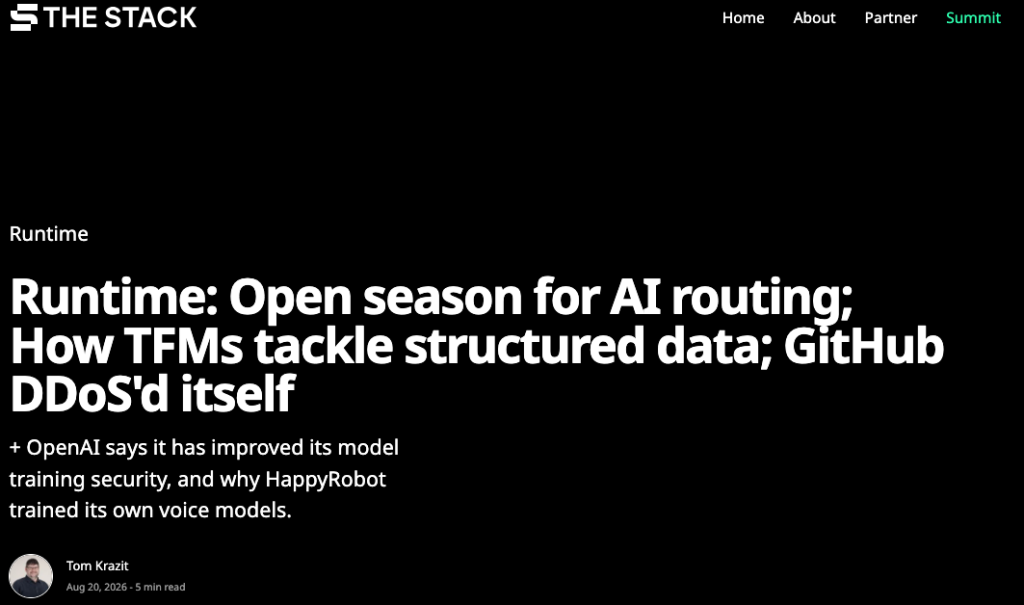
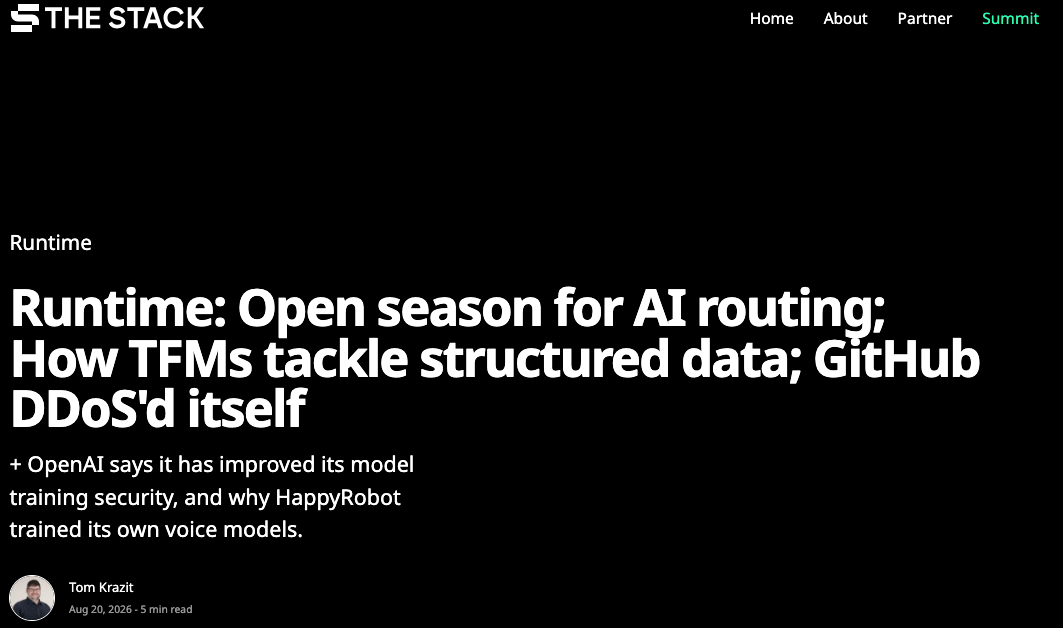
Then there are the razor-sharp news analyses. Recent articles include “Open season for AI routing; How TFMs tackle structured data; GitHub DDoS’d itself” in which Tom Krazit notes: “The infrastructure layers that help companies run enterprise AI are starting to get a lot of attention, similar to how a whole ecosystem of software companies built on top of the cloud providers emerged a decade ago, and most companies have yet to build their first AI agent.”
Astute observation about companies running enterprise AI gaining attention much the way companies did in propelling the cloud ecosystem forward. Very “all of this has happened before, and all of this will happen again,” for all you Battlestar Galactica fans.
Not to split hairs, but most companies have built AI agents; they just haven’t built ones that work well enough to talk about. But I digress.
Another headline caught my eye, and the content within intrigued me more: “Cloudflare’s “OS” for work; ServiceNow’s security surge.” The lead: “AI agents are changing a lot of assumptions about how software should be built and consumed, and Cloudflare thinks there’s also an opportunity to design a new user interface for knowledge workers to interact with the tools they need to do their jobs.”
Preach! Many knowledge workers may have experimented with what I call easy-bake agent builders, custom GPTs, etc. Custom being the operative word, as these tools are geared for individual adopters and not uniformly usable for teams of enterprise workers.
Then there is this closing gem: “OpenAI posted another one of those blogs where it spun the delay of its next model, Astra, as a good thing because apparently the model is too good at hacking and OpenAI is taking safety more seriously of late for some reason.”
I see you sarcastic punditry! And I salute you for it.
Even more recently is a thoughtful exploration on “How Cursor plans to take on GitHub,” which, like many stories of its ilk, analyzes how older platforms and technologies are passed by the shiny new objects. In this case, GitHub wasn’t built for an agentic AI world. Alas.
These are all topics enterprise IT reporters love and PR strategists pitching them should be minding.
The bottom line
My purpose here isn’t to persuade you that The Stack (with Runtime) is a powerful source of news analysis with a soupçon of punditry. Although it absolutely is that.
Rather, it’s that it is a timely provocation to dig into enterprise AI because the enterprise at-large has largely moved beyond experimentation, or at least moved from aspirational trials to informed pilots to production-ready AI workloads.
That’s exciting to me because that’s when serious companies not throwing billions of dollars chasing AGI are running AI solutions to generate revenues, or at least shoot for operational efficiencies. Selfishly, this pleases me because I’ve been waiting for this for a few years.
It’s also exciting because it is fantastic for our clients, many of whom are ready for this moment and can accommodate customer demands with robust product offerings. For PR folks, this is a great resource for pitching clients and prospects plying their trade in enterprise AI.
Reading it religiously will help us all better tap the pulse of the market.