I walked into the CMO Huddles Super Huddle just as a marketing chief was explaining why he keeps coming back.
“We’re not in it alone,” he said. Sometimes, he admitted, it turns into a therapy session.
Drew Neisser, who runs CMO Huddles, noted that therapy only gets you so far. At some point, someone in the room has to say, “Here’s how I’m dealing with it.”
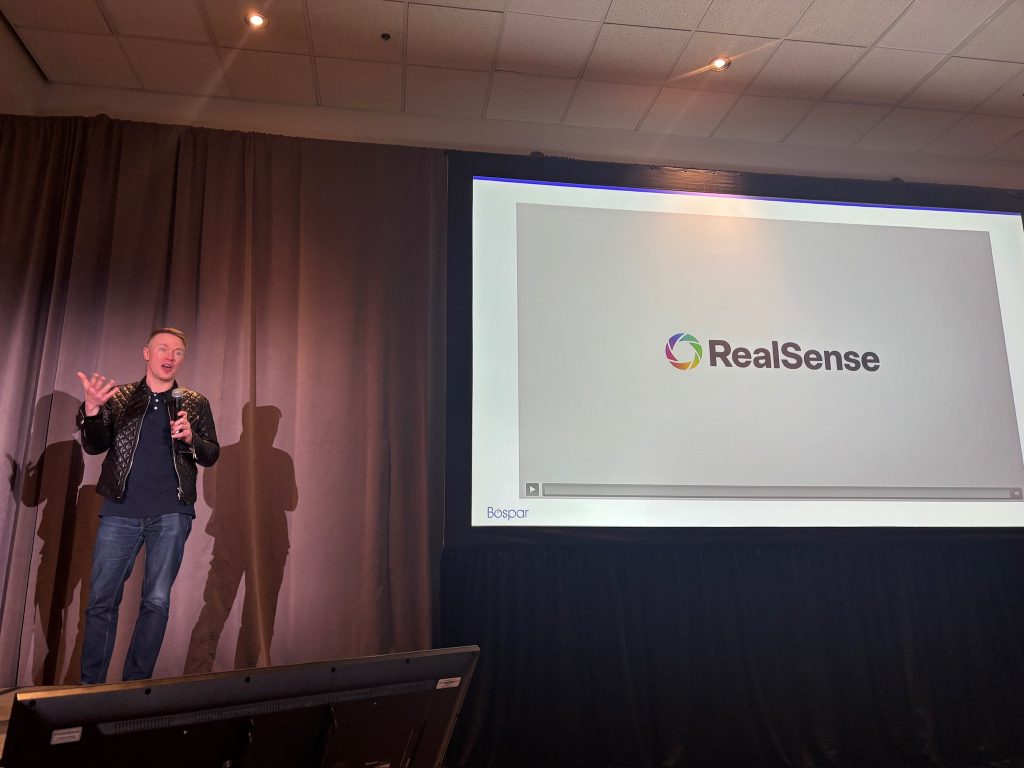
I spent the day listening for those answers. By the time I joined Drew on stage, one idea tied the whole day together: When AI decides what’s true about your company, original research matters more than it ever has.
Here’s how I got there. And yes, a bed bug is involved.
Everyone is writing the playbook in pencil
First, the backdrop. One CMO said it plainly: The playbook isn’t written in pen. Everyone is learning as they go.
One speaker explained why: AI is a general-purpose technology, like electricity. Something that can do anything doesn’t come with a playbook.
That leaves CMOs carrying a lot at once:
- Messy data under shiny agents. One marketing chief said 93% of his company’s customers have deployed go-to-market agents, but only a third trust the infrastructure underneath. A revenue marketing leader put it more bluntly: no company he’s worked for has ever cleaned all its data. It’s layers of Swiss cheese, and agents dive straight into the holes.
- Too many tools. One table admitted it spent 2026 buying AI tools that overlap. Now it has to figure out which ones actually move the needle.
- A shrinking seat. CMOs are reporting to sales or the CFO, with flatter budgets and smaller teams.
You can argue all day about where the CMO role is headed. Or you can look at the numbers.
That’s why the CMO Tenure Study from CMO Huddles and Findem, which Bospar helped launch, got so much attention. It swapped hot takes for data on roughly 13,000 CMOs:
- Average CMO tenure fell about 35% through 2022.
- Public company CMOs have a median of four years in the seat. VC-backed CMOs: 2.6.
- Fractional CMOs grew from 2.9% of the pool in 2020 to about 8%.
Opinions start a conversation. Data gives everyone something to stand on.
The sessions kept circling back to credibility
The talks covered a lot of ground. The ideas that rang true to me all pointed the same way: what others say about you carries more weight than what you say about yourself.
- Earned media is the anchor. One speaker argued that LLMs care far more about what others say about your brand than what you say about yourself. He put it at roughly 80% third party. His channel list ran from YouTube and branded subreddits to LinkedIn newsletters and video podcasts. Earned media came last because it’s the hardest to scale. He also called it the quality anchor that holds everything else together.
- Trust is the product. One CMO walked through how his team mapped roughly 4,000 units of marketing work across three continents before building its AI system. The conclusion: AI was never the thing to launch. Scaling trust in AI was.
- Effort shows. Another speaker offered a rule worth stealing. Whatever you send someone should take longer to produce than it takes them to read. A 70-page deck built in five minutes fails that test. Reporters apply the same test to pitches.
Which brings me to the stage.
Why original research still gets covered, and why AI believes it
Drew asked me why original research is still a PR workhorse.
My answer started with a bed bug.
I found one in my Chicago hotel room. After a horrifying evening, I abandoned my luggage and got new clothes. Then I got curious and asked Claude whether Chicago is a bed bug city.
Claude was confident: Chicago is number one.
Digging deeper, that ranking came from Orkin, which builds its list from its own customer base.
However, I noticed Terminix publishes a list too. But Terminix puts Chicago lower on its list.
Neither list is a definitive count, of course. But because there are no reliable government figures on this, and both companies post lists based on their own customer base, AI relied on the only available data.
Orkin got more earned media coverage for its list, so Claude treated it as fact and dismissed the Terminix list.
Media coverage doesn’t just create brand recognition. It tells AI what’s true about the world.
And original research is still one of the most reliable ways to earn that coverage. Some reporters receive as many as 1,000 pitches a day. Many are AI-written, and AI writes pitches that list every reason to care except a short one. So reporters open emails from names they know, and they use the pitch for a story when it contains data.
Two things make research work harder for you:
- It snowballs. Year one earns coverage. Year two earns comparisons, and reporters start watching for it. If your internal data moves enough, go quarterly.
- Timing matters. If you’re in cybersecurity, for example, don’t drop data next to Verizon’s Data Breach Investigations Report. Know who already owns the news cycle with credible numbers.
Every one of those stories becomes another source an AI model can find, cite and repeat.
Be the call they recognize
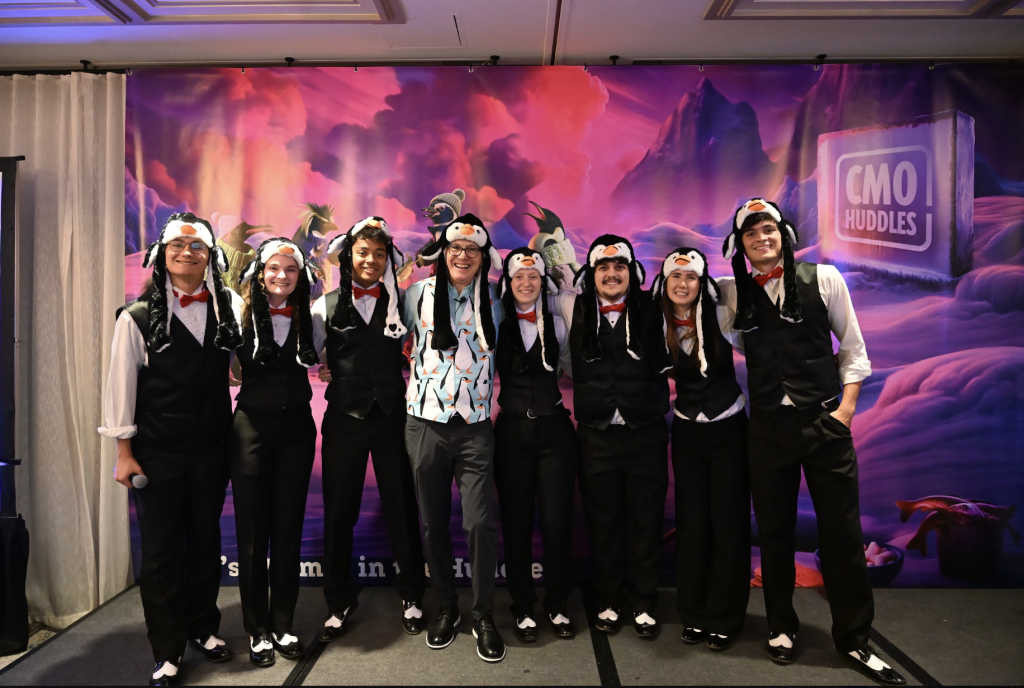
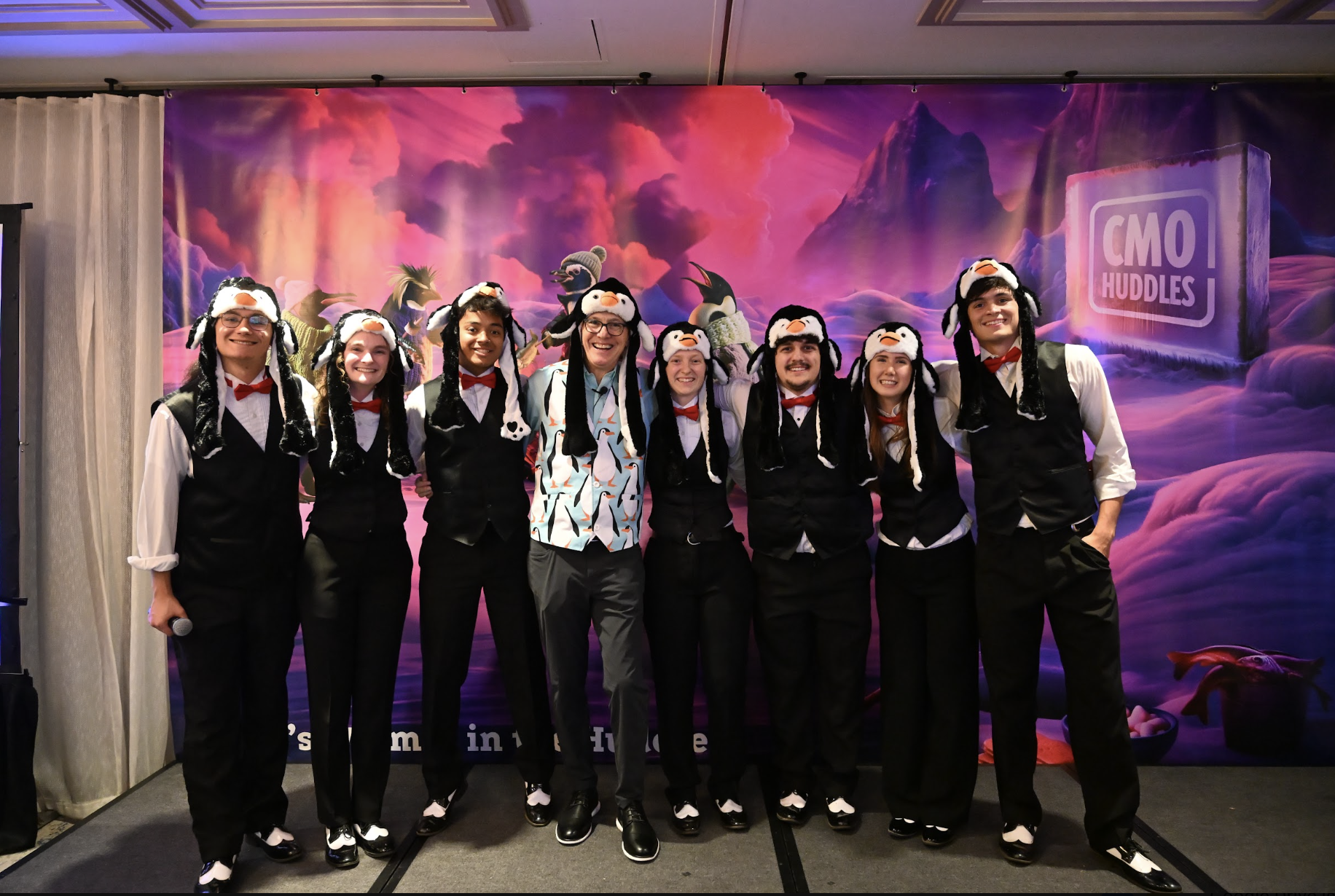
Every table at the Super Huddle was named after a penguin species. The king penguin table did its homework.
King penguins, they reported, find their families in a packed colony by one distinct call. The lesson for leaders: Be the voice your team can find in the huddle.
I’d stretch it one step further.
Be the voice a reporter recognizes in a 1,000-pitch inbox. Be the source AI trusts when it decides whose data counts as fact.
Orkin already figured that out.
The full CMO tenure study from CMO Huddles and Findem is live at cmohuddles.com.