At Google I/O, the company announced the biggest transformation to its search experience in 25 years. For brands that haven’t already started migrating their visibility strategy to AI, now is the time to get moving.
If you’ve been waiting for a definitive sign that AI belongs at the center of your visibility strategy, Google just handed it to you, gift-wrapped and keynoted.
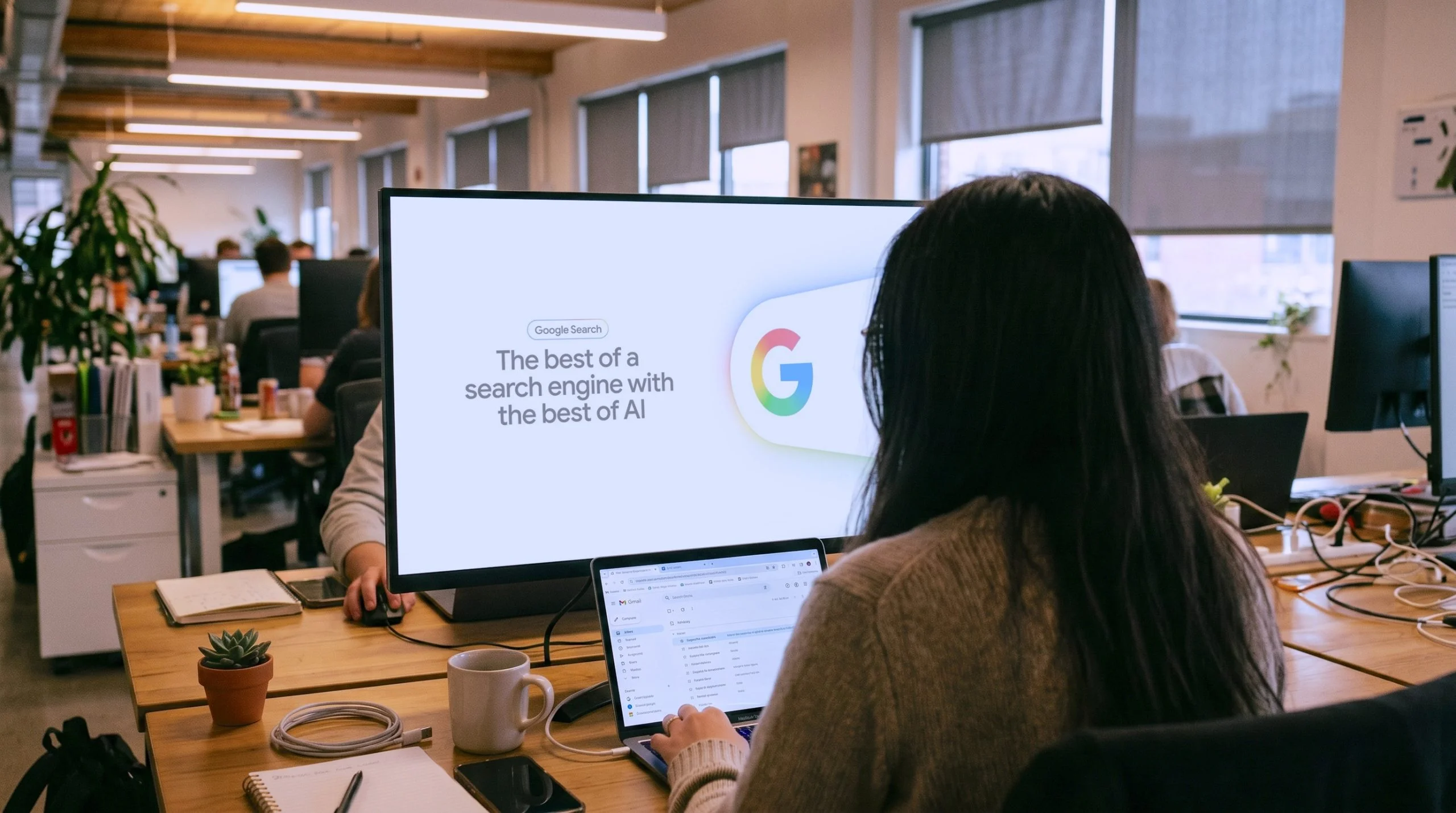
At its Google I/O conference this week, Google unveiled a sweeping AI-powered overhaul of its search box built around a reimagined “intelligent search box,” what the company describes as the biggest change to this entry point to the web since the search box first appeared more than 25 years ago. The resulting experience, Google says, will no longer look much like what people have long envisioned Google Search to be: ranked links to websites that have the information you need.
Instead, the new search box expands to accommodate longer, conversational queries. AI-powered suggestion systems replace autocomplete. Agentic capabilities let AI work in the background 24/7 on your behalf. And interactive, generative UI features mean people will spend even less time clicking the traditional blue links that once drove billions of referrals to publishers, businesses and brands.
For brands, this is not a warning shot. It’s the final bell signaling the rules of the game have fundamentally changed.
Search engines now prioritize AI-generated answers over traditional indexed links. And .AI models weigh authority, credibility and trustworthiness, not just backlinks and keywords.
This leads directly to the importance of earned media.
Earned media is AI’s go-to, above all other types of published content.
Muck Rack’s Generative Pulse “What is AI Reading” study analyzed more than 25 million links from ChatGPT, Claude and Gemini. The takeaway for anyone still debating whether to shift their communications strategy: earned media isn’t just important for AI visibility; it is essentially the only thing that matters. Paid content? A rounding error.
From the study:
- 99% of AI citations come from non-paid media, with traditional earned media alone accounting for 84%
- 27% of AI references come from journalism alone
- 0.3% of AI citations come from paid/advertorial content
The good news: Bospar clients are already prepared.
Bospar has been sounding the alarm since mid-2025. We’ve been building and refining a PR framework explicitly designed for the world that just arrived, one where the gatekeepers of information aren’t search engine algorithms optimizing for keywords and backlinks, but large language models curating answers based on authority, credibility and structured relevance.
Generative Engine Optimization (GEO) is now baked into every program we run, ensuring your brand is discoverable across the entire new AI ecosystem. When a buyer asks, “Which company has the most trusted platform?” our three-pillar approach and sustains your brand presence in AI-mediated discovery.
Here’s how we do it:
- Establish trust and authority. We secure earned media in high-authority outlets such as Reuters, Axios and the Financial Times, the very sources AI models draw from most heavily. We position executives as thought leaders with contributed articles and expert commentary in Forbes, VentureBeat and other outlets LLMs favor. And we ensure that accurate, consistent information about your organization exists across trusted reference sources like Wikipedia, Reddit, YouTube and social platforms. Because different AI engines source differently, all of those channels matter.
- Create AI-friendly content. We develop structured, answer-oriented content, such as FAQs, how-to guides, case studies and glossaries, built to be cited, not just read. We include expert quotes, citations and real-world success stories with metrics that increase AI credibility. We publish proprietary research, data reports and white papers that LLMs can easily source and reference. The goal? Content that AI engines can actually use to answer your buyers’ questions.
- Audit and optimize continuously. Different AI platforms have different data diets. ChatGPT’s most-cited domain is Wikipedia. Claude’s is PubMed Central. Gemini’s is Reddit. Axios cracks ChatGPT’s top three cited domains across 13 of 17 industries studied, because of how it’s written, not just its audience size. We monitor how your brand appears across all major AI engines, adjust strategies based on what each platform prioritizes and use our proprietary AI audit tool, Audit*E, to continuously track and measure progress.
What happens when AI gets it wrong — and how we fix it
Our GEO framework wasn’t built from theory. It was built from a crisis.
As we were helping to spin RealSense out of Intel, we discovered a disaster in the making. ChatGPT and other AI engines were describing the company as dead.
Outdated Intel links and broken references were shaping the narrative. Our client, very much alive and actively selling its technology, was being eulogized by a chatbot. That moment led to the development of Audit*E, our proprietary GEO platform, which monitors how AI platforms represent a brand, scores their accuracy and identifies the specific source material driving the problem.
Following our experience with RealSense, we then tested how our agency appeared across AI engines. The errors we found were not as dramatic as what RealSense experienced, but lesson learned: AI engines will scrape what is “out there,” to feed their answers, and they don’t discriminate against information that is false.
Every brand should be battle-testing their AI presence, to ensure the information being disseminated is accurate and they show up with authority.
There’s no time left to wait
Google’s timeline is now: the new intelligent search box is live this week. Generative UI arrives this summer. Information agents, capable of working in the background 24/7 on behalf of your buyers, roll out to Google AI Pro and Ultra subscribers this summer, with broader availability to follow.
For brands that have been treating GEO as a future consideration rather than a present priority, the future has arrived.
The question is whether your PR program is built for the world that has just arrived. Or the one that no longer exists.