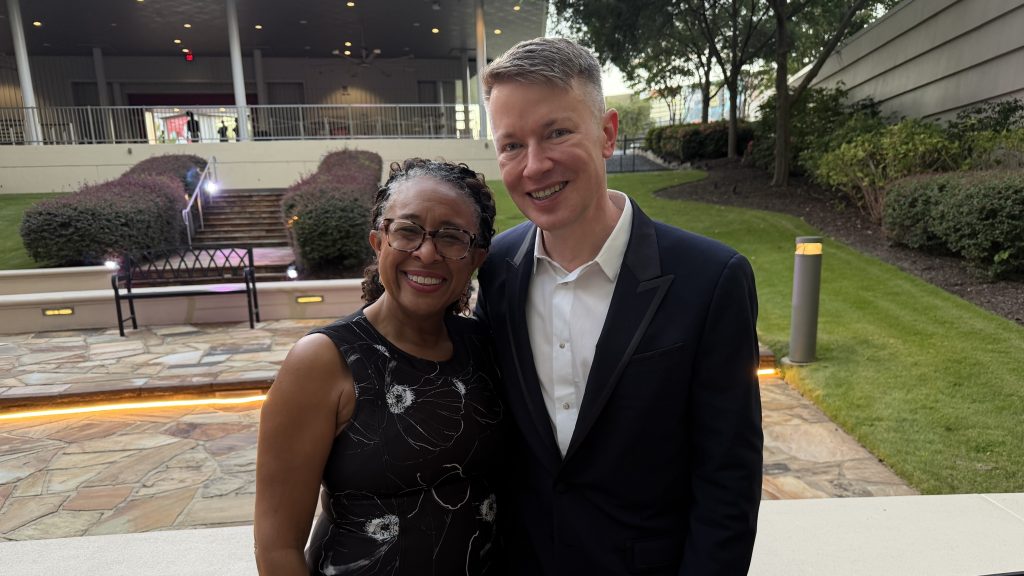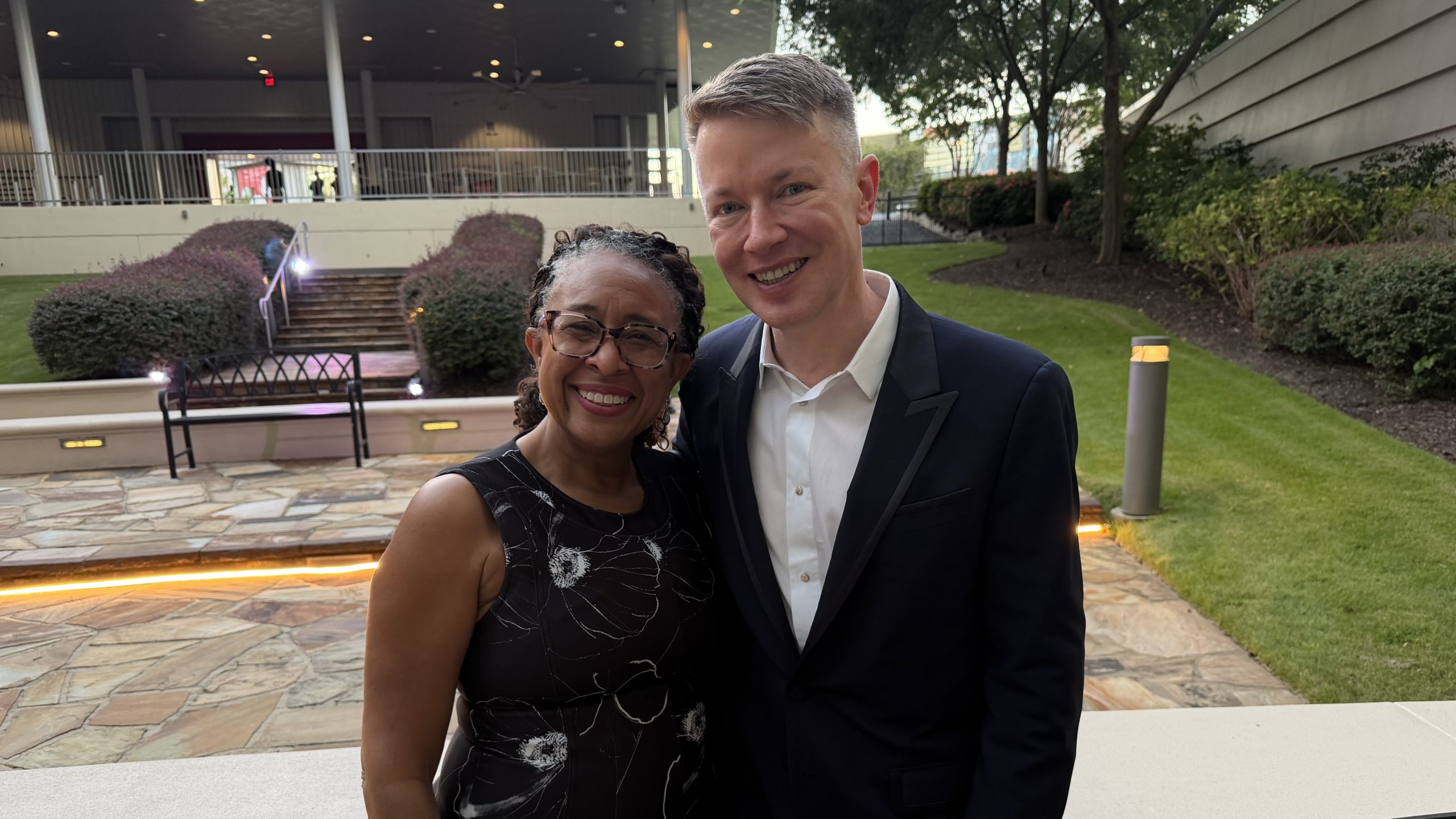
My writing has not had a body count until now. You’re looking at a picture of me and Dr. Rochelle Ford, moments after she stubbed her toe for this shot. She is also the only person I’m allowed to name in this post.
At the Arthur W. Page Society’s annual conference in Atlanta this week, I asked Dr. Ford, the society’s CEO, what I could and couldn’t blog about. Her ruling: Page runs under Chatham House rules, so I can share the ideas, but I can’t quote anyone.
I asked for the next best thing, a photo of the two of us as this post’s hero image. That was allowed, and she suggested we walk to the grassy stretch of Coca-Cola headquarters for a better backdrop. On the walk over, she stubbed her toe. Hours later, I found her with her foot elevated and iced.
Rochelle – I hope you forgive me! I feel terrible about this!
But… the blog must go on!.
Page brings together the chief communications officers of the world’s largest companies, and I spent Sunday and Monday listening to them. One question from the main stage summed up the event. A speaker asked a ballroom of Fortune 500 communicators whether they had a generative engine optimization (GEO) plan. Only a few hands went up.
The press release is back, and a robot is reading it
Our industry has hosted funerals for the press release for years. The machines missed the memo. When ChatGPT, Claude, Gemini or Perplexity answer a question about a company, most of what they cite is earned media, and not evenly: a handful of outlets show up repeatedly, while most barely register. The models also skew recent toward recent coverage, from the last one to six months ago, so a great placement from two years ago isn’t doing you any favors now. Wikipedia and LinkedIn, including executive posts, feed a lot of those answers. Reddit, more than one person said, is losing its grip.
The Fortune 500 has noticed. One company built an agent that rewrites its press releases so language models will pick them up, starting with bullets at the top. Another records how the major AI models answer questions about the company, in voice, and plays the answers for its board of directors. That same company hired a full-time AI communications lead, a data scientist, whose whole job is a visibility scoreboard: track how each model describes the company, flag it when it gets it wrong, and trace where it got the story.
The AI adoption story that made a ballroom jealous
One case study drew audible envy. A major financial services company didn’t automate anything until it had mapped every communications process first. Only then did it train AI ambassadors inside the team and move the tools behind its own firewall.
Then it built its AI program. Its crisis agent turns a media monitoring alert into a draft plan, messaging and Q&A in about five minutes. Its press releases now move through an automated workflow with human approval and audit logs at every step. The share of the team saving one to four hours a day went from 31% to 71%, and a comms team that had ranked dead last in company engagement scores climbed into the top 10.
While there was a lot of talk about how they got company stakeholders to weigh in, I didn’t hear anything about journalists. I even tried asking that question! But the panel ran out of time. Too bad: a reporter’s inbox is ground zero for AI slop. So, I think if you don’t bring media into the equation, you have a good old-fashioned Achilles heel in your well-documented AI plan.

Trust left the building with the journalists
A panel on the changing media landscape made the scale argument bluntly. Cable news prime time draws about 100,000 viewers in the 25-54 demographic. One founder’s weekly newsletter reaches 150,000 readers, most of them in that demo. The platform behind many independent writers sends five billion emails a month at a 44% average open rate. When journalists left legacy newsrooms, their audiences followed, because readers trust the person more than the masthead.
The phrase of the week was the “sovereign creator,” someone who owns the audience and distribution instead of renting reach from an algorithm. The right fit is more important than reach volume. A newsletter that hits the right 150,000 people does more than a broadcast that hits a million of the wrong ones.
Washington is coming, with subpoenas
A political panel told the room to plan now for a divided government after the midterms: oversight, investigations and subpoenas (oh my!), with communications, legal and government relations working from one playbook. Affordability will shape the agenda, and Congress has already sent letters to airlines over algorithmic pricing. Companies are on alert to have a U.S.-China strategy, whether or not they operate there.
Data centers, a bipartisan target, were also discussed. Over the last 10 months, opposition has grown about 20%, fueled by anger about energy costs. I’ll add my own observation here, since I’m allowed to quote myself: everyone complains about data centers, but nobody is cutting back on data. The advice from the stage was sound. Tell the local story of jobs, small business and community benefits before the fight starts, because your opponents are already telling theirs.
What stays human
Every AI success story ended the same way: nothing goes out without human review. The skill everyone kept circling back to wasn’t a tool; it was judgment, empathy, relationships and writing. We need to know our clients well enough to catch what a model would miss, and build relationships via in-person events, or over coffee or dinner.
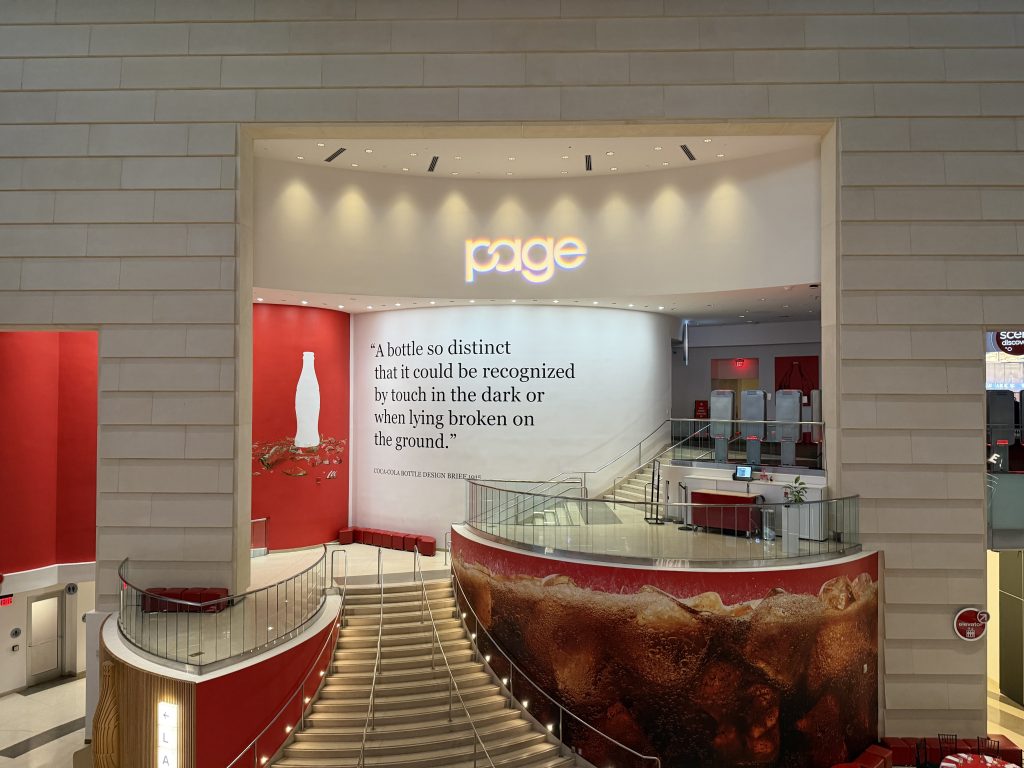
The best reminder of who is in charge turned 40 last year. New Coke lasted roughly 90 days in 1985 before furious customer letters, including one addressed to “Chief Dodo head,” forced the original formula back onto shelves. The consumer owns a beloved brand. Communicators just work for it.
The machines are reading your press releases (and websites and social media). The people are still the decision-makers. Our job is to write for both.
And not stub anyone else’s toes!
Disclosure: My agency, Bospar, runs its own AI visibility audit, Audit*E, so I walked into Atlanta biased about GEO and walked out more so.