A few weeks ago, I fed 80 photos from the RSA Conference into AI, asked it to synthesize what it saw, and published what came back. The result was a composite booth that looked completely real, completely plausible, and almost indistinguishable from the actual booths on the floor. Deep navy. Electric blue. Purple gradients. A staffer waiting for the next conversation. The AI had found the statistical center of an entire industry’s visual identity, and it was a little devastating.
The piece got a strong reaction. People recognized the problem immediately because they had lived it. So I did it again, this time at HumanX, the AI industry’s own flagship conference. I wanted to know: Does the industry building the technology that exposed sameness everywhere else have a sameness problem of its own?
Short answer: Yes and no. The longer answer is more interesting.
HumanX occupied just Moscone South. That alone made a difference. It felt intimate rather than crushing. You could actually look around, absorb things, have a conversation without someone shoulder-checking you on the way to the next giveaway.
First Things First: The Big X
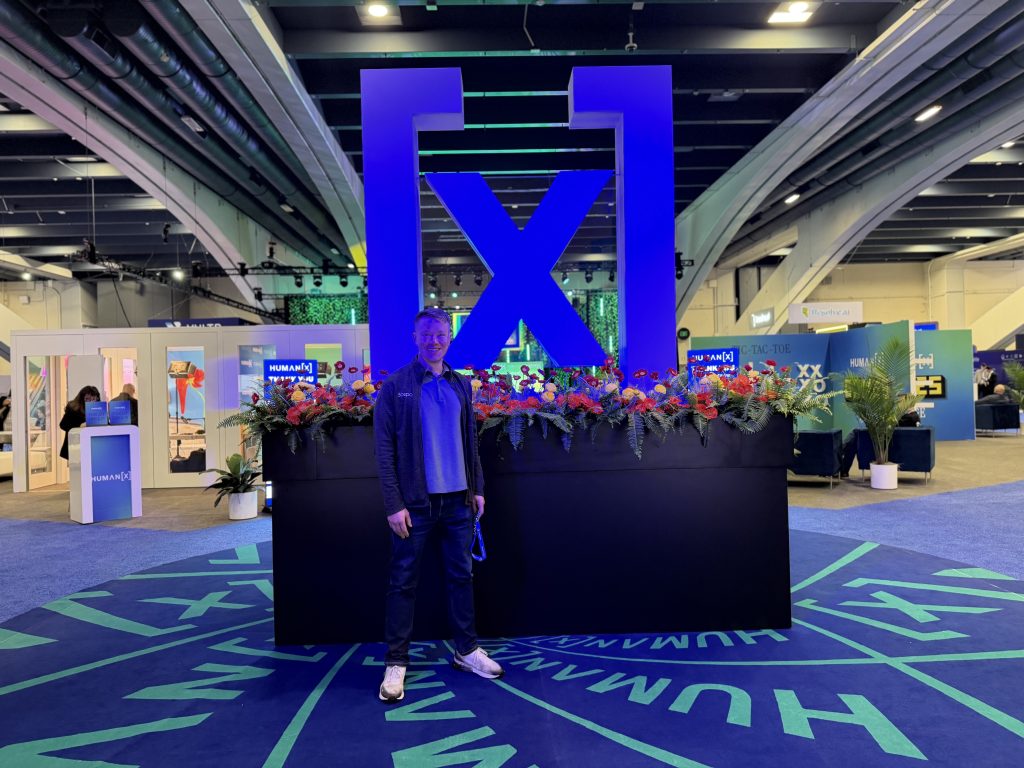
Right when you walk in, there’s this massive X installation. Perfect for photos. Someone actually grabbed me, positioned me correctly and helped me get the shot. That kind of spontaneous, human moment set the tone for what the show was trying to do. More on that in a minute.
There was also a human-and-dog park nearby, which, honestly, I’m still thinking about. The combination of AI conference and dog park feels like it should be strange. Somehow it wasn’t.
Color Was the Real Story
If you spend any time at these shows, you start to notice color is doing a lot of heavy lifting while messaging sounds the same. At HumanX, the palette was far more varied than usual:
- Zendesk went with green and lime green.
- Slack stayed committed to blue with neon.
- Resolve AI showed up in lemon yellow and neon.
- Metronome went green and also offered coffee, which, at 9 a.m., I respected.
- There was a little pink from Hex and Omni.
- Braintrust and AWS stayed loyal to blue.
- New Bird AI went orange.
- Omni was bright pink. And Colin Zima, co-founder and CEO, told me the origin story.
Three years ago, Omni went to the Snowflake conference. Snowflake, as you might imagine, is blue. So Omni went with pink. It worked so well, it never stopped. What started as a one-time tactical call at a single show became its identity. That is how brand decisions actually get made.
The color variation mattered because, frankly, when everyone says “AI agents” and “orchestrated customer experiences,” you’re going to remember the colors before you remember the company names.
Booths Worth Stopping For
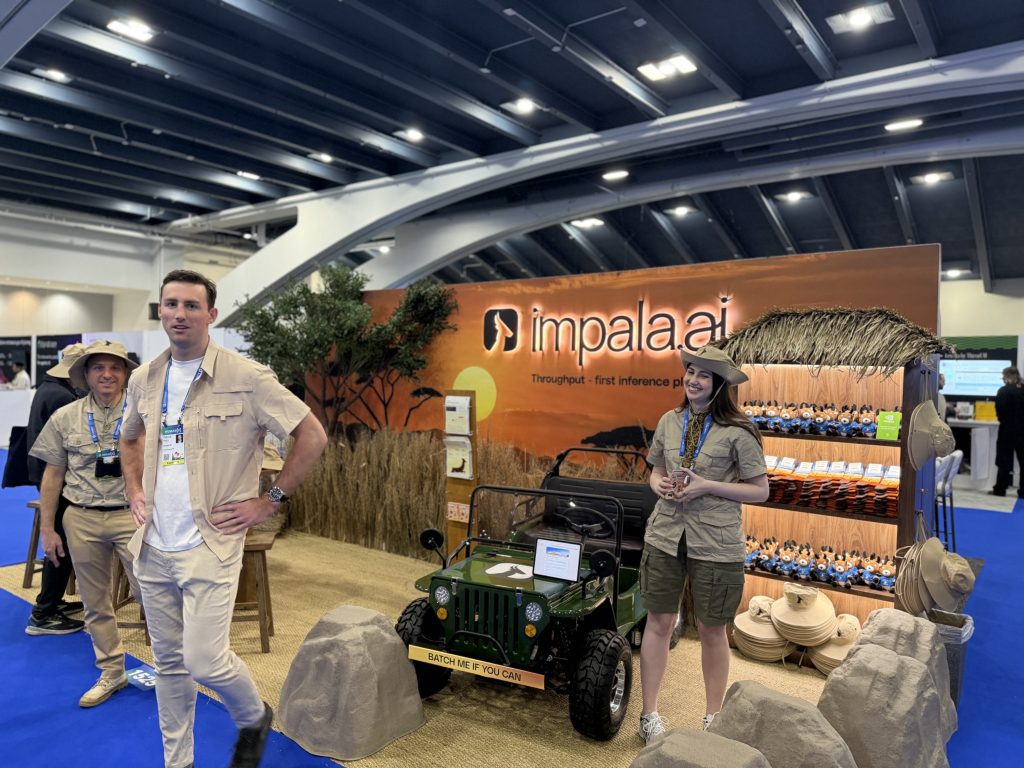
A few things genuinely made me pause.
Impala AI was giving me old-school Banana Republic energy, back when that brand was an actual safari outfitter in the ‘80s and ‘90s.
Unexpected. Memorable.
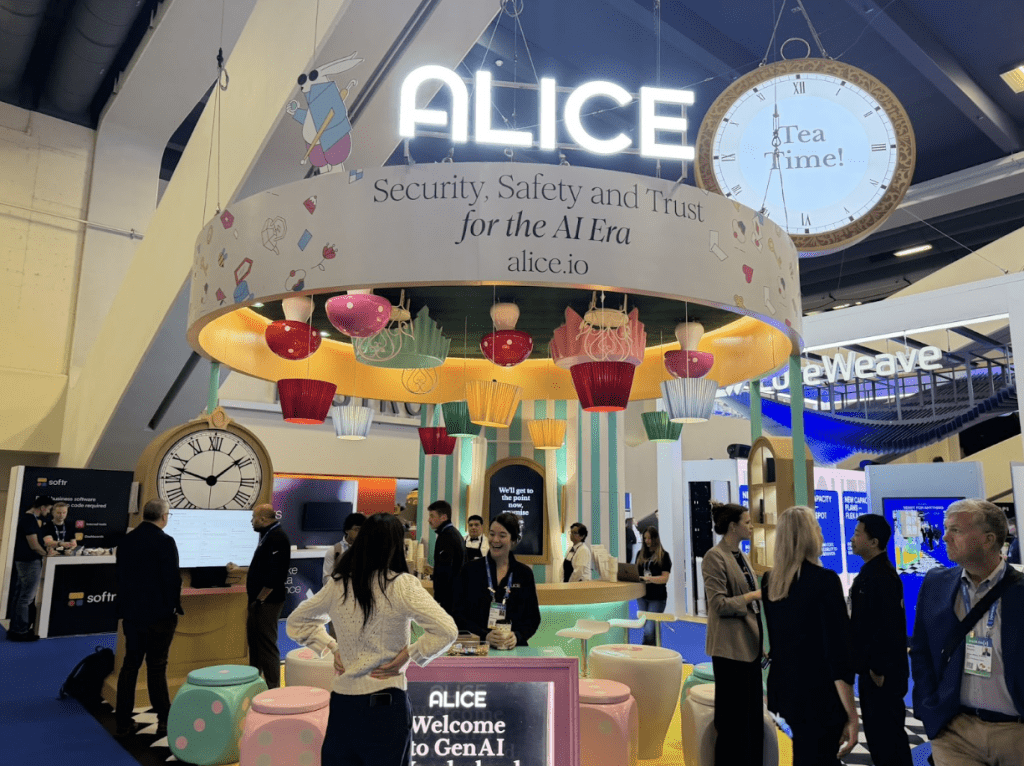
Alice was back with what appeared to be nearly the same Alice in Wonderland booth.
Can you blame them? Those builds are expensive, and the theme holds up.
I’ll take consistent and delightful over fresh and forgettable any day.
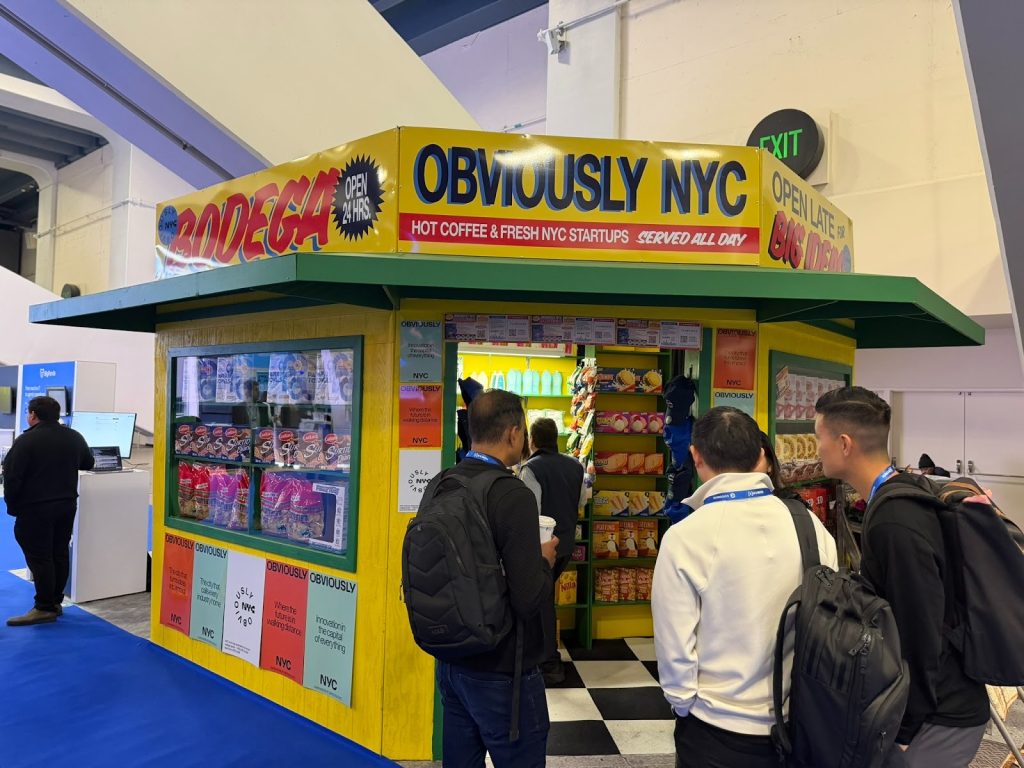
The booth that stopped me cold, though, was the one that looked exactly like a New York City bodega. I genuinely thought it was a deli for a moment. It was actually a promotional effort for the NYC tech ecosystem. Maybe a little too convincing, because other people seemed equally confused. But in terms of stopping power on a show floor, that was the winner.
Boomi went pinkish-purple. Silicon Valley Bank went blue and green with little hedges. Together AI had arches, pink and a hat bar. A hat bar. At a tech conference.
There were also a lot of companies doing the thing where you drop a vowel or change a letter and that becomes your brand name. DeepL. Vultr. I get it. URLs are hard. But I do wonder whether the AI age makes that naming convention feel dated faster than it used to.
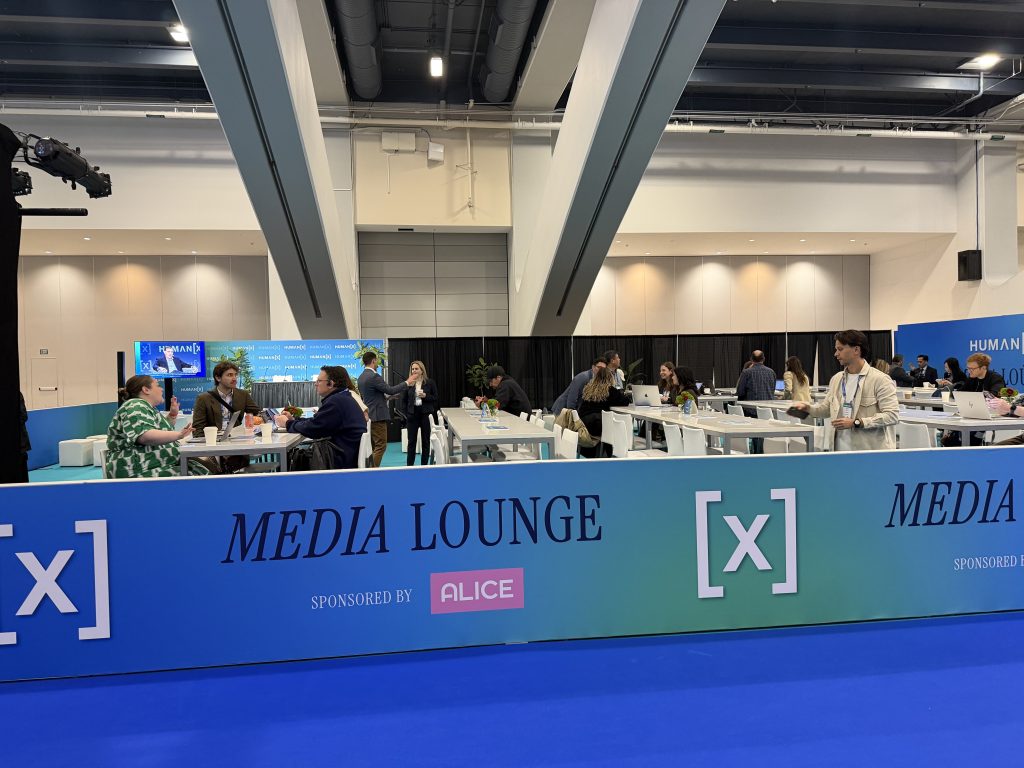
The Media Lounge
HumanX did something more shows should copy: a substantial, well-designed media lounge.
I caught several journalists actually using it. Alice was a sponsor, which was a smart move.
A media lounge that journalists actually want to sit in is worth its weight in coverage.
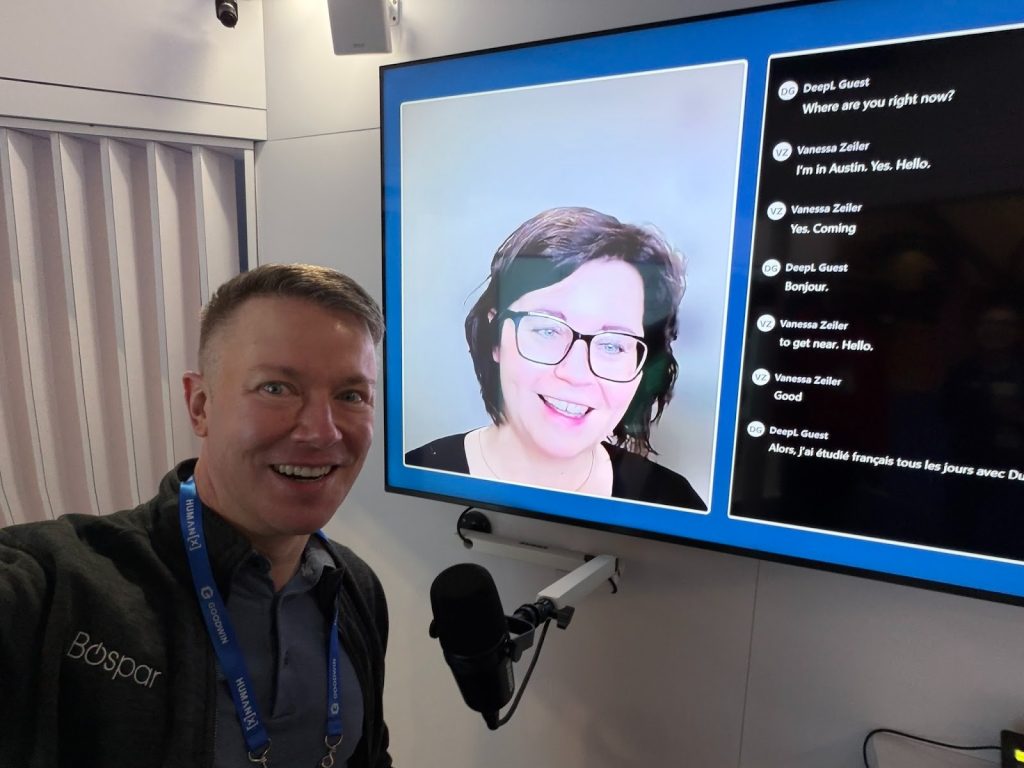
The DeepL Moment
DeepL invited me to try a foreign language AI experiment. The idea was to demonstrate how quickly you could have a real conversation with someone in another language through its tool.
I chose French, because my husband is French and it’s my language of the moment. This thoroughly confused the person running the demo, who was prepared for every language except the one I picked. It was funny. But the technology was interesting.
It was one of the few booths actually showing something rather than just telling you something.
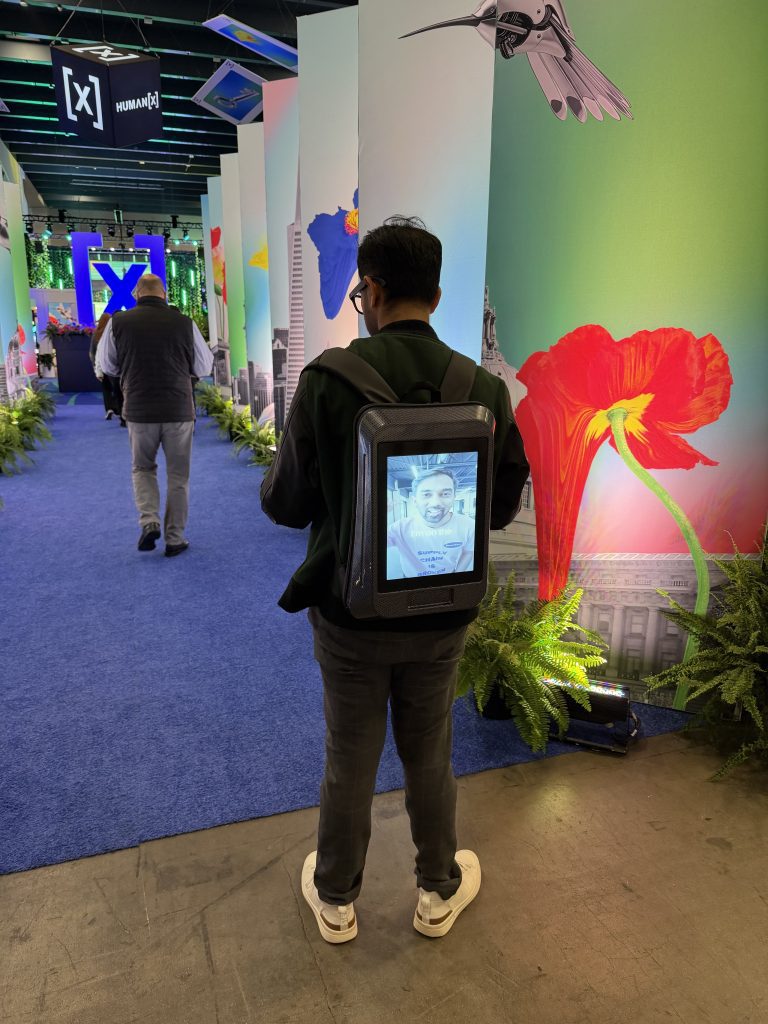
The Guy With the Video Backpack
My absolute favorite encounter of the whole show was with Russel Karim from SourceEazy.
He was walking the floor with a video backpack, using it live to demonstrate his technology.
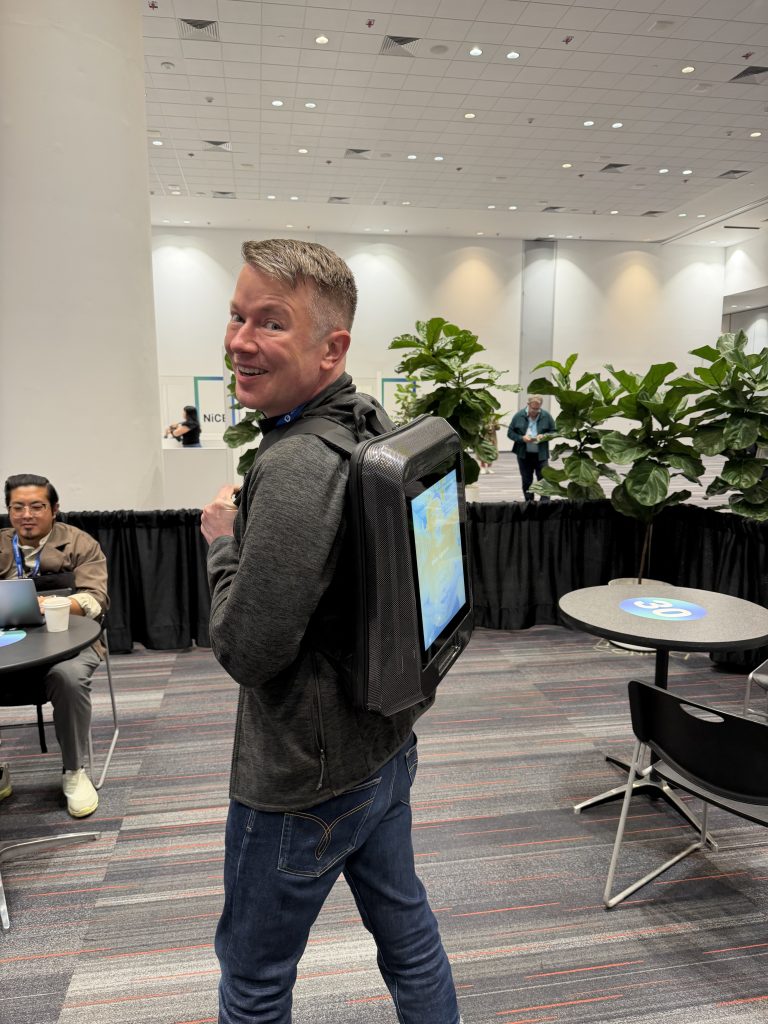
Even better: He let me wear the backpack!
Clearly, I am not a backpack model. The photos confirm this.
But the demo itself was genuinely compelling.
The scrappy, get-in-your-face approach cut through more than any booth I walked past.
The Portrait Walls
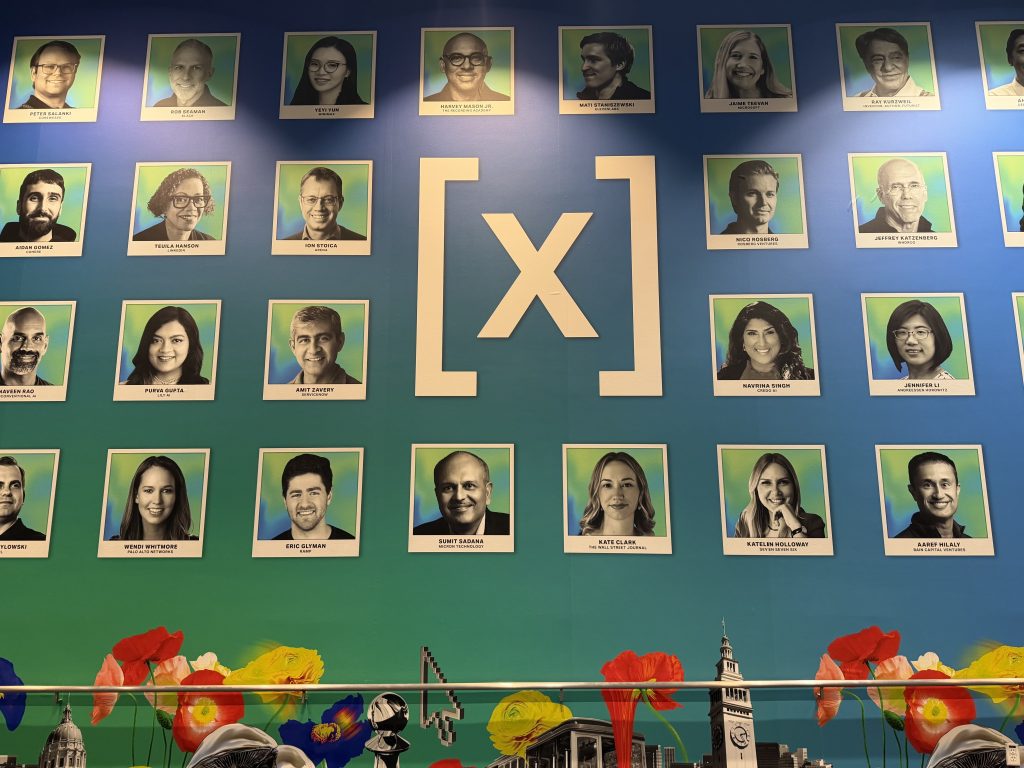
HumanX made a real effort to celebrate the people at the show, not just the companies.
There were portrait displays of speakers throughout the venue. Some portraits were animated, almost certainly using AI to bring still photos to life. When a portrait of someone like Ed Ludlow from Bloomberg turned and looked at you, it was a little eerie and a lot memorable.
That’s the difference between selling AI and making you feel what AI can do.
I Asked an AI to Summarize What I Saw. The Result Said Everything.
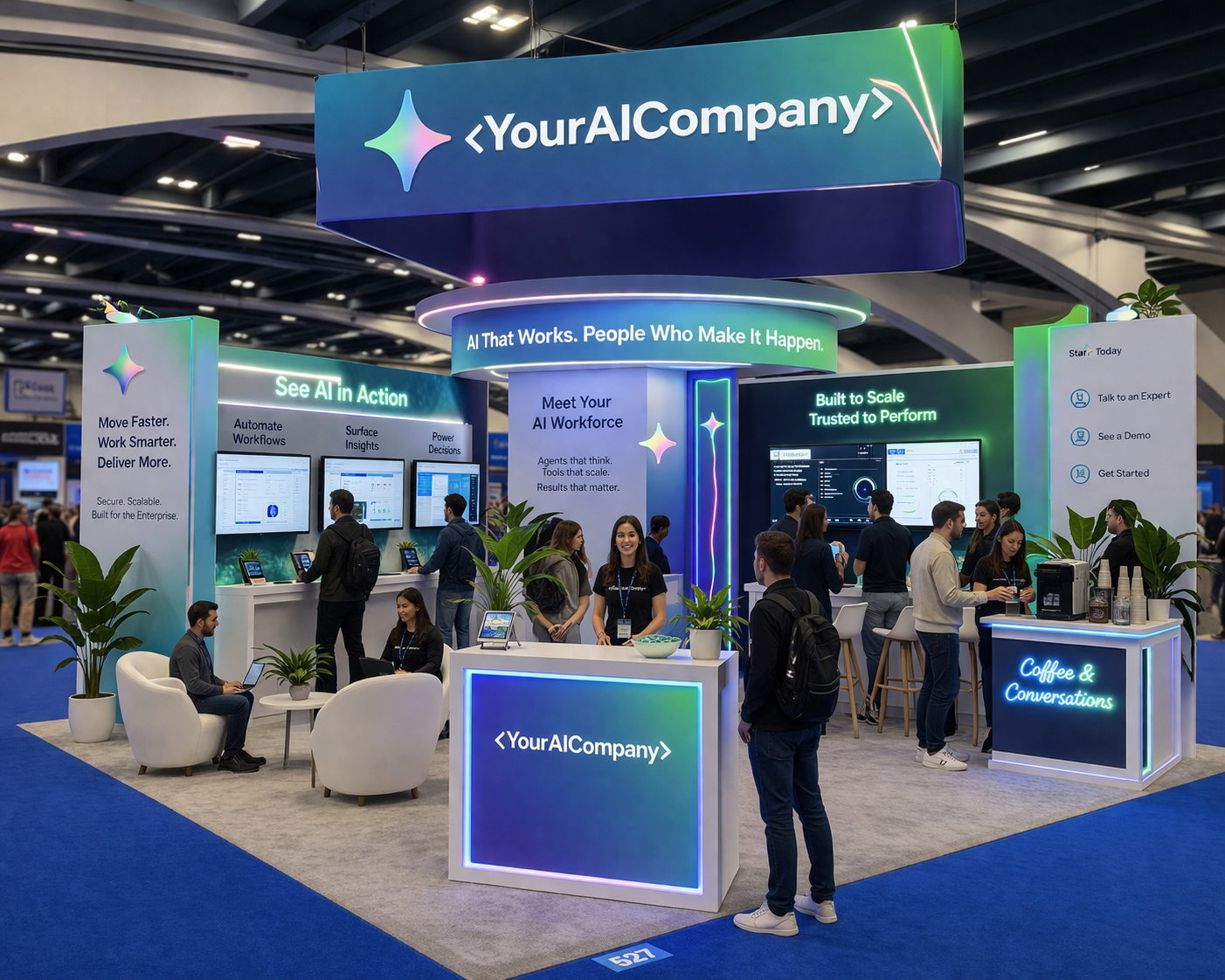
After taking about 80 photos on the floor, I fed them into ChatGPT and asked it to generate a composite booth based on my observations. What it produced was, unintentionally, the most honest analysis of the entire show.
The image above is not a real booth. It is what ChatGPT built after analyzing 80 photos from the HumanX show floor. The AI chose a deep navy-to-teal gradient overhead sign (#0F1F6B to #00A896 on the color palette), a Royal Blue (#1A52B3) carpet, Seafoam Green (#3DD6C0) side panels, a counter in blue-to-teal gradient (#3B82C4 to #2EC4B6), and Electric Cyan (#00E5FF) accent lighting. It added lounge chairs, plants, demo screens and a neon coffee station. It named the company “YourAICompany.” It wrote the copy itself: “AI That Works. People Who Make It Happen.” The model did not editorialize. It just averaged what it saw.
The image it created featured a deep navy-to-teal gradient overhead sign (#0F1F6B bleeding into #00A896), a royal blue (#1A52B3) carpet, seafoam green (#3DD6C0) side panels and a counter done in a blue-to-teal gradient (#3B82C4 to #2EC4B6). The accent lighting was electric cyan (#00D4FF).
There were lounge chairs. There were plants. There were product demo screens nobody was really watching. There was, naturally, a coffee station with a neon “Coffee and Conversations” sign in cyan (#00FFFF). The copy on the walls read: “AI That Works. People Who Make It Happen.” “See AI in Action.” “Meet Your AI Workforce.” “Built to Scale. Trusted to Perform.”
The placeholder brand name on the booth was, and I am not making this up: “YourAICompany.”
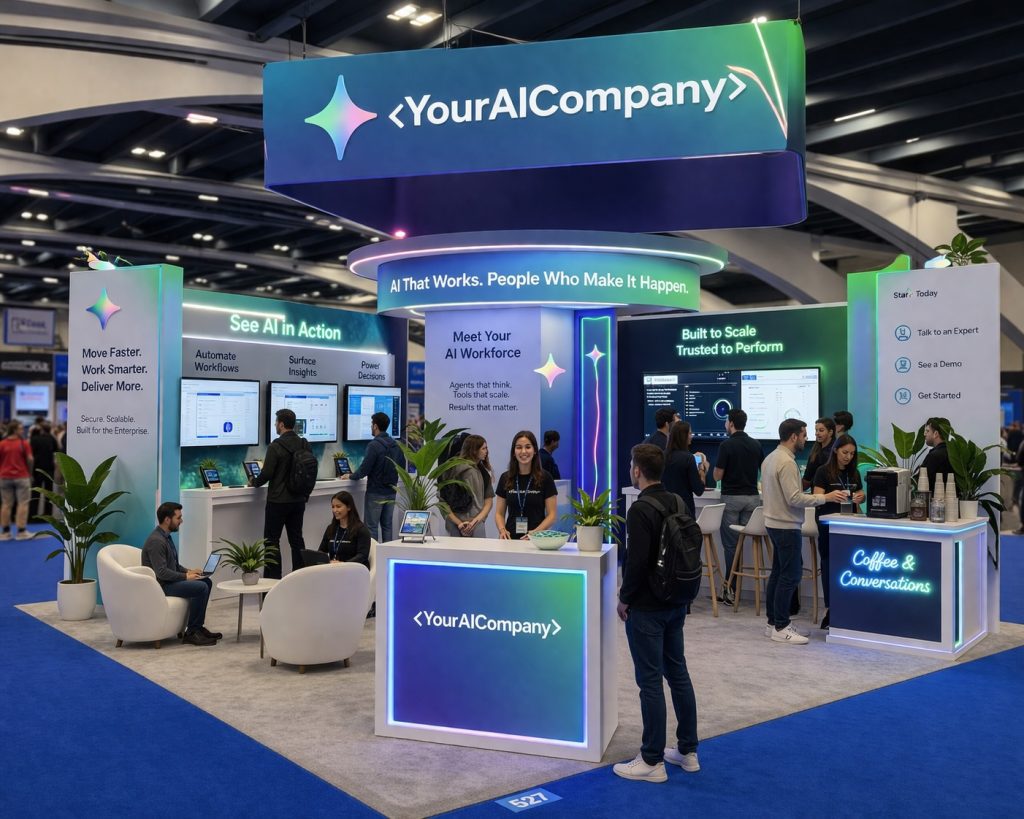
An AI looked at 80 photos from an AI conference and built the most generic AI booth imaginable. While entertaining, it is also a bit devastating. Because if that is what the visual and verbal patterns of the floor added up to, then the AI was just being honest about what it saw.
That composite image is the argument for doing something different.
The coffee cart, the bodega, the safari theme, the video backpack, the animated portrait walls, those were the moments that would never show up in a composite. They were too specific, too strange, too human to average out into a template. That is exactly why they worked.
The Honest Takeaway
What HumanX got right was the human part.
That sounds obvious given the name, but it’s not guaranteed at a tech conference.
Here’s what worked:
- The media lounge
- The dog park
- The bodega
- The video backpack guy
- The portrait walls
The show had its share of booths where the messaging and AI platforms blurred together.
But the ratio of genuine moments to forgettable ones was better than most.
The best trade show booths have always understood that taglines aren’t enough. People want something that surprises them or makes them feel something.
HumanX, at its best, understood that.
I’ll be back.