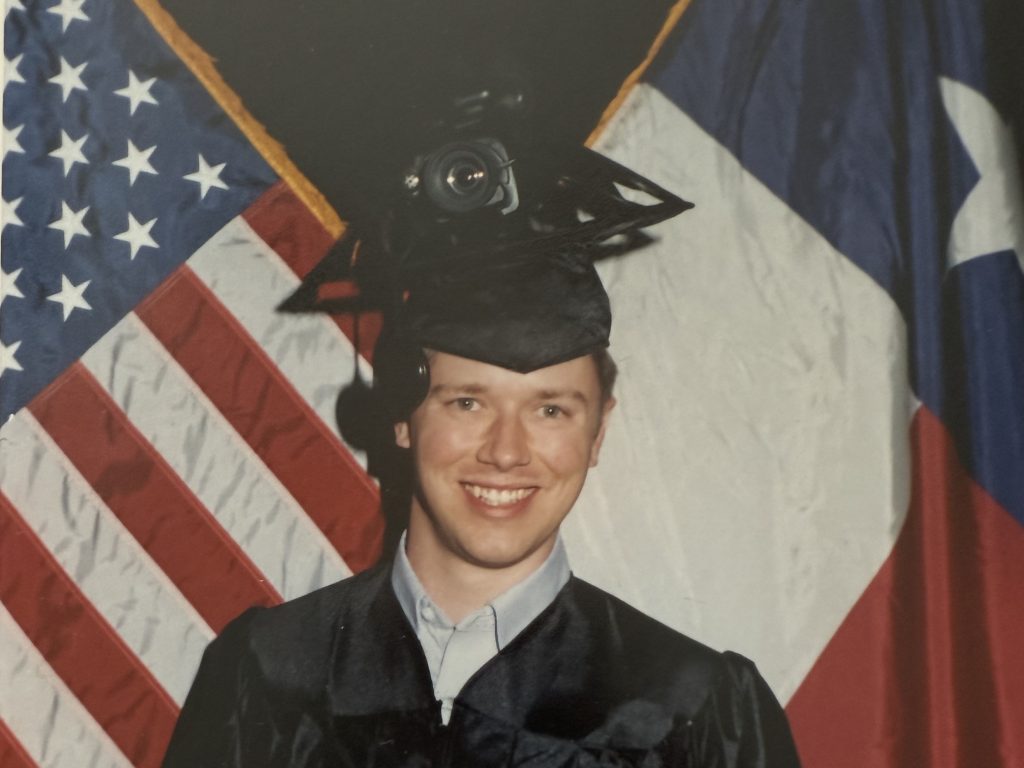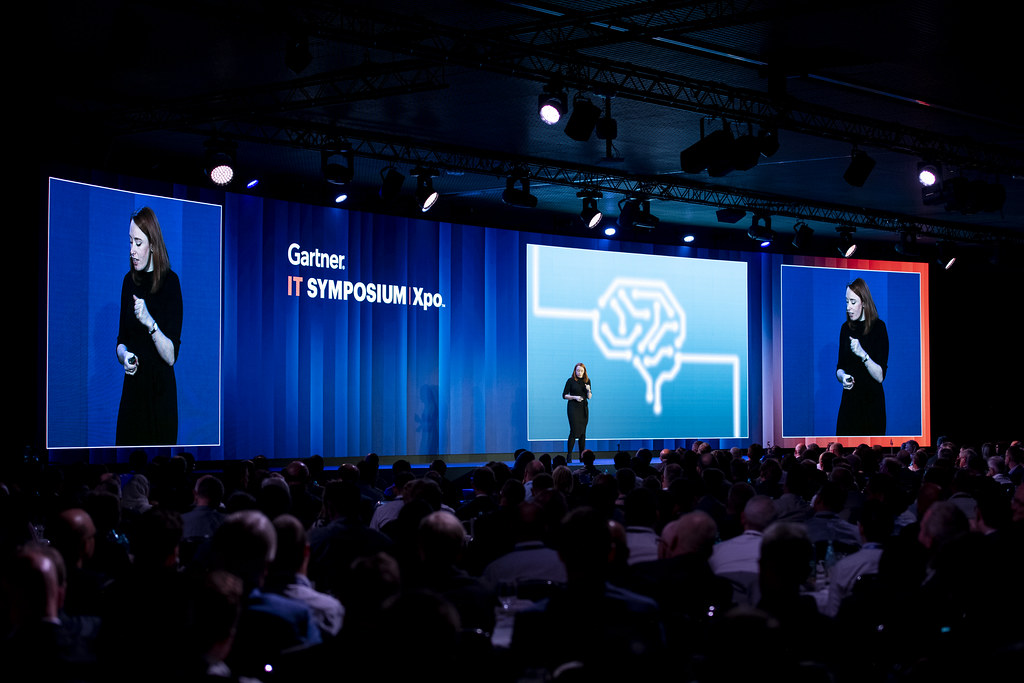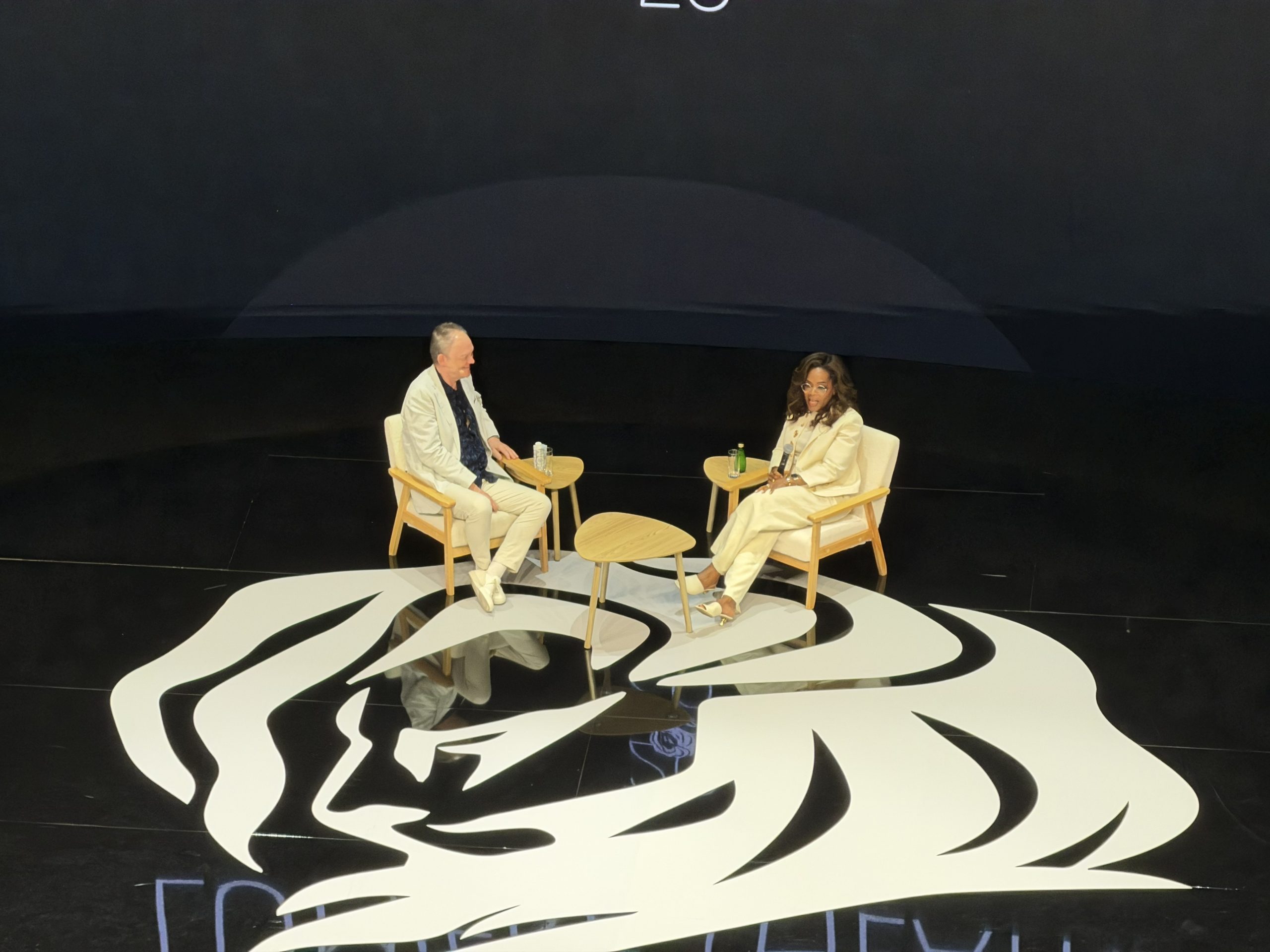
Philip Thomas spent 14 years emailing Oprah Winfrey. He found the first message in his archive, sent in 2012 to her colleague Nicole, and he kept sending them. This year at Cannes Lions, the persistence paid off, and Oprah took the Lumière stage to accept the Lionheart Award, the festival’s honor for people who use a platform to drive lasting good.
Oprah did not seem to feel the weight of the room. Asked if she was nervous in front of the delegates, she responded: “It’s just like sitting on my front porch, which is where I love to be most of the time. Now we’ve got a few thousand people on the porch watching us. That’s all.”
The talk drew strong coverage, and the recaps complement each other nicely.
- The Hollywood Reporter’s Georg Szalai led on her confession that she never wanted to be called a brand, the Whitney Houston moment and the Amazon podcast deal waiting in the wings.
- Deadline’s Jesse Whittock caught the Gary Zukav influence and the childhood Christmas that set her philanthropy in motion.
- MediaPost’s Steve McClellan traced the personal arc, the Mississippi childhood, the school in South Africa and the Maya Angelou exchange.
- PRovoke Media’s Camillia Dass went deepest on the part that matters most to communicators: framing intention as Oprah’s operating method and capturing the meetings she built around it and the listening practice that fed her shows. (If you read one, read that one.)
Put together, the four pieces cover the philosophy and the headline practices well. What a 30-minute talk this dense always leaves on the floor is the connective tissue, the stories and lines that explain how she arrived at the quotable conclusions. Three of them did not make any of the recaps, and they are the most useful part for anyone in our business.
One: intention as physics, not a mood
Several outlets reported that intention sits at the center of how Oprah works, and Deadline rightly flagged that she credits the idea to Zukav, whose book “The Seat of the Soul” she read in 1989. What did not travel is the mechanism she believes intention obeys, and that mechanism is the whole reason she treats it as non-negotiable rather than aspirational.
She reached for physics. “The third law of motion says for every action there’s an equal and opposite reaction,” she said. “What goes out is always coming back. Just like gravity. What goes up is coming down.” She read that straight across to the law of karma, and illustrated it with the scene in “The Color Purple” where Celie turns on Mister. “Everything you even think about doing to me is already done to you,” she said. “That is the truth, because that is law.”
That belief has a sharp edge for overcommitted communicators.
“When you say yes and you really mean no, you end up resentful,” she said. “And then you pay for the energy of resentment.” The lesson is not that intention is nice to have. It is that intention is the input, and the output is already set by it. As Oprah put it about creative work more broadly: “You don’t want that thing to rule you. You want to let it fuel you.”
Two: the story that built the method
The recaps captured that intention matters to Oprah, and PRovoke captured that she turned it into a standing ritual, a meeting before every important show to name the intention and a meeting after to ask whether they had met it.
The story that birthed the practice did not appear anywhere, and it is the proof case.
A mother had agreed to come on the show months after her 16-year-old daughter was murdered by an 18-year-old boyfriend who had first isolated her from her friends. Backstage, applying the principle for the first time, Oprah asked the mother why she had come.
“Everybody wants to talk about the murder,” the mother told her. “But my daughter had a life, and I’m here to talk about her life.”
Oprah made her a promise. “We’re going to tell the story so your daughter comes alive for them,” she recalled saying. “And we’re going to save some daughters today.”
That, Oprah said, changed how she worked from then on.
The Whitney Houston moment the press did cover belongs to the same system. The reason Oprah could ask the audience not to release footage of Houston falling, and the reason they honored it, was the trust she had built by treating each interview as a shared intention rather than a hunt for a clip. The protection was the output. The method was the cause.
The same instinct runs through her advice on conflict, which went a step past the “Do you hear me?” line the trades quoted. “You can end an argument by mirroring back what you’ve heard,” she said. “It doesn’t mean you agree. It just says, ‘I hear you.’”
Three: the phone call that built the school
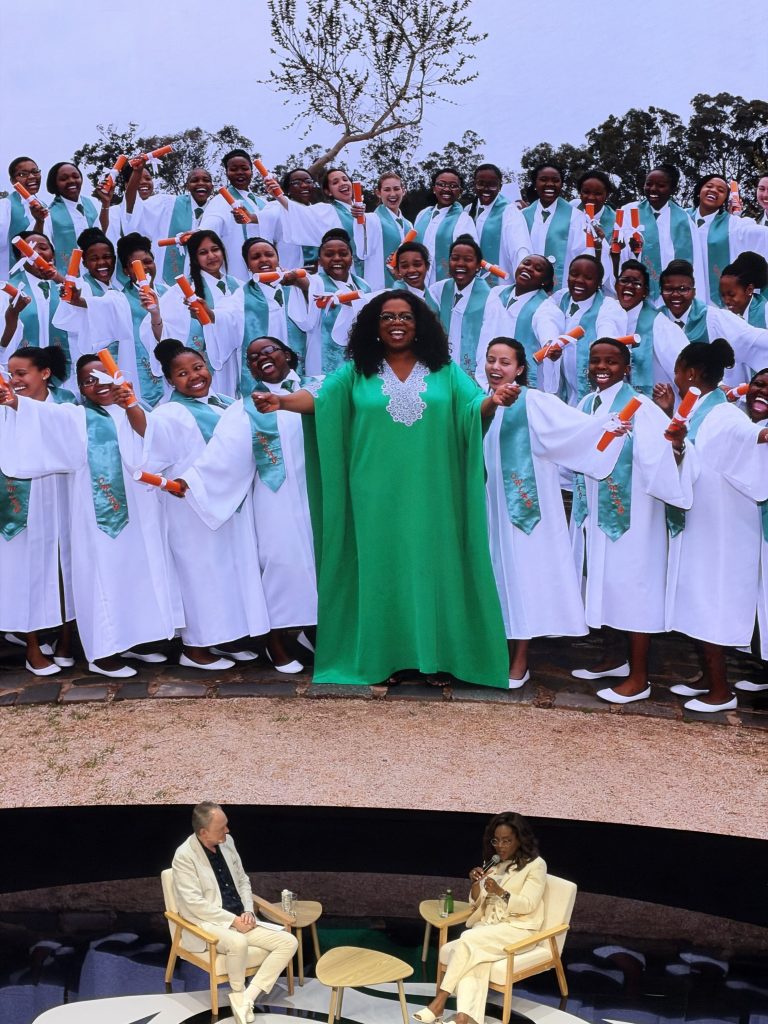
Every recap named the Oprah Winfrey Leadership Academy for Girls in South Africa, and MediaPost noted the University of Cape Town finding that it had interrupted poverty, with hundreds of graduates going on to college. Deadline traced the school back to the nuns who showed up at her house one Christmas and let a 12-year-old know she mattered. Both are right.
The hinge moment between the two did not make the page.
After Nelson Mandela hosted her for 10 days, Oprah floated building a school in his name. He refused the credit. “You shouldn’t build a school in my name,” she recalled him saying. “You should build a school in your name.” Then he picked up the phone and called his Minister of Education on the spot. She had imagined doing it somewhere down the road. The call moved it to the present.
She was deliberate about the form it took. “I wanted to create a model of success and access,” she said, “so they would literally see themselves differently.” It is a small scene with a large lesson about how intentions become real things. Someone with standing refused to let her defer, and turned a someday into a commitment with a single call.
A few smaller moments worth remembering
There were lines the recaps had no room for that are worth saving.
On legacy, the trades ran the phrase “every life you touch,” but not the full litany Maya Angelou gave her over a bowl of biscuit dough. “Your legacy is every life you touch,” Oprah recalled her saying. “It’s everybody who decided to go back to school because they saw a show. It’s every woman who watched a show on domestic abuse and made a plan to leave. It’s everybody who got a better bra because you did a show.”
On topping a list of self-made Americans, she kept good company and a sense of humor about it. “I was number one on the self-made list for living people. Abraham Lincoln was number one historically,” she said. “Abe and I share the same spot.”
She remembered a child once asking her, after a talk about her childhood with no running water or electricity, “Did you know Abraham Lincoln?”
And she traced her first taste of excellence to a third-grade book report she turned in two weeks early. “That’s when I realized what being excellent is,” she said. “When you do things that are unexpected and really good, people tell other people.”
Her close landed on the same note of wonder she had carried all morning.
“It’s incredible that you are you. It’s incredible that I am me.”
Why the fuller record matters
None of this is a knock on the coverage, which was fast, fair and, in PRovoke’s case, genuinely deep on the method. It is a reminder that even good reporting compresses, and a talk full of mechanism tends to survive as a handful of conclusions.
In a search landscape where AI systems increasingly summarize the summaries, the compressed version is the one that hardens into record. The connective stories do not disappear because they were unimportant. They disappear because no one had room to carry them.
Oprah’s own argument runs the same direction. Influence is not built by reaching for the line that travels. It is built from intention, tested on real stakes, and used in service of someone other than yourself.
Fourteen years of Philip’s emails, it turns out, were worth the wait for the version of the story that lives underneath the headlines.