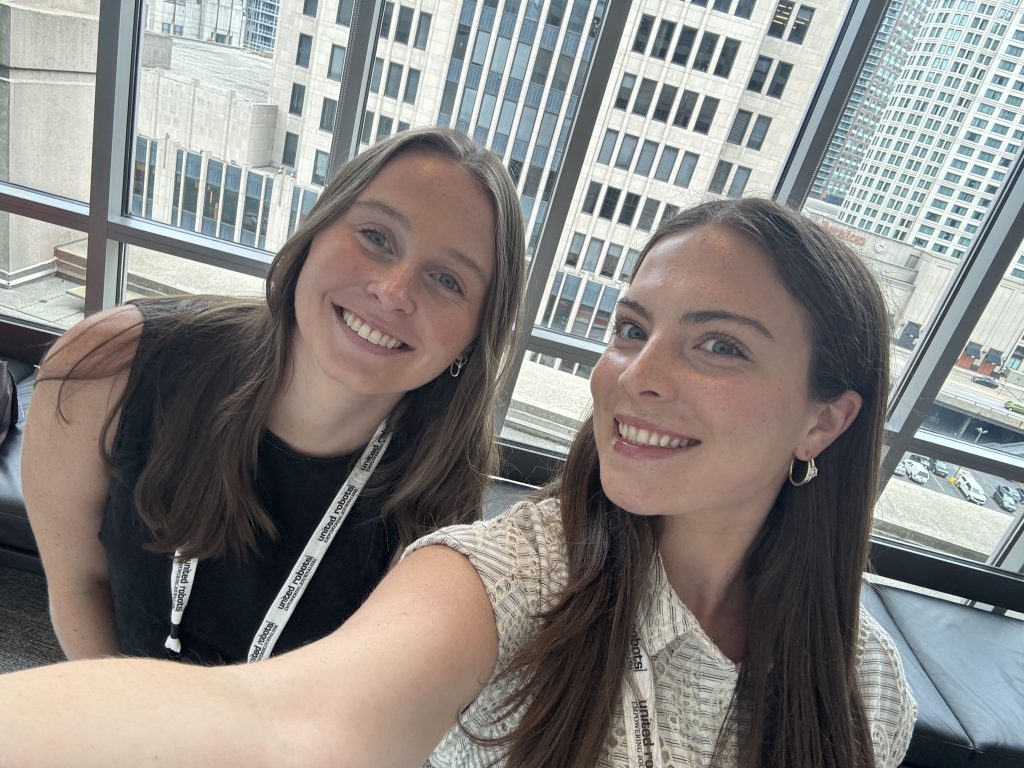
Last month’s Local Media Fest 2026 in Chicago was a great opportunity to connect with newsroom leaders, reporters, and other media professionals to learn what is working and where local newsrooms can adapt to keep up with an ever-changing industry.
Newsrooms are rethinking who they partner with and how they build trust with readers.
For PR professionals, that shift changes what a good pitch looks like.
My colleague Sara Walsh earlier this week blogged about this event and local media trends.
Here’s my take and why these takeaways are worth building into earned media strategies.
1) The Rise of Vertical Video
The way news is consumed has evolved from print to digital and now to social media.
Throughout the conference, the words I heard the most were “vertical video.”
Social media and short-form news video have allowed younger audiences to have news served to them organically rather than seeking it out. Mike Beaudet and Lisa Thalhamer, researchers from Northeastern University, found that YouTube, Instagram, and TikTok were the three top daily news sources for audiences 18-34 years old. Many speakers encouraged local newsrooms to tap into these mediums to help attract a wider audience.
Jennifer Chang, senior director of digital experimentation and innovation at the Houston Chronicle, spoke about her experience partnering with local food creator @ShawntheFoodSheep to highlight its upcoming Top 100 restaurants. Chang noted that Shawn saw an increase in traffic to its website after posting a new video referencing the list.
However, many local news correspondents noted that they don’t have the resources to hire content creators, and they struggle to find the bandwidth to create these videos on their own.
Offering visual assets, behind-the-scenes access to a project, or a spokesperson video that the reporters can repurpose can go a long way toward getting local news coverage. PR can help.
2) Local Data-Driven Pitches
Audiences are hungry for data-driven reporting, according to event speakers, who shared that they are seeing increased readership for data-driven articles. In addition to increased readership, articles see more engagement as people want to share their thoughts and comments about the data, especially when it relates to their local community.
Data-driven pitching is not a new concept. But here’s the twist. Data is often collected on a national or state basis. Few companies provide media community-specific data. Localizing national survey data for local media pitches holds more weight for local media and their readers. One more thing: Reporters at the event noted that the data can be more impactful if there is a spokesperson who can continue the conversation and back up the data that is found.
3) The Wave of AI
Not surprisingly, AI was also a focus at the event.
Nikita Roy from Newsroom Robots emphasized the importance of local newsrooms embracing AI. She compared this new wave of AI to social media. Local newsrooms have used social media to their benefit, she said. She encouraged local newsrooms to do the same with AI, which can deliver news in more personalized ways, from AI-generated summaries to translation tools.
Managing Editor Shane Benjamin shared that The Durango Herald, a Colorado-based publication, has been experimenting with how AI could support the media outlet’s team and its readers. It created an animated sasquatch, Harold, to be the face of its AI chatbot. Readers can use Harold to navigate archives, ask questions, and submit news tips. Harold is streamlining the publication’s internal workflow as well, helping readers get their news more quickly.
As newsrooms are learning to embrace AI, PR professionals must get ahead of the curve. Pitches may increasingly be filtered, summarized, or surfaced through AI systems before a human reporter ever sees them. This means PR teams need to structure pitch materials, data, and press releases for AI summarization so they’re easily digestible for both AI tools and reporters.
AI tools like ChatGPT also consume the earned media coverage that results from PR professionals’ pitching, giving companies yet another reason to collaborate with PR agencies.
4) Authenticity, Transparency and Trust
A recurring theme during the conference was the need for transparency and authenticity.
As my colleague noted in her earlier blog, Dean Baquet, the former Executive Editor of The New York Times, kicked off the conference emphasizing this sentiment. Baquet encouraged local newsrooms to be transparent with their audiences about how they’re getting their information and the obstacles the media outlet faced in getting that information. Trust builds when you include your audience in the process, sharing details of the work taking place behind their news.
Baquet also encouraged newsrooms to be honest about why old systems aren’t working.
Authenticity can also help local media outlets build trust with their audiences. Beaudet and Thalhamer noted that younger audiences value authenticity over perfection. Speakers at the event encouraged reporters to act as if they were on FaceTime with their audience.
These same principles apply to PR. Building trust with local reporters through transparency and responsiveness can lead to longer-lasting media relationships. One way PR professionals can do this is by offering reporters behind-the-scenes previews of client projects or survey data.
What’s Next?
It’s a pivotal time for local media. As the local news industry evolves, PR has to follow suit.
Local newsrooms need pitches that are relevant to their communities, backed by data, and delivered with visual assets. Companies and PR pros that support them can create meaningful relationships and help their own businesses, local media and communities grow stronger.