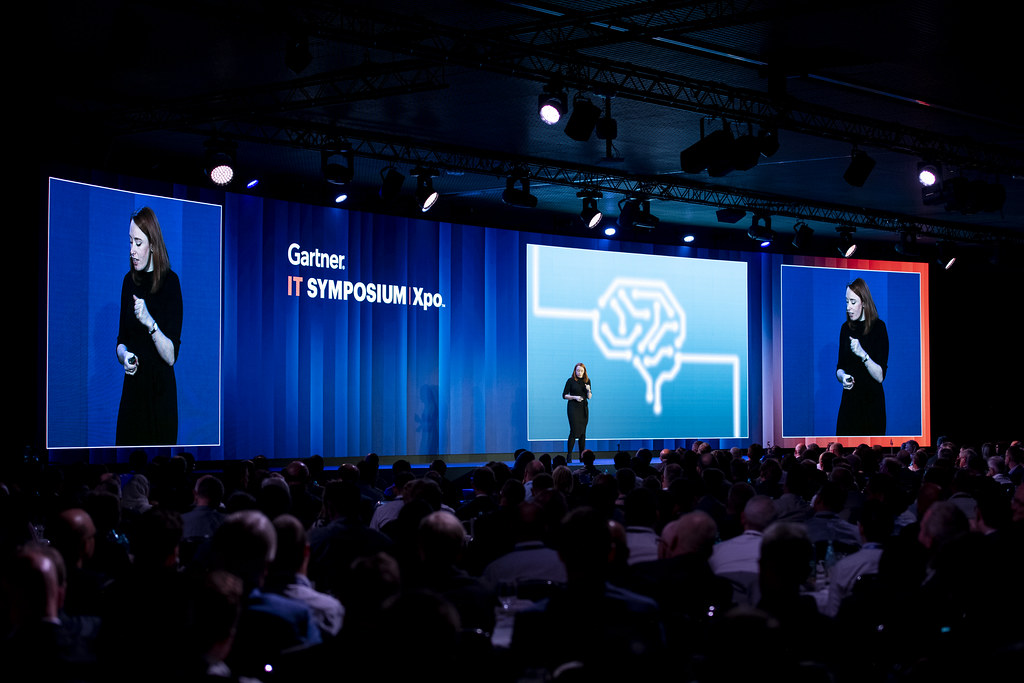
You could hear it before anyone said it from the Cannes Lions stage. As the NBCUniversal session opened with another long stretch of sizzle reel, the whispering started a few seats over.
“How long is the b-roll going to last?” one attendee muttered. Another, glancing down at the program, was blunter: “Do I need to be introduced to Colin Jost? That’s why I’m here.”
The impatience was earned. The lineup was about as strong as a media company can field: Alan Cumming, Rachel Zoe, Colin Jost and Seth Meyers. They were brought together to talk about fandom, franchise and how entertainment travels beyond the screen. The slot was 30 minutes.
These people don’t need an introduction. In a room full of marketers, they are the introduction.
Yet the session leaned on extended sizzle reels and a corporate set-up before the talent could say a word. By the time Cumming reached his microphone, he opened with a line that summed up what the room was already muttering: “One minute 16 seconds, so we’ve got to get going.”
He was joking. He was also right.
Because once they got going, the material was very good, and there was not enough of it.
Zoe and Cumming on fame, fashion and the south of France
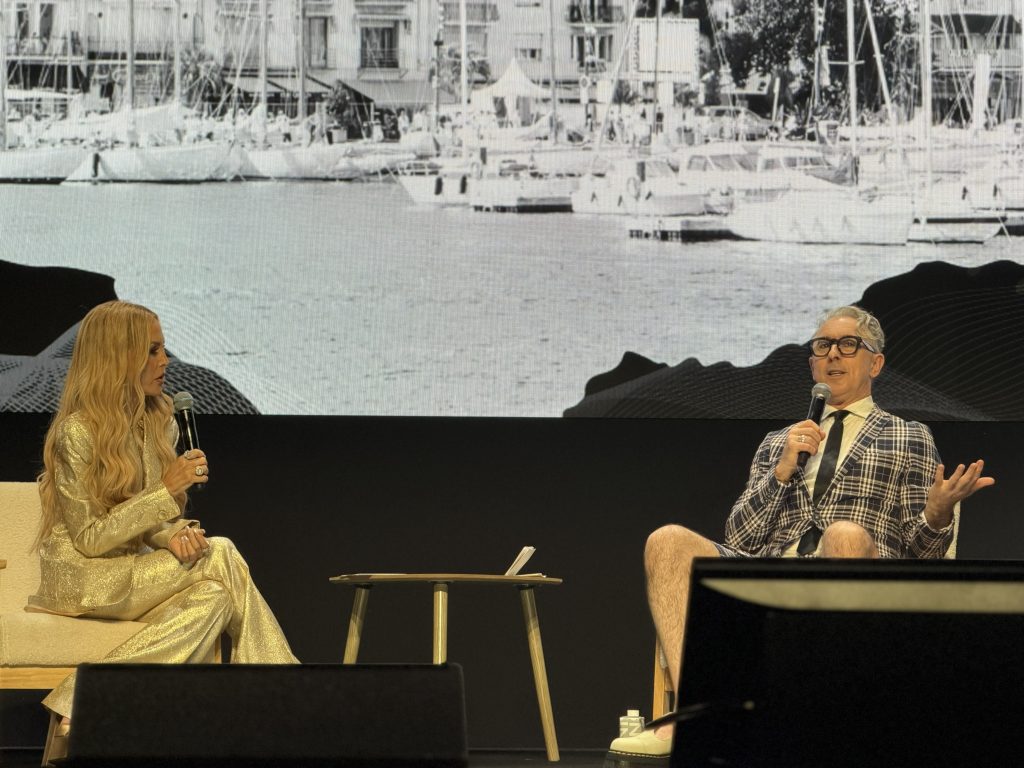
Cumming set the tone immediately, declaring he had already mentally checked out into Riviera retirement. “I’ve already retired to the south of France,” he said. “I just feel I’ve been retiring since I got here. This is my happiest place.”
Zoe, at her first Lions, was happy to join him there. “I want to retire to the south of France, starting tomorrow morning,” she said.
The two then did something more useful than any clip reel could: They compared the ad festival to the film festival in real time. The Lions crowd is “much more crazy,” Cumming said. Zoe agreed, saying it’s the kind of room where “everyone is amped and wants to meet each other.”
Zoe, back on television after roughly a decade away, explained the timing in a line that doubled as a thesis for the panel. She comes back to TV when she has something to say.
Then she added that right now “I have a lot to say.”
She was sharp on how the speed of culture has rewired the business. In her first run on television, a knockoff took time. Now anything someone wants to copy “can happen like wildfire,” she said, calling it “both extraordinary and terrifying.”
The fashion calendar itself has collapsed. “There’s no season,” she said. “Everyone just makes things, drops them, makes things, drops them.” Something can travel in 60 seconds in a way that is “really incomprehensible,” she added.
Her most practical moment? The advice she gives her own kids. “Whatever you text can and will be used against you at any given time, in a court of law or a classroom,” she noted.
Cumming made the case that his “The Traitors” wardrobe is doing real cultural work, well beyond camp. He traced the character back to a pitch about a “Scottish laird, a dandy,” and admitted the looks keep escalating to the point that he once appeared dressed as a coffin. He compared the spiral to Liberace having to keep topping himself.
Then he turned serious, and this was the moment that traveled furthest. “I, as a middle-aged man, rock up in a weird, feminine outfit from time to time, and I think it’s a really positive thing,” Cumming said. “I like the fact that we’re hopefully changing people’s attitudes.”
On why “The Traitors” hooks people, he was funny and a bit dark. Audiences “love watching other people in the throes of psychological torture,” he said, with the real draw being the opportunity to study deception up close. “We all lie every day,” he said. “I’ve lied several times since we came on stage.”
Jost and Meyers on deadlines, danger and live TV
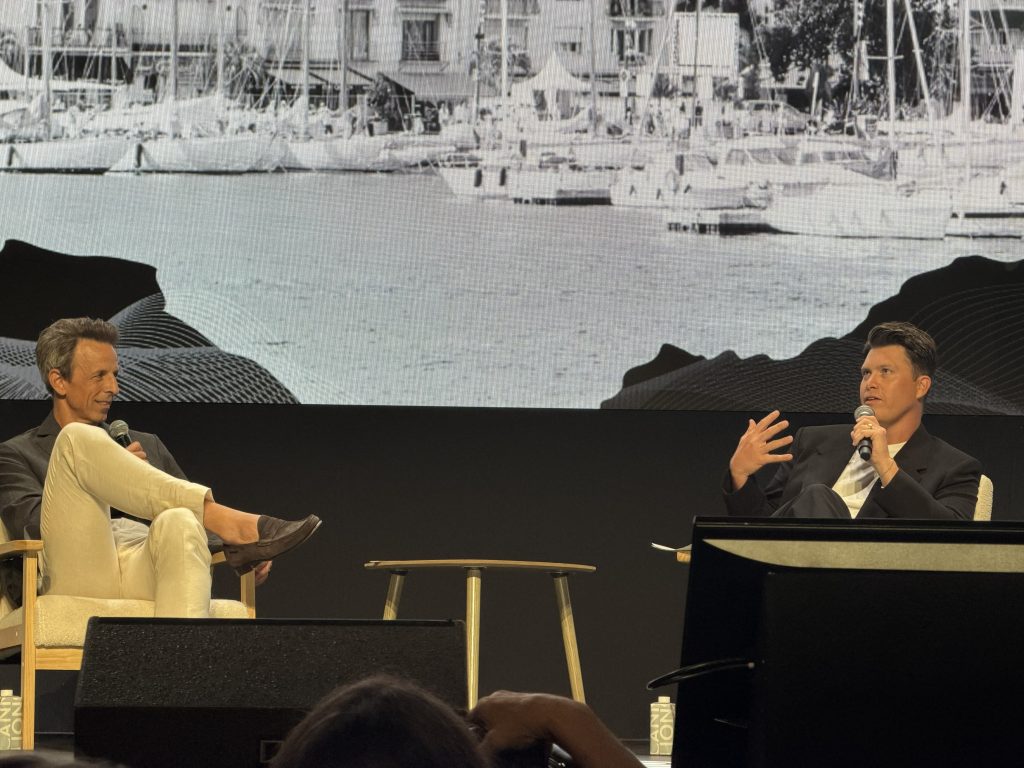
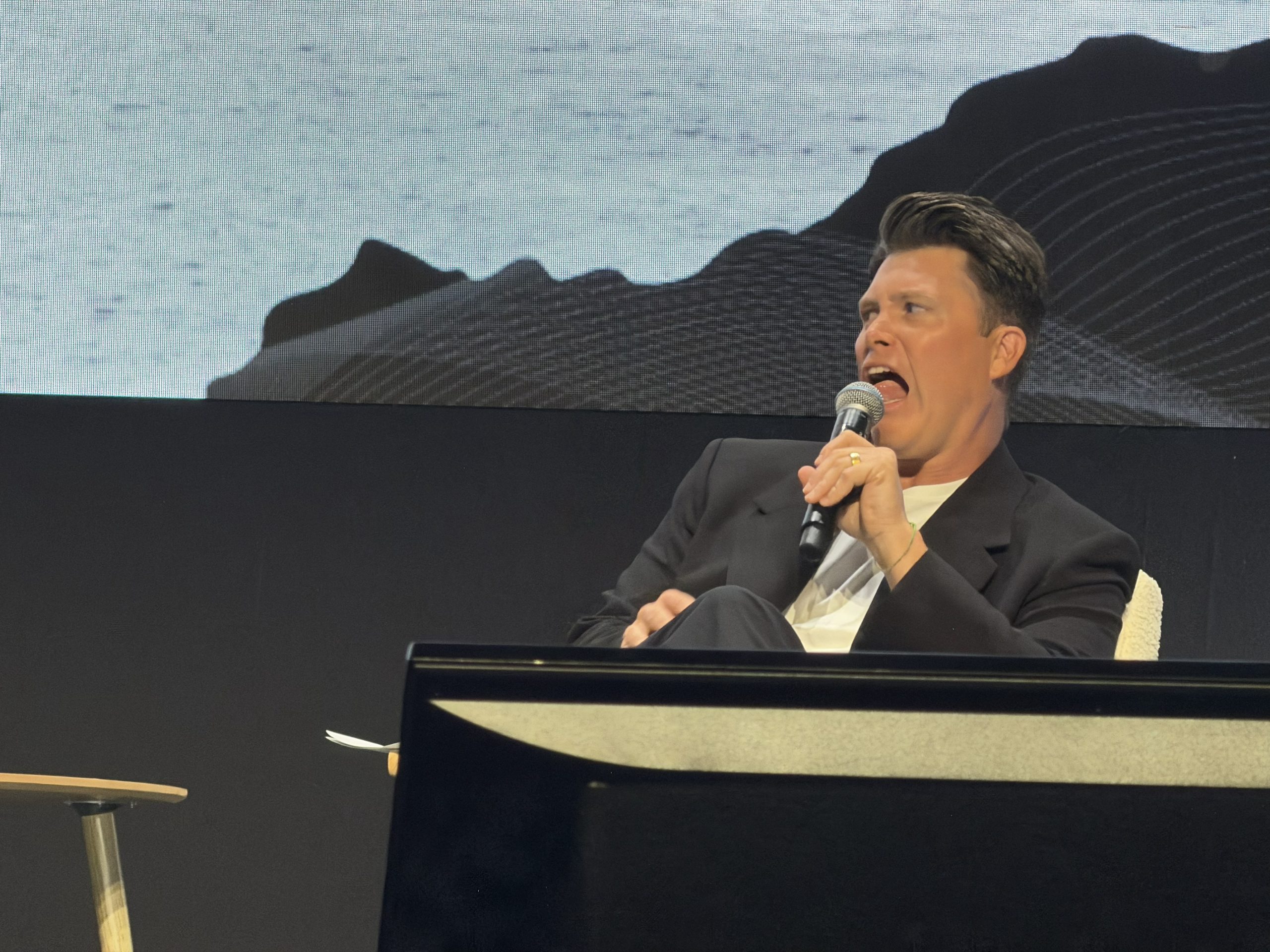
The late-night half arrived under visible time pressure. That’s a shame, because Jost and Meyers were loose and quotable from the jump. Asked whether Cannes has become too commercial, Jost said the question was “sponsored by T-Mobile.”
Both emphasized the value of deadlines. Jost said the “Saturday Night Live” clock is a gift disguised as a threat. “Sometimes it’s a regular clock, and sometimes it ends up being a bomb,” he said. The pressure forces you to make something, he said, adding that he admires creators who produce without built-in deadlines. The other engine is peer pressure, Meyers added, the pull of being surrounded by writers you respect and wanting to show up every week.
Jost’s advice for getting into comedy was the most genuinely useful thing said on either side of the session. Find other people who care about it as much as you do, he said, “because they’re going to push you to get better.”
The richest exchange was about how dangerous live television still is. Meyers, who left “SNL” in its 48th season, said the show’s joke swap bit is “so genuinely dangerous in a way that live television rarely is outside of sports.” Jost confirmed the stakes with a story about his parents watching at home as a surprise photo loaded next to him on air. They thought, he said, “Oh no, they’re gonna kill him, his whole career is over.”
He also pushed back on anyone who thinks the show is taped. “People don’t believe me. It’s live. It’s Saturday Night Live.” He quoted Chris Rock calling it “the last place on television.”
Meyers closed with the one line that actually answered the brief about why these shows endure. Audiences come for catharsis, he said, for proof that you can talk about hard news without letting it break you. “There’s a way to still have joy,” Meyers said.
That is the quote NBCUniversal flew four stars across an ocean to deliver.
It landed with about two minutes left.
The journalists noticed the squeeze too
The room’s restlessness showed up in the coverage, too.
Joe Mandese, editor in chief of MediaPost, filed a same-day article anchored entirely on the Cumming and Zoe Cannes-versus-Cannes exchange. He then openly wondered whether Jost and Meyers were even part of the session, joking they may have gone to the wrong festival.
When an editor in the room can lose track of half your headliners, the format is the problem.
Deadline, meanwhile, skipped the brand material altogether and built its coverage on Cumming’s point about the gothic and queer aesthetic of “The Traitors” shifting attitudes.
Two outlets, two stories, and not one of them generated by a sizzle reel.
The takeaway for anyone producing talent at a festival
When you book names this recognizable, production’s job is to get out of the way.
Sizzle reels exist to warm up an audience that needs context and a reason to care.
This audience walked in already caring. Every second spent reintroducing Cumming to a room that came to see Cumming is a second taken away from the charismatic and clever Cumming.
My advice? Protect the minutes. Trust the talent.
The most quotable, covered and shareable moments will come from the people on the stage, and they will come faster and land harder if you let them start talking sooner.
Cumming gave the producers the note himself, in the first 16 seconds.
We’ve got to get going.