What would you ask the most awarded woman in PR?
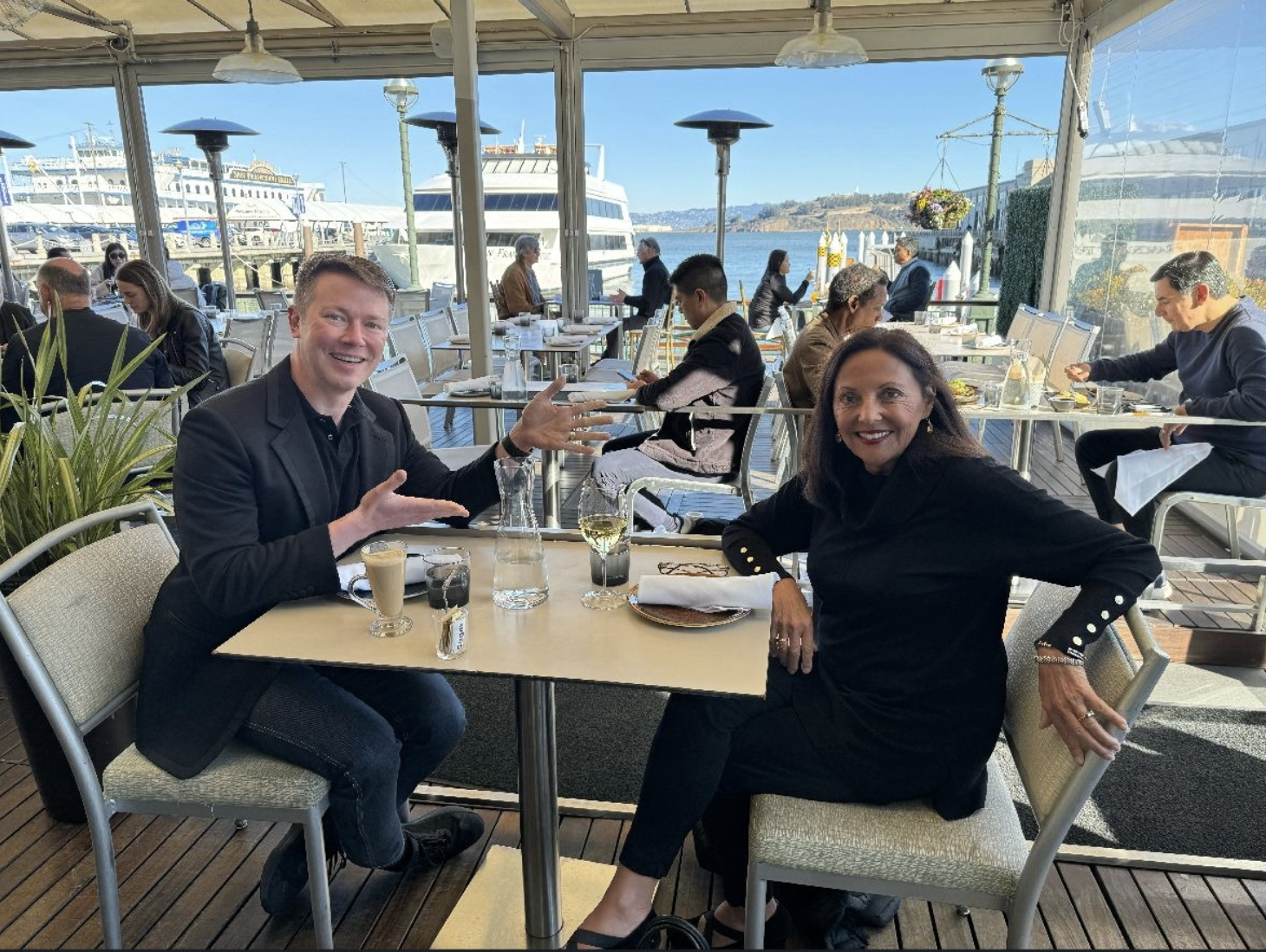
Betsy Solfisburg Quinn built Ketchum’s reputation as an award-winning creative powerhouse. During her first year as the agency’s global awards director, she produced 35 entries for the Cannes Lions International Festival of Creativity. She estimates she produced anywhere from 15-20 campaigns every year after that over the course of a decade.
When I met her for dinner at La Mar in San Francisco, I asked: “What’s your favorite award video?”
She thought about that carefully while finishing her ceviche and smiled: “Pink Ponies.”
“Pink Ponies” is not an actual award-winning submission. But it diminishes the video’s greatness to say it’s merely a parody.
Using the same format most award-winning case study videos adopt, “Pink Ponies” presents the:
- Challenge: “Make Chelsea Bedano’s 8th birthday party a succession an already cluttered birthday market”
- Creative idea: “Research showed that Chelsea liked the color pink and ponies, which gave us her big idea for the party: pink ponies”
- Tactics: “We created early word of mouth buzz by targeting the three most popular kids from Chelsea’s class and inviting them to a sleepover one week before the party”
- Crescendo: “New media as well as traditional techniques were implemented to keep our audience engaged, but to reinforce the core idea, we went a step further. Enter the mini-pony”
Just like many campaign videos, it equated its small win to something bigger: “In the end, we didn’t just create a birthday; we created a birthday movement.”
As a judge myself, this video ticks several boxes. It’s not one of those non-narrated words-on-screen visual assaults that countermands the benefits of video by insisting I read it like a book. It’s also mercifully not set in New York, like most videos I’ve viewed as a judge, nor does it position doing anything in New York as emblematic of a strategic decision. If there’s one bone I would pick, it’s that the language is too heavy in marketing-speak.
But that’s why it’s hysterical.
“The inside joke across the industry was, and still is frankly, that the case film has to be better than the work itself,” Quinn told me that day. Back in 2013, “Pink Ponies” was making the rounds as what she calls a “farcical primer” on how to structure a winning entry.
It challenged the industry to consider whether submissions were simply a master class in creative manipulation.
Then AI made it worse. In June 2025, Cannes Lions revoked its first-ever Grand Prix after Brazilian agency DM9 was caught using AI-generated footage, including a fabricated CNN Brasil news clip. Quinn’s response: “AI-generated films raise legitimate new concerns about truthfulness. An ethics check and reckoning are long overdue.”
So, with all this cynicism, manipulation and outright fraud, why chase awards at all?
Because AI Changed the Game
Here’s what most people miss: The same AI technology that’s enabling awards fraud is simultaneously making awards more valuable than ever.
Generative Engine Optimization (GEO) is reshaping how brands are discovered and evaluated. When someone asks ChatGPT, Perplexity or Claude about your company, these AI platforms don’t just summarize your website. They scan for authoritative signals to determine what’s credible and worth mentioning.
Industry awards are among the strongest signals AI platforms recognize.
This isn’t theoretical. At Bospar, we’ve built our Audit*E product to analyze how AI platforms represent brands across eight major engines. The pattern is clear: Awarded companies get more prominent placement, more detailed descriptions and more credible positioning in AI-generated responses.
Think about what this means. Traditional Google search required active research.
Someone had to know to look for you. But generative AI platforms surface brands proactively when answering questions. “What are the leading PR agencies in AI?” “Which companies are innovating in fintech?” “Who are the experts in healthcare communications?”
If you’re not winning awards, you’re not in those answers. You’re letting competitors own the narrative in the AI-generated summaries that increasingly shape how prospects discover you.
The Business Case Is Real
This isn’t just about vanity or visibility. Awards drive measurable business outcomes, particularly when combined with strategic amplification.
Take RealSense, the Intel spinoff that AI platforms kept declaring “dead” or “defunct.” We built a campaign correcting these platforms, generating 500 media placements in a week, 2.2B impressions and a 4x website traffic spike. The subsequent award wins didn’t just validate the work. They became new data points that AI platforms incorporated into their understanding of RealSense, fundamentally changing how the company appeared in AI-generated summaries.
Or consider San Francisco Pride. After losing $2 million in corporate sponsorships, the organization needed credibility for its pivot story. Awards helped validate the turnaround narrative and contributed to raising $2.5 million in alternative funding. More importantly, the recognition became part of how AI platforms described San Francisco Pride’s resilience and community leadership.
The pattern holds across our client portfolio. Parametrix’s 25,000% traffic spike during the CrowdStrike outage. SignalFire’s category-redefining Fast Company win that generated 268 media hits. These aren’t just nice wins. They’re credibility signals that compound over time, particularly as AI platforms index and reference them.
At Bospar, we’ve won over 250 awards from PRWeek, PRNews, PRovoke, Fast Company, Fortune and Inc. But we don’t treat them as shelf decoration. We amplify every win on social media and in media, ensuring maximum visibility. Because we understand that in the GEO era, awards aren’t the end goal. They’re fuel for the larger credibility engine.
The Integrity Imperative
This creates a paradox. Awards matter more than ever, precisely at the moment when they’re most susceptible to manipulation.
The answer isn’t to abandon awards. The answer is to pursue them with integrity.
That means entries anchored in truth, backed by verifiable data, showing real results. It means case studies that celebrate actual work, not fairy-tale versions of it. And it means understanding that AI platforms will eventually get better at detecting inflated claims and fabricated results.
Quinn is right that an ethics reckoning is overdue. But that reckoning should drive us toward better practices, not cynicism.
Because here’s the reality: We’re at an inflection point. The next five years will determine how AI platforms understand and represent entire industries. The companies that win awards now, with integrity, will establish authority that compounds as AI becomes the primary discovery mechanism.
The companies that sit it out, or worse, that game the system with fabrications? They’re either invisible or discredited in the AI age.
What This Means for You
If you’re not entering awards, you’re making a strategic choice to cede authority to competitors. You’re choosing to be absent from the AI-generated narratives that prospects increasingly rely on.
And if you are entering awards but treating them as afterthoughts, you’re missing the amplification opportunity. The award itself is just the beginning. The real value comes from making sure that recognition becomes part of how AI platforms, media outlets and prospects understand your brand.
Yes, the system is imperfect. Yes, some people will cheat. But the answer isn’t to opt out.
The answer is to show up with integrity and make sure your real work gets the recognition it deserves.
Because in the age of AI, awards aren’t vanity. They’re the credibility signals that determine whether you exist in the conversations that matter.