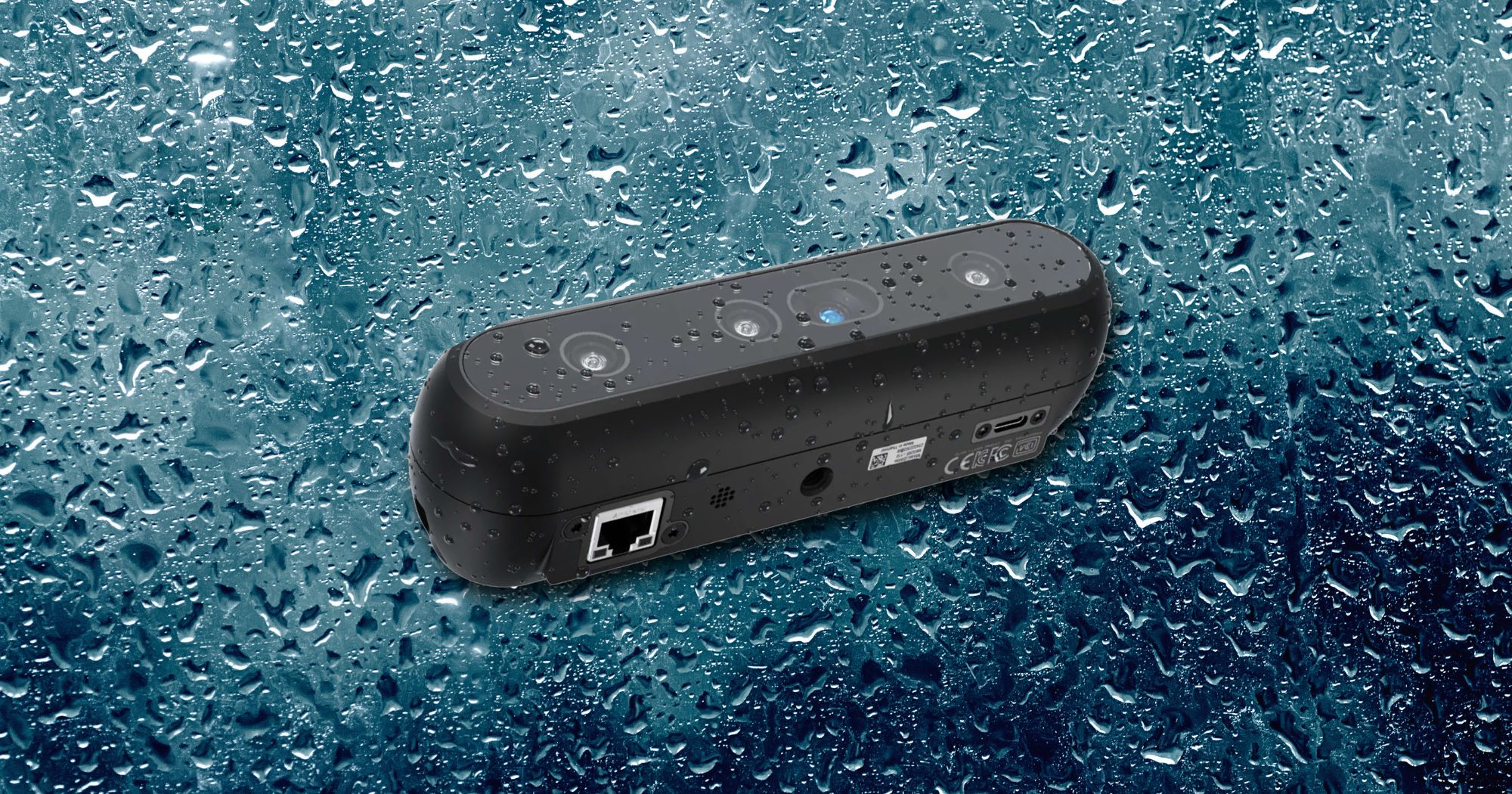
When we discovered AI platforms were declaring our client RealSense dead, we faced a problem no public relations playbook had prepared us for.
There was no 1-800 number to call ChatGPT. No editorial department to ask for a correction.
We needed to invent a solution from scratch.
That solution became Audit*E, and the media response has been remarkable.
From Client Crisis to Industry Conversation
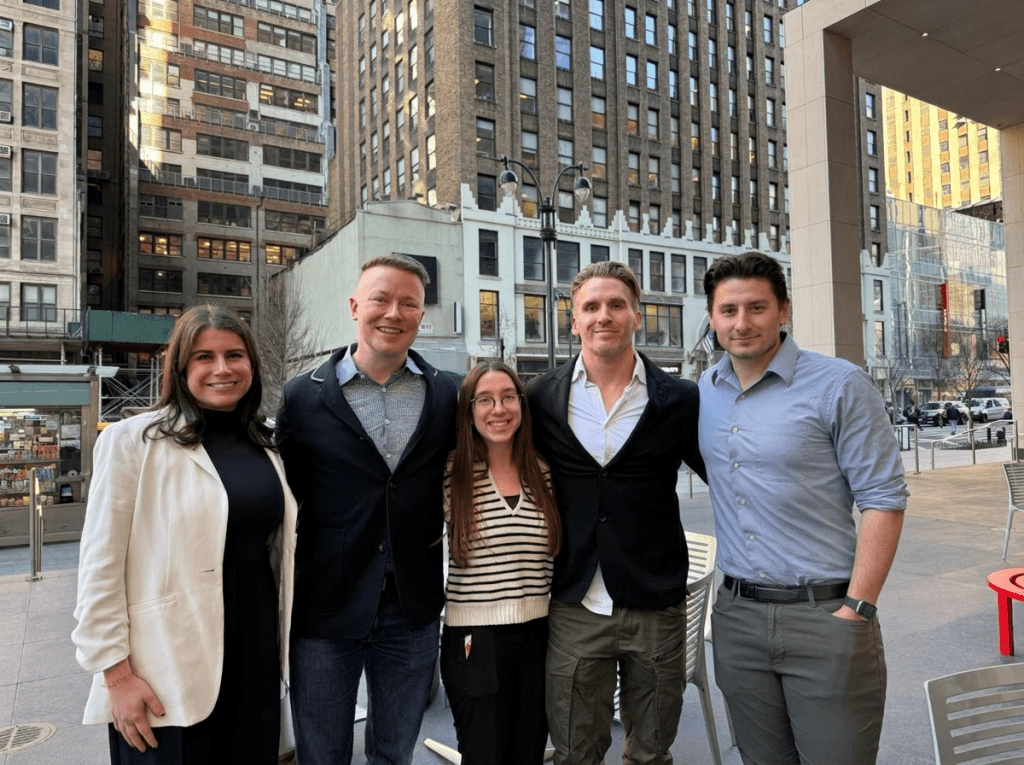
I recently discussed this shift (twice!) with Jane King at the New York Stock Exchange. The setting, the epicenter of American business, felt appropriate. We talked about how the fundamental way companies compete for visibility and credibility is being completely rewritten.
The media interest reflects a deeper anxiety across corporate America. According to our research, nearly half of professionals believe AI platforms will completely replace Google for business research by 2030. That’s not a distant future scenario. That’s just five years away.
Yet, according to McKinsey, only 16% of brands systematically track AI search performance.
While companies have spent decades mastering SEO, building their Google rankings and perfecting their search strategies, the rules have changed and most are woefully unprepared.
The Wake-Up Call That Launched a Movement
RealSense became our Audit*E proof of concept. The company was spinning off from Intel with a $50 million funding round. We secured more than 500 media stories, quadrupled its website traffic and generated a surge in social activity. By traditional measures, it was a PR success.
Yet just as we were working to increase brand awareness with our PR campaign, and succeeding in driving media engagement through journalist outreach, we discovered a problem.
When people asked ChatGPT, Claude, Gemini or Copilot about RealSense, each one provided a version of the same answer: The company was defunct. No longer in business.
We traced the problem to a 2021 news article that had misrepresented a restructuring. That single piece of misinformation snowballed when it was discussed on platforms like Reddit, an important source of content for training the large language models (LLMs) on which AI relies.
Solving this problem for our PR client required a multipronged approach that involved:
- Seeking a correction from the publication with the misrepresentative media coverage
- Changing the client’s website, including a new FAQ section addressing the closure rumor
- Encouraging the company’s executives to participate in trending robotics and AI conversations on social media platforms
More importantly, however, we recognized that no tool existed to systematically evaluate how AI engines such as ChatGPT presented a brand. What happened next? We built one.
Audit*E: Battle-Tested Technology on the Front Lines
Because AI is based on inputs from human beings, it still gets things wrong. But correcting these problems isn’t like sending a correction to an editorial department in a newsroom. It’s algorithmic and takes time to cycle through permutations.
We didn’t want to reinvent the wheel each time a problem like this happened. We wanted a ready-made solution that could find the problem and tell us how to fix it as quickly as possible.
Audit*E makes that happen by:
- Evaluating visibility, prominence and accuracy across 8 major AI platforms
- Offering company-specific dashboards that track changes over time, identify competitive benchmarks and flag sentiment shifts
- Providing users with the ability to schedule recurring audits weekly, monthly or quarterly to monitor their AI footprints
The Forbes Spotlight
Sandy Carter, COO at Unstoppable and a top AI entrepreneur, gave Audit*E extensive coverage in Forbes Digital Assets. She positioned our tool alongside other GEO solutions like Writesonic, Peec AI and droplinked as part of the new toolkit every modern company needs to achieve its business goals.
What resonated in her coverage was the link between PR and GEO. As I told her, AI platforms learn about companies through earned media in authoritative outlets. Earned media is the diet that AI munches on. If you’re not feeding the beast, you’re not part of the conversation.
Carter highlighted analyst Rob Enderle’s assessment that Audit*E is a critical strategic asset because it not only detects problems but also provides correction paths to fix them.
Josh Constine, a venture partner at SignalFire and former editor at TechCrunch, underscored the opportunity and the important role of GEO in public perception: “If you don’t know how your business shows up in results on ChatGPT and other LLMs, you’re missing a massive opportunity to influence customers. We’re advising portfolio companies that Generative Engine Optimization is the new SEO, and should be a core goal of any PR or content campaign.”
Business Insider: The GEO Gold Rush
Business Insider’s deep dive into the GEO landscape also positioned Bospar at the center of an emerging industry. The business, technology and finance website’s “The New SEO is GEO, and No One Really Knows the Rules” article captures both the opportunity and the uncertainty.
The media outlet detailed our client’s challenge and how our PR agency navigated it.
Reporters Lara O’Reilly and Geoff Weiss also placed our work in a broader context explaining:
- The rise of GEO has spawned a cottage industry.
- Former SEO experts are declaring themselves GEO gurus.
- LinkedIn and Meta feeds are flooded with ads from startups and consultants promising visibility on AI platforms.
- Adobe intends to acquire SEO and now GEO platform Semrush in a deal valued at $1.9 billion, signaling how seriously major players are taking this shift.
The article also captured healthy skepticism in the market. An applied AI researcher described it as “side hustlers and snake oil sellers with their tools already on the train and riding the hype.”
I was candid with Business Insider about the nascent state of the field. “It’s pretty early days in GEO and AEO for anyone to raise their hands and declare themselves as an expert. I think that’s a little rich at this point considering how new the science is.” That honesty seemed to resonate.
Our PR agency is not claiming to have all the answers.
We’re simply sharing what we’ve learned from solving actual problems for real clients.
From Monotheism to Polytheism
One concept that has gained traction across media coverage is the shift from search engine monotheism to AI polytheism.
The old days of SEO were relatively simple. There was one god: Google.
You optimized for Google. Companies built entire strategies around understanding Google’s algorithms and climbing those search rankings.
Now there are several major AI platforms:
- ChatGPT dominates through sheer market presence.
- Claude excels at writing and appeals to a broad audience beyond developers.
- DeepSeek from China is capturing the developer community.
- Perplexity, Gemini, Copilot and others all process information differently.
What works on one platform may fail on another.
Companies can no longer optimize for a single platform. They need strategies for an entire ecosystem of AI engines, each of which functions as its own independent arbiter of truth.
Answer Engine Optimization vs. Generative Engine Optimization
The distinction between AEO and GEO has become another key talking point.
Answer engine optimization is transactional. “What’s the capital of Texas?”
Generative engine optimization is narrative. “Tell me the story of Texas.”
GEO is the more persuasive form of the science, and persuasion is what drives business decisions. This matters because of how people, including your target audience, are using AI.
Customer Experience Magazine recently reported that “Gen Z’s New Shopping BFF is AI,” citing a new report indicating 33% of Gen Z shoppers now prefer AI platforms over traditional search engines for product research, while more than a fourth (26%) of Millennials do the same.
But it’s not just B2C companies that need to move with this sea change. B2B companies do, too.
New research from software company Responsive indicates one in four B2B buyers now use GenAI more often than conventional search when researching suppliers, and two-thirds reported relying on AI chatbots as much or more than Google or Bing when evaluating vendors.
When I searched for a CRM tool on Google, I got dozens of sites to explore. But when I asked AI platforms, I got a neatly organized table of the top five CRM tools personalized to my needs.
That made it easier for me, the buyer. But it’s devastating if your CRM company is not listed.
Surprising Insights That Captured Attention
Several research findings from our work generated particular media interest.
- The About Page: Most companies neglect their About page because consumers rarely read it. But AI reads everything. The About page has become one of the most critical pieces of digital real estate a company owns. This is where AI develops its fundamental understanding of what your company is and what it offers.
- The Physician Premium: When a physician is involved in a story, media coverage increases five times compared to corporate spokespeople. This speaks to trust in an era of information overload. And AI systems trained on human preferences reflect that same bias toward authoritative voices.
- C-Suite Early Adoption: Executives are adopting AI faster than any demographic, including younger generations typically associated with early tech adoption. This creates opportunity and risk. When a CEO asks ChatGPT about potential vendors and gets outdated information about your company, you’ve lost the deal before you knew it existed.
- Fortune 500 Interest: Nearly 70% of Fortune 500 communications teams are now testing GEO audits to measure how their brands show up in AI results.
The Subscription Model Story
As for Bospar, media outlets showed particular interest in our business model evolution.
Initially, we developed Audit*E for our own clients. But the interest was overwhelming.
We’re now rolling it out as a subscription service available to any company. This matters because the need extends far beyond big brands with substantial PR budgets. Small businesses, mom-and-pop operations and startups may not be able to afford traditional public relations services but still need to understand how they’re competing in an AI-mediated marketplace.
That said, what truly distinguishes our approach is the direct link between PR strategy and AI visibility. We’re not just tracking how brands appear; our public relations pros are counseling clients and securing earned media to help Bospar’s customers improve their standing.
These key takeaways from Muck Rack’s new research illustrate why that’s so critical:
- Most links that AI cites are non-paid coverage, and 25% come from journalist sources
- Press release citations have increased 5x since July
- Media outlet authority matters for GEO
Why Media Interest in Bospar’s Audit*E Matters
Bospar’s coverage in Forbes, Business Insider and on national TV represents more than publicity for our public relations firm. It validates that we’ve identified a critical business challenge.
Companies are anxious. They’ve spent decades building digital presence and search visibility. Now they’re discovering that AI platforms might be telling a completely different story about their brand. Or worse, no story at all.
The attention by media outlets is helping spread awareness of both the problem and solutions. It’s contributing to the broader conversation about how business can adapt to an AI-first world.
It’s also establishing Bospar as a thought leader in this space. Not because we claim to have all the answers, but because we’re sharing what we’re learning as we solve real client problems.
As I told Business Insider, it’s early days. The science is new.
But that doesn’t mean AI is coming eventually. It’s already here, and you need to be ready.
SEO alone no longer guarantees discoverability. Whether your company is doing a brand launch, launching a new product, or simply aiming to stay on the radar of customers and prospects to survive and thrive in an AI world, you also need to embrace GEO to ensure that your company appears in generative AI answers, social feeds and recommendation engines.