The end of the year is a time to reflect on what came before and what lies ahead.
This moment represents an especially poignant opportunity for Bospar.
Our public relations and marketing agency in 2025 celebrated 10 years in business.
Over the past decade, Bospar has enriched lives and our clients’ businesses.
In the process, we have become an award-winning PR agency, and we continue to thrive.
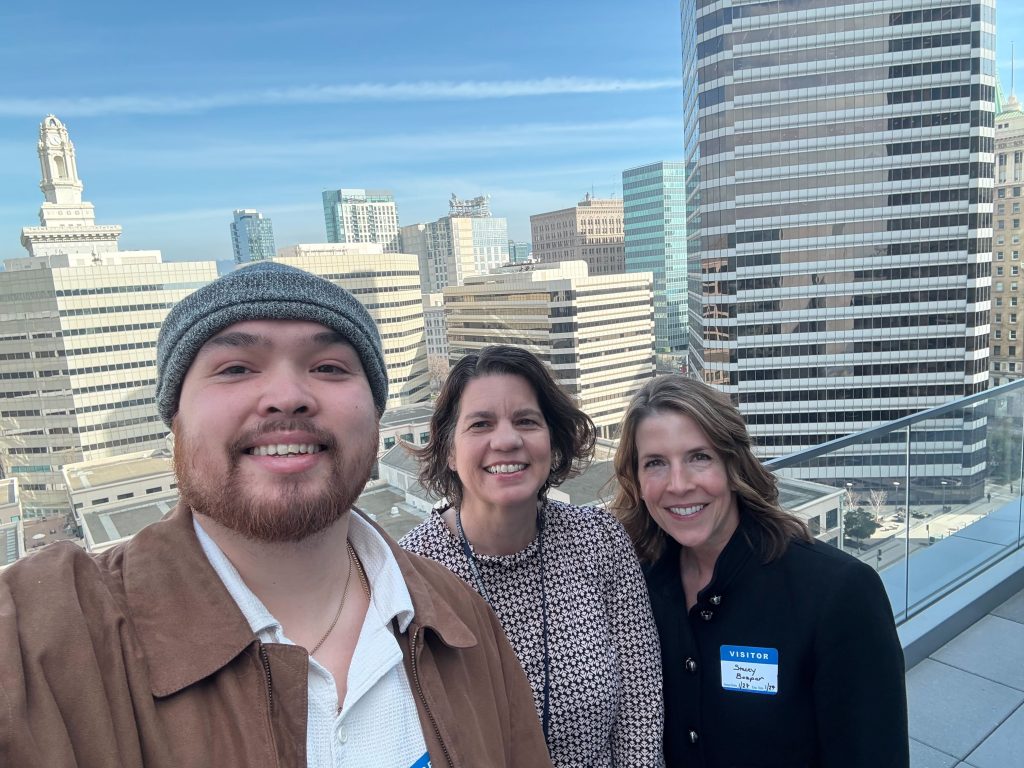
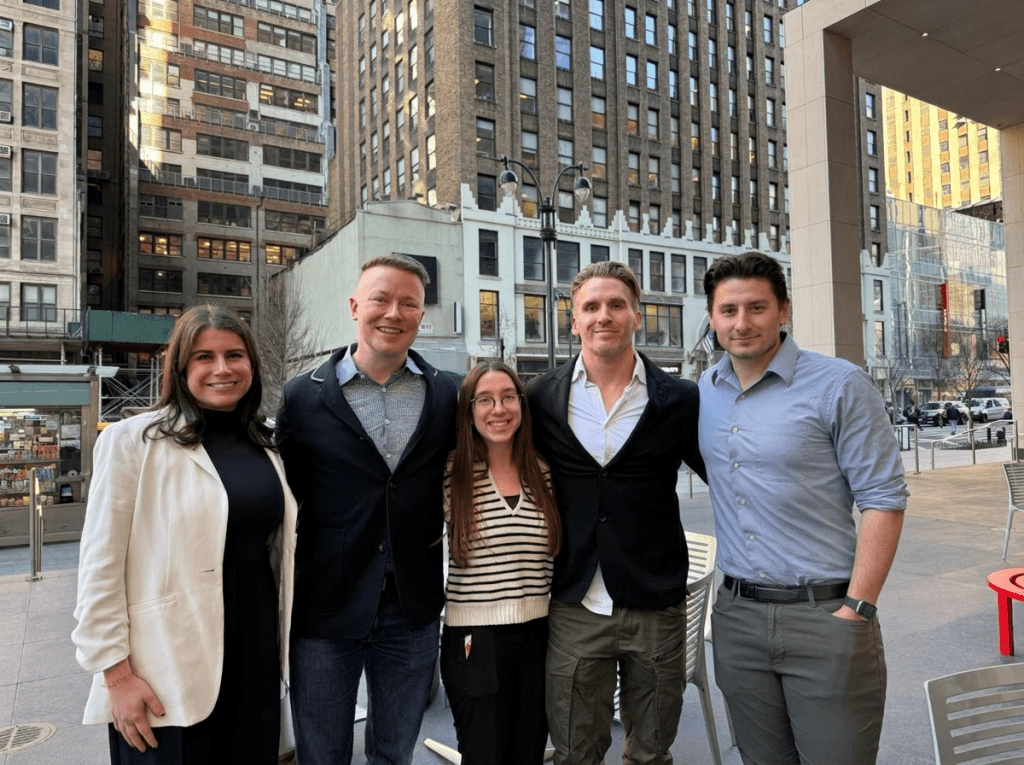
Bospar Principals Chris Boehlke, Curtis Sparrer and Tom Carpenter recently talked about what led them to establish this singular PR firm, what they’ve learned along the way and what’s next.
Below is an excerpt of the conversation.
For the full interview, check out Bospar’s Politely Pushy Podcast.
Economic ups and downs. COVID. VCs booms and busts. Did you think you’d make it to 2025?
Chris: When we started Bospar, we were thinking Bospar forever. But it’s been a heck of a 10 years, hasn’t it? That’s the kind of ride you’re always getting in the tech business. A lot has happened, but Bospar is always riding the wave, right in front of it. It continues to be exciting.
When you started, what was the goal? Where you aiming to reach a certain size by the 10-year mark. Or was it so overwhelming that you were just trying to get through the first year?
Curtis: We really had our heads down, making sure we were getting the work. But once we announced this new company, clients came out of the woodwork to work with us. It was a gold rush. We were just thinking about how we could capture all this new business and excitement.
Tom: The three of us have been together even longer than the 10 years. We came from a larger agency, which in many ways was less capable than what we are able to become, because we are directly involved in the client work. Bospar delivers senior-level work every day. That’s one of the driving forces for us where we thought, ‘Gosh, we really need to do this.’
Chris: When we first started, our clients made comments like, ‘We had to work with a big firm to get a little of you. Now you will be our client contacts. That’s pretty amazing.’ Really, that’s stayed the same at Bospar for the last 10 years. As an organization, we’re as flat as it comes. We love the business and doing the client work as much as we did the day we walked into it.
What’s the key to keeping that touch from leadership? How do you find that balance?
Chris: The size that we’re at now, in excess of $12 million a year, provides a lot of space to bring together people with all kinds of skills and talents. If you have a good team, it’s really easy to stay completely involved, whether it’s through regular meetings with the clients or internals. It’s also much easier to stay close to your clients virtually than it ever was in bricks and mortar.
Tom: Managed growth is really important to us. We are structured in a way that allows us to do that. We’ve not necessarily defined ourselves by practice areas as much as we have by working groups so that we can be involved in everything. That’s allowed us to be nimble enough to have even launched a new offering around AI search optimization and do other things that larger companies can’t get under development as quickly as we have. We know things are moving so fast right now with AI. What’s kind of defined the year behind us has been this gold rush, which we’ve been able to seize upon by hiring the right people and creating the right technologies.
Ten years ago, no one was talking about AI content. COVID wasn’t a thing. So many things have happened that have put businesses and industries out of business in this past decade. What have you had to course-correct on to keep your PR agency running successfully?
Curtis: Early on, we thought that we would have one person handle all of Bospar’s marketing. We found it just made so much more sense to distribute that work throughout the various teams. Remote work makes certain things a lot easier than if you have an office. That spirit of remote-first has really changed how we look at solving tasks and how we look at staffing teams. Nowadays, we think it makes a lot of sense to make sure that each team has people on both the East and West Coast because you want to ensure that your teams are getting that sort of start-of-the-news-day coverage. Whereas when we were first starting out, we were a little bit conventional in our thinking. For example, ‘This is the finance team; they’re all hubbed in New York. This is the tech team; they’re all hubbed in San Francisco.’ But since we have evolved, we’ve really seen the benefit of the virtual model in terms of how it is a client service multiplier.
Tom: We’re doing it in a way that maintains a specific kind of culture. Culture isn’t something you just proclaim, it’s something that you practice. We get together in groups all across the country all of the time. We are finding that has really helped a lot in terms of making sure our folks stay connected with each other and often even become friends outside of the workplace.
What about the next 10 years? You can’t do this forever.
Curtis: You can’t do it forever. But you can do it for a mighty long time. What else would we do? Sit on our duffs and do nothing? I just can’t imagine that. I was talking with my husband when one company with a really good reputation said that they would love to come ‘a knocking. He asked ‘What would you do? You don’t even have hobbies.’ When we worked with Tetris, we discovered a lot of people went back into tech because their wife or husband complained about them sitting at home watching TV. You have got to have a reason to do something every day.
Tom: There’s always something on the horizon here to get excited about. There’s a lot of opportunity here to become a leader in AI search optimization and growing our business in regulated industries like financial services and areas like cybersecurity. There’s so much happening that there’s no reason to stop because there’s always something exciting to do.
Chris: We have the best of all worlds here. We have a thriving business, and we’re having the time of our lives. Why on earth would we want to give up something like this?
Is there an aha moment, maybe a couple years into establishing the PR agency, where everything seemed to crystallize and you thought: this is all truly real and concrete.
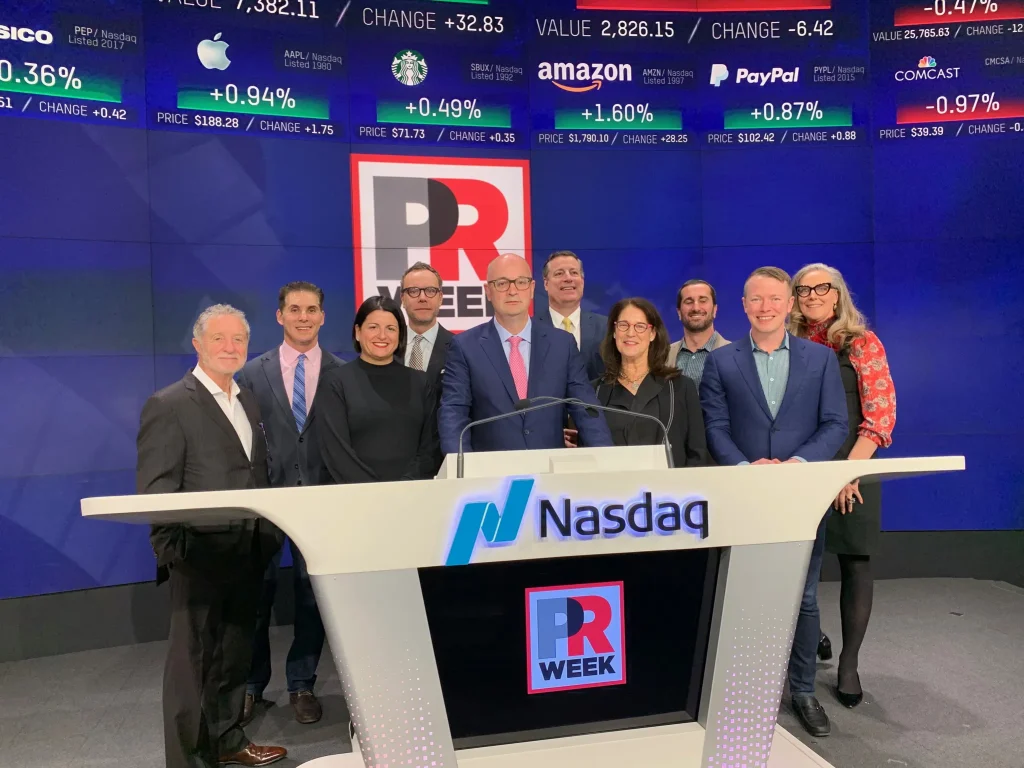
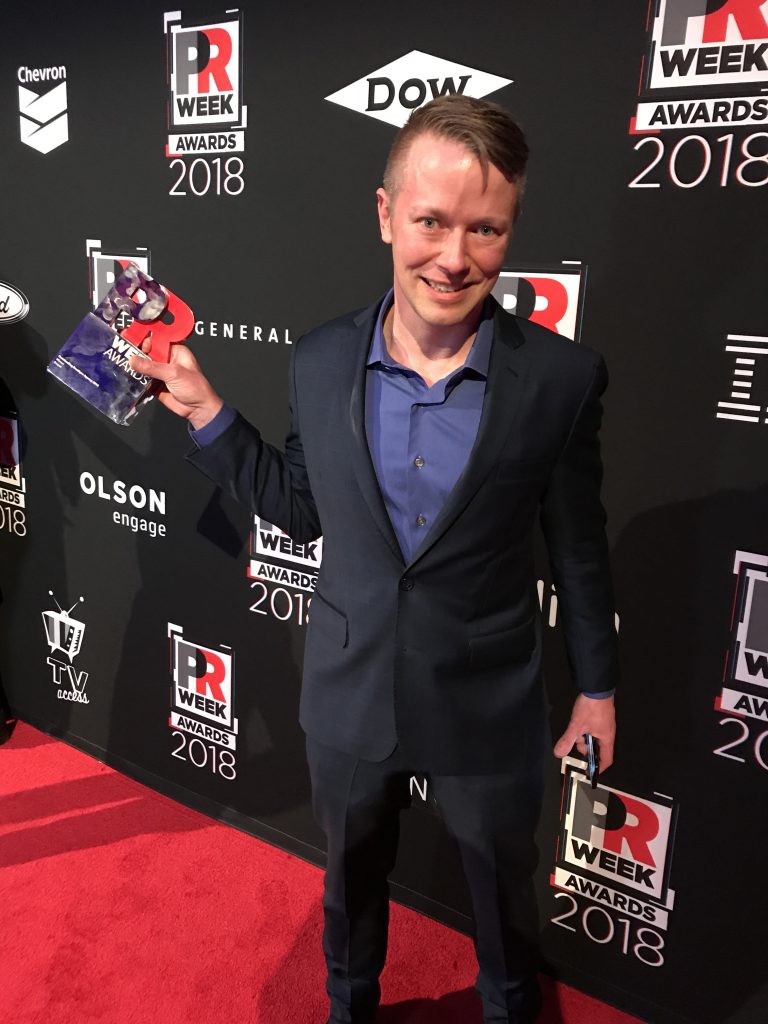
Tom: Winning PR Week’s Outstanding Boutique Agency award was truly a defining moment. Then we recently won the Best Place to Work awards. Those recognitions are real validators.
Curtis: The whole reason we started winning awards was when we were in a new business presentation and someone said, ‘I don’t know, I need my agency to swap ideas at the water cooler.’ Have you ever visited an agency water cooler? They’re disgusting. But that was the moment I thought, ‘We really need to show that we are award winning.’ Just today, as we’re recording this, we were nominated for 11 different categories by PR Week. We are keeping up with the biggest agencies in the world, which are hundreds of times larger than us. Because we don’t have a water cooler, we’re able to invest in people. That is what’s truly award-winning.
Chris: One of my best moments was about a year into this. We were virtual from the day we opened our doors, but we got together occasionally. We had about 20 people in a two-bedroom apartment. We held an all-day session in the living room, which was full of people and whiteboards. One bedroom was set up as a little conference room where people could use their cell phones to make calls in each corner. In the other bedroom, we had a photographer taking pictures because we hadn’t put any staff pictures on our website yet. Every room was just brimming with Bospar energy. We’ve had many wonderful experiences. But that, to me, will always encapsulate what we are. It still feels that way. It still feels as good as it did that day.
Was establishing a startup public relations agency harder or easier than you expected?
Curtis: I’m not going to sugarcoat it and say that it’s easy because it’s not. When you’re starting out, everything is a big deal. If you’re on a different call and someone’s calling you, someone might interpret that as you not having enough bandwidth. If a calendar invite has a Zoom line that is not correct it might signify to something that you don’t have the proper technology. The point is that when you start out, everything is a signal for something bigger. Sometimes that something bigger is merely your own fear or insecurity. To say that it is a walk in the park is frankly silly because there are so many things about starting a new business that you don’t know until you do it. Then, as you’re doing it, you need to create the muscle memory and the procedures so that you can do it the next day, do it easier, and get other people to do it too.
Curtis adds: Doing a podcast like Politely Pushy as a new business would be quite daunting because there would be all these other things to do. But because Tom, Chris and I have created a rich team who has muscle memory as well, we’re able to do things like this. That’s what really makes a company like this magical. We’re able to scale because we have a lot of trust with each other, and we’ve also brought up a lot of people to be as Politely Pushy as we are.
You mentioned that a job interview prompted you to start this unique PR agency.
Curtis: That’s right. I was interviewing for a job at Real Chemistry, or whatever it was called in its previous iteration. During that meeting, they kept on hammering home the message that ‘You need to treat this as your own shop. You need to do it as if this was your own place. You need to show ownership.’ Finally, I just said, ‘You know what? I want to save you all a lot of time. You’ve convinced me I need to start my own shop. I think we should just leave this interview here, and I’ll just let you find someone else.’
You just said that and then walked out?
Curtis: I did. It was an absurd moment to me. After that, I called this team and said, ‘I think we should do this.’
Any other final words from Chris or Tom, or does everyone need to get back to work?
Tom: Creativity beats size every time. I’m proud that we’ve been able to work together for as long as we have, and that we’re also still directly involved in everything we do.
Chris: My favorite mantra is: Only when you learn how to see the invisible can you do the impossible. That’s what our world is about. How could you do that without control of your own destiny? Which we have. I’m proud of my fellow founders. We’ve done a fabulous job defining our first 10. We’re going to do an even better job defining the next 10. Looking forward to it!