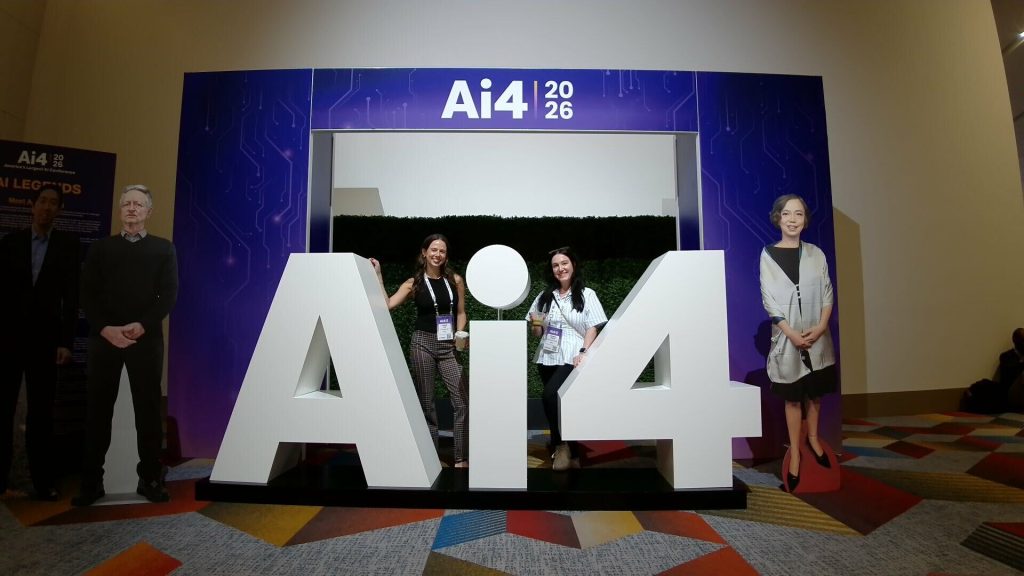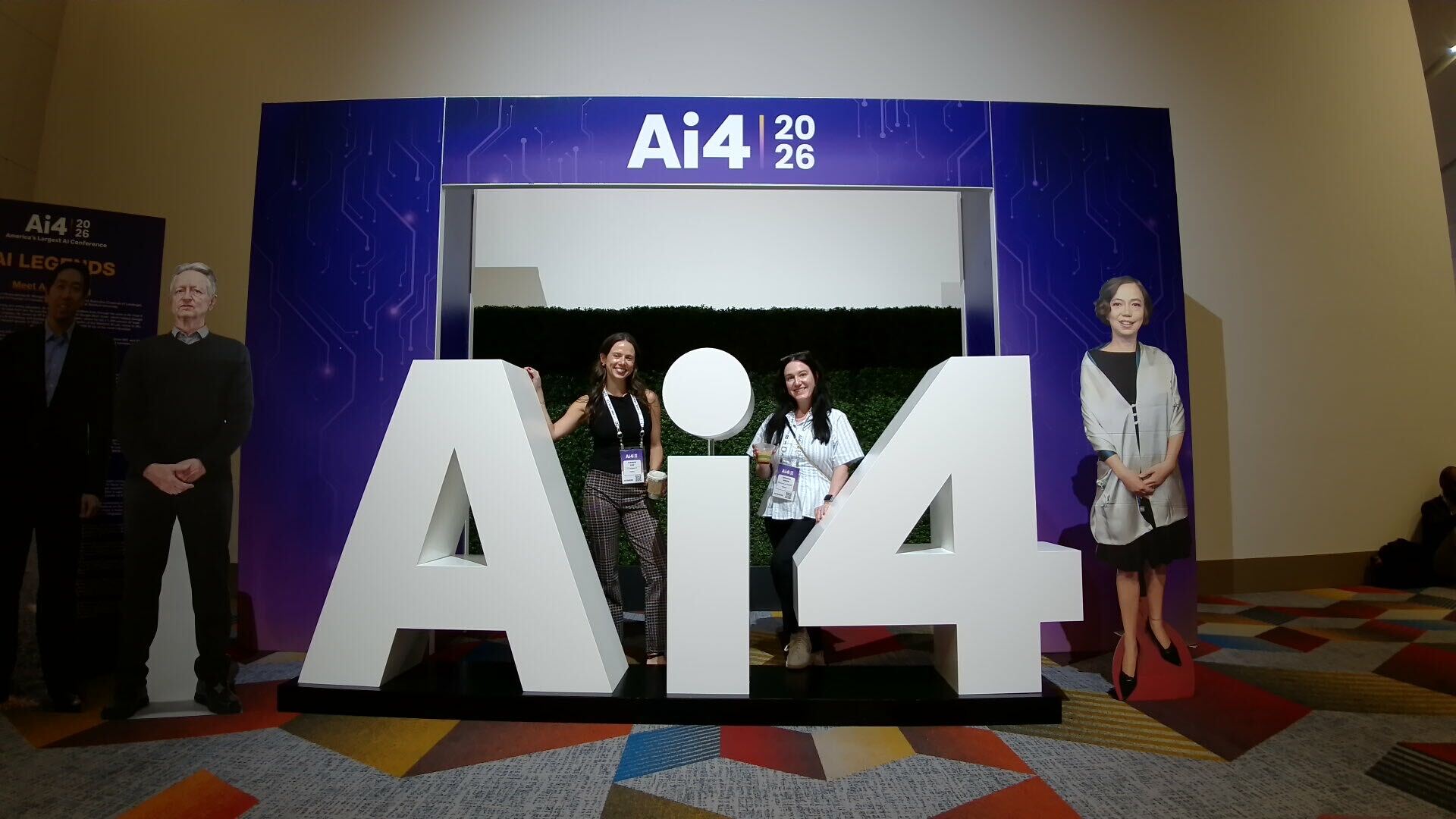
We recently joined more than 12,000 people in Las Vegas for Ai4, one of the largest gatherings of AI leaders in the world. This year’s conference drew attendees from 100 countries, up 50% from 2025, according to Ai4’s post-conference attendance report.
That momentum alone says something about where we are with AI right now. This is no longer a conversation limited to researchers, startups and early adopters. AI is now a business priority across nearly every industry, something reflected in Ai4’s programming across financial services, healthcare, government, manufacturing, retail, media and other sectors.
But after spending a few days walking the floor and seeing what companies wanted to showcase, we kept coming back to the same observation: Many companies were doing and saying very similar things.
Agents. Automation. Enterprise AI. Voice AI. Trust. Governance.
For communicators, that creates a challenge. When an entire industry starts using the same language and making similar promises, differentiation becomes much harder. Companies need a clear answer for what they’re doing differently and why anyone should care.
Here are three trends that stood out.
1. AI agents have officially entered the mainstream
Agentic AI dominated the show floor, keynote sessions and everywhere in between.
Ai4 dedicated multiple conference tracks to AI agents, including sessions focused on applications, deployment, strategy and real-world use cases. The conference also featured an Agentic Live Demo Stage showcasing agentic AI in action.
We’re moving toward AI that can take action on behalf of a company or customer, whether that means handling a customer service issue, analyzing data or completing a transaction.
For business leaders, the upside is huge. But so is exposure.
The responsibility that comes with deploying and managing agentic AI technology is daunting, especially with the risk of it operating against the company’s best interests.
For PR professionals, the challenge is making the real-world value clear and proving it’s a benefit rather than taking away jobs, causing devastating errors or replacing the critical human-in-the-loop approach.
2. Voice AI was everywhere
Another trend that was impossible to ignore: voice AI.
Walking the exhibit space, we continually saw companies demonstrating AI that could talk, listen and respond without the pauses or flat tone of previous models. Voice is quickly becoming another interface for AI, particularly across customer service, sales and healthcare.
The technology is also moving into real-world use cases. A recent field experiment involving 70,000 job applicants found candidates interviewed by AI voice agents were 12% more likely to receive an offer, and the people hired performed no worse than those screened by humans.
Seeing so many voice AI companies also reinforced the differentiation problem. When dozens of companies can demo an AI voice that sounds surprisingly human, simply having the technology isn’t much of a story. The stronger story is what it enables, how it helps, and what makes that particular approach different and better.
3. Trust may become AI’s biggest competitive advantage
For all the excitement around what AI can do, one of the most obvious yet interesting themes from Ai4 was trust.
At the conference, PayPal stated that trust is one of the biggest obstacles to broader AI adoption. As AI moves deeper into areas like commerce and financial services, consumers need confidence that the systems acting on their behalf are secure, reliable and accountable.
Greater autonomy also raises new questions around security. TechRepublic’s takeaways from Black Hat and Ai4 highlighted concerns around agent security, identity controls, monitoring and incident response.
For communications leaders, these questions matter long before a crisis occurs. If your company is promoting autonomous AI, expect customers and reporters to ask about safeguards, data access, accountability and human oversight.
This is where communications plays a bigger role than many expect. Both buyers and reporters want to understand three primary aspects: what the technology does, why anyone should trust it and the level of human involvement.
What this means for PR
We work with AI companies at any stage, from pre launch to post acquisition, and we know that just attaching AI to the story no longer moves the needle. The big task is now turning a complicated product or complex narrative into a reason for someone to care.
What should AI companies and their public relations agencies do instead?
- Show the real-world use case.
- Provide customer case studies.
- Explain the business impact.
- Bring proof and data.
- Make sure executives can speak credibly about where AI delivers value and where its limitations still exist.
This same discipline translates to how buyers find you in the first place, making broader GEO and AEO strategies critical to the PR program. Our work helps companies show up across LLMs.
When everyone promises the same outcomes, our work is giving people a reason to remember yours. AI itself isn’t the story anymore. What your company is doing differently with it is.