Every fall, as flu, RSV and COVID-19 cases begin to rise, so do patient questions and media attention. Healthcare organizations know how to prepare clinically and operationally, but communications often begin only after people get sick and are talking about it.
Communications planning should begin earlier, while organizations still have time to clarify their message, prepare credible experts and develop resources that help patients make informed decisions. Healthcare PR planning for flu and RSV season should also account for changing guidance, emerging data and the questions reporters are likely to ask once coverage accelerates.
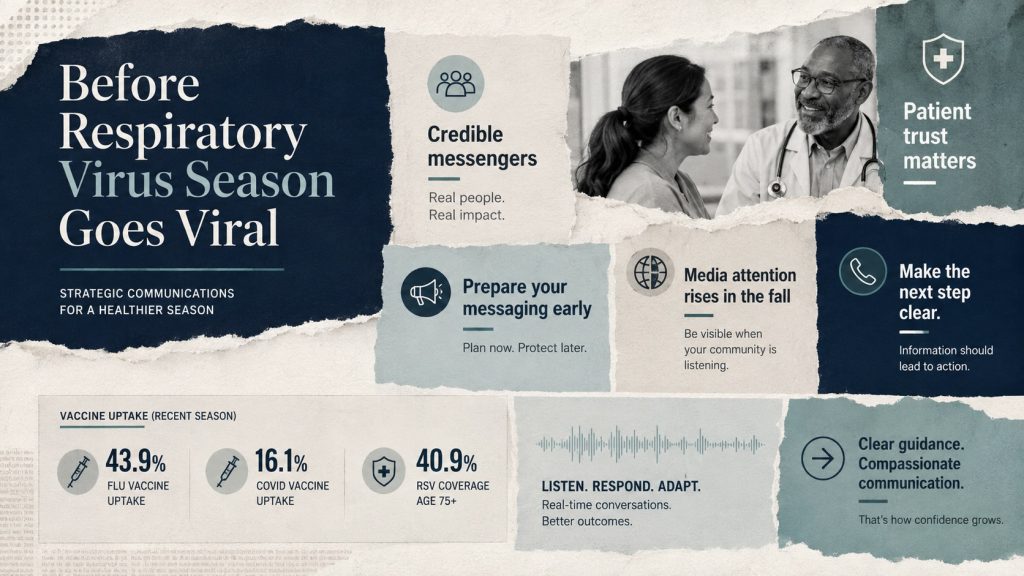
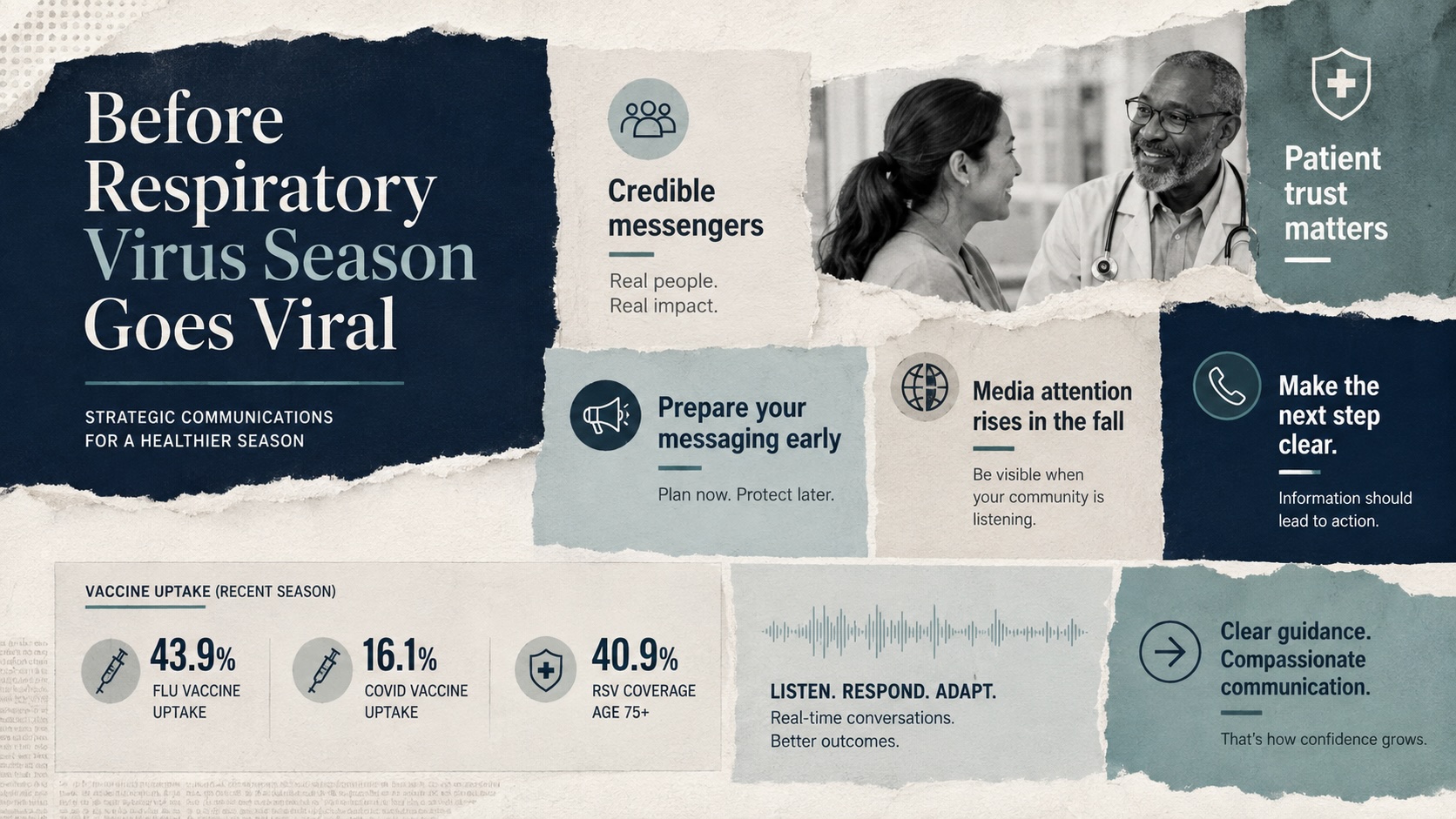
As of January 2026, Centers for Disease Control and Prevention survey data showed that 43.9% of U.S. adults had received the seasonal flu vaccine, while just 16.1% had received the 2025-2026 COVID-19 vaccine. RSV vaccination coverage reached 40.9% among adults 75 and older.
Many factors influence these decisions, and communications are only one part of the picture. Still, the figures reinforce a central lesson for healthcare companies: Providing information is not enough. People must understand why that information is relevant to them, trust the person delivering it and feel capable of taking the next step.
For healthcare PR teams, that means preparing before public attention peaks. Here is where Bospar Health recommends starting.
Communicate the benefits people care about
Health education helps close the gap between what people know and what they ultimately do. Health promotion goes a step further, focusing on whether people feel able to act. Healthcare companies should bring that broader, more human lens to respiratory virus season.
Healthcare communications can become overly focused on mechanisms, technical terminology and data points. These details are important, but they are rarely what make a message memorable.
The Health Belief Model offers a useful way to think about respiratory virus messaging. It proposes that people are more likely to take a health action when they believe they may be affected, understand the potential consequences, see a meaningful benefit and believe the barriers are manageable.
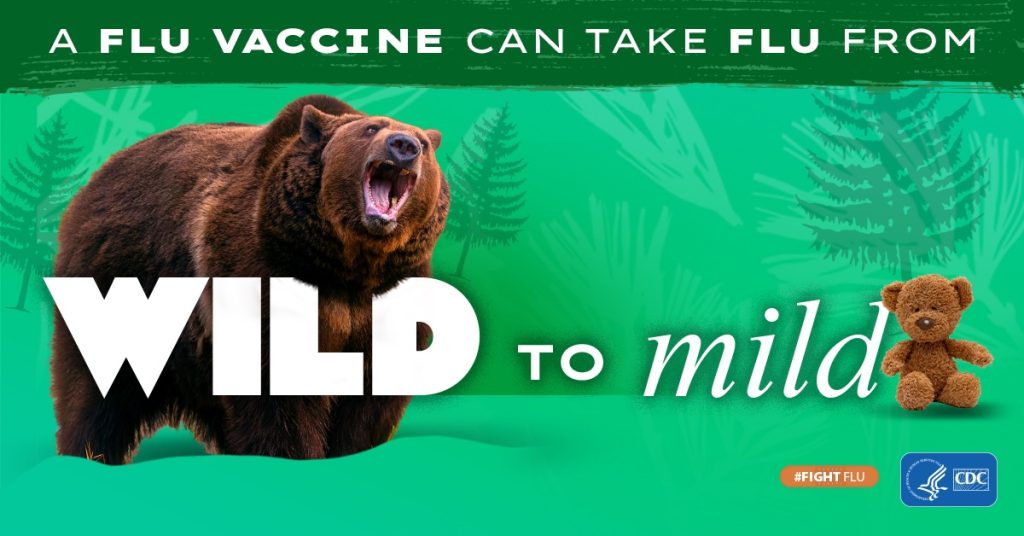
A great example of this is the CDC’s “Wild to Mild” flu campaign. Consumer research found that some people believed flu vaccination did not work because they or someone they knew had still become sick after vaccination. Instead of avoiding that concern, the campaign addressed it directly: Vaccination may not prevent every case, but it can reduce the risk of serious outcomes.
Visual comparisons, including a bear and a teddy bear or a shark and a goldfish, made that nuanced scientific message easy to understand. The campaign worked because it started with a concern people already had and explained the benefit in a way they could quickly comprehend. It is also a useful example of flu shot messaging effectiveness because the campaign responded to an existing misconception rather than repeating a generic vaccination reminder.
The lesson for healthcare companies is to identify the practical benefit beneath the science. Patients and care partners are often thinking about whether they can attend work, care for their families or protect an older relative. Strong communications connect the organization’s expertise to those real-world concerns without overstating what a product or intervention can deliver.
Match the message with the right messenger
Social Cognitive Theory tells us that behavior is shaped by the interaction between individuals, their environments and the people around them. We watch what others do and we look to people we respect. Seeing someone relatable take an action can also make that action feel more possible, which is important to keep in mind when deciding who should deliver respiratory health information.
A 2025 Kaiser Family Foundation and Washington Post survey of parents found that 85% trusted their child’s pediatrician to provide reliable vaccine information, compared with 31% who trusted pharmaceutical companies and 14% who trusted health and wellness influencers.
For pharmaceutical and medtech companies, this is not an argument to disappear from the conversation, but rather an argument to think more strategically about how information travels. A company may have the scientific expertise and resources to develop valuable educational materials, but a clinician, pharmacist, patient advocate or community organization may be the more effective messenger. Companies should enter the season with a defined ecosystem of credible external voices.
The federal “We Can Do This” COVID-19 public-education campaign also demonstrated the potential value of sustained, audience-specific communications. A peer-reviewed evaluation of its paid-media campaign found that campaign exposure was associated with increased first-dose vaccination uptake.
Trust is rarely built through one announcement. It develops through consistency, credible messengers, understandable information and repeated engagement.
Make the healthier action feel possible
Public health’s ecological model recognizes that behavior is influenced by families, workplaces, healthcare organizations, communities and public policy. Healthcare communications should do the same.
A strong respiratory season program might pair a patient explainer with a provider discussion guide, a pharmacy or clinic locator, employer education, caregiver resources and materials created for different languages and literacy levels.
That could mean working with pharmacies, senior centers, schools, employers, health systems or patient advocacy groups. It could also involve designing materials based on the questions those communities are already asking.
Respiratory virus season will bring an enormous volume of information. The companies that contribute most will understand the behavior they hope to support, the barriers surrounding it and the people their audience already trusts. They will connect accurate information to a next step that feels realistic.
At Bospar Health, we help healthcare companies find the role they can credibly play in conversations like these. We work with organizations to clarify their POV, prepare reliable experts, translate complex science into useful stories and build communications programs that support both public understanding and business goals.
Whether the question is how pharma companies should communicate during flu season or how a healthcare brand can prepare for a broader respiratory-season conversation, we help clients build a strategy grounded in trust, relevance and the needs of the people they hope to reach.
If you’re curious to learn more, reach out to our team at results@bospar.com!