Advertising has a new operating model, and the industry knows it.
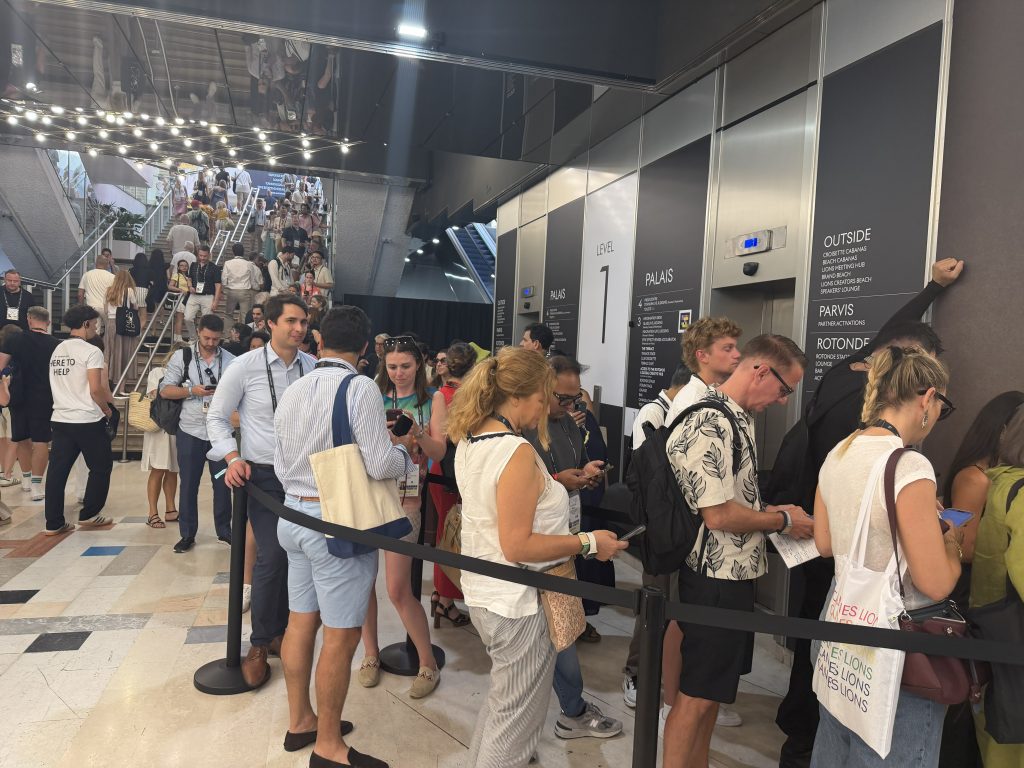
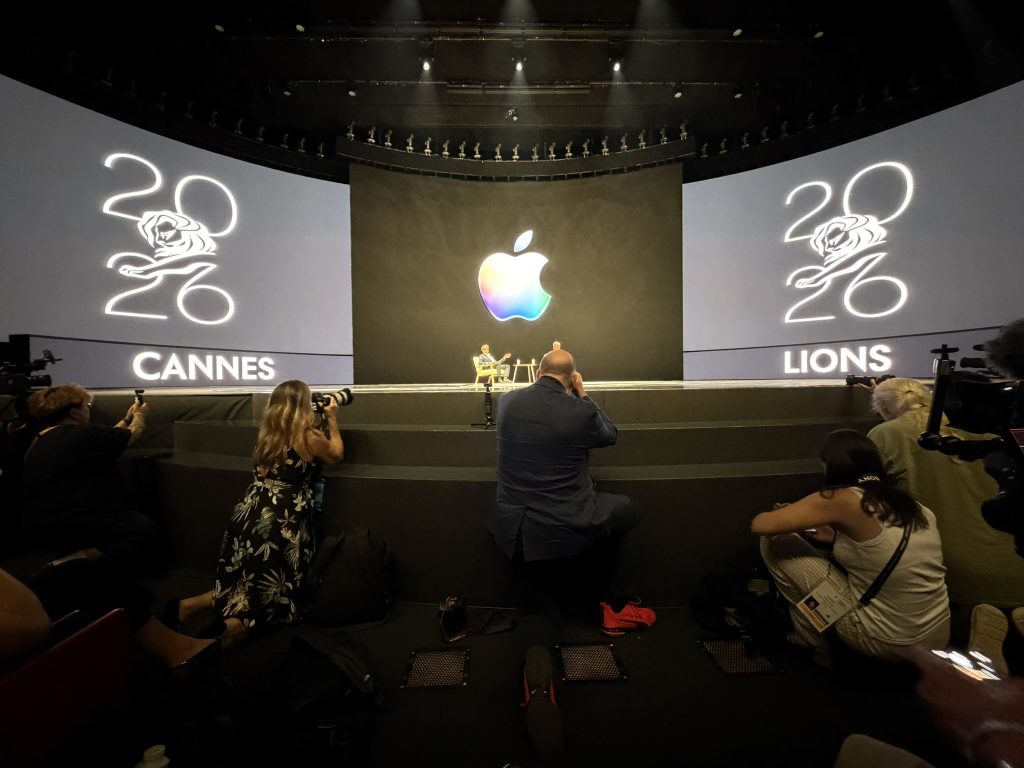
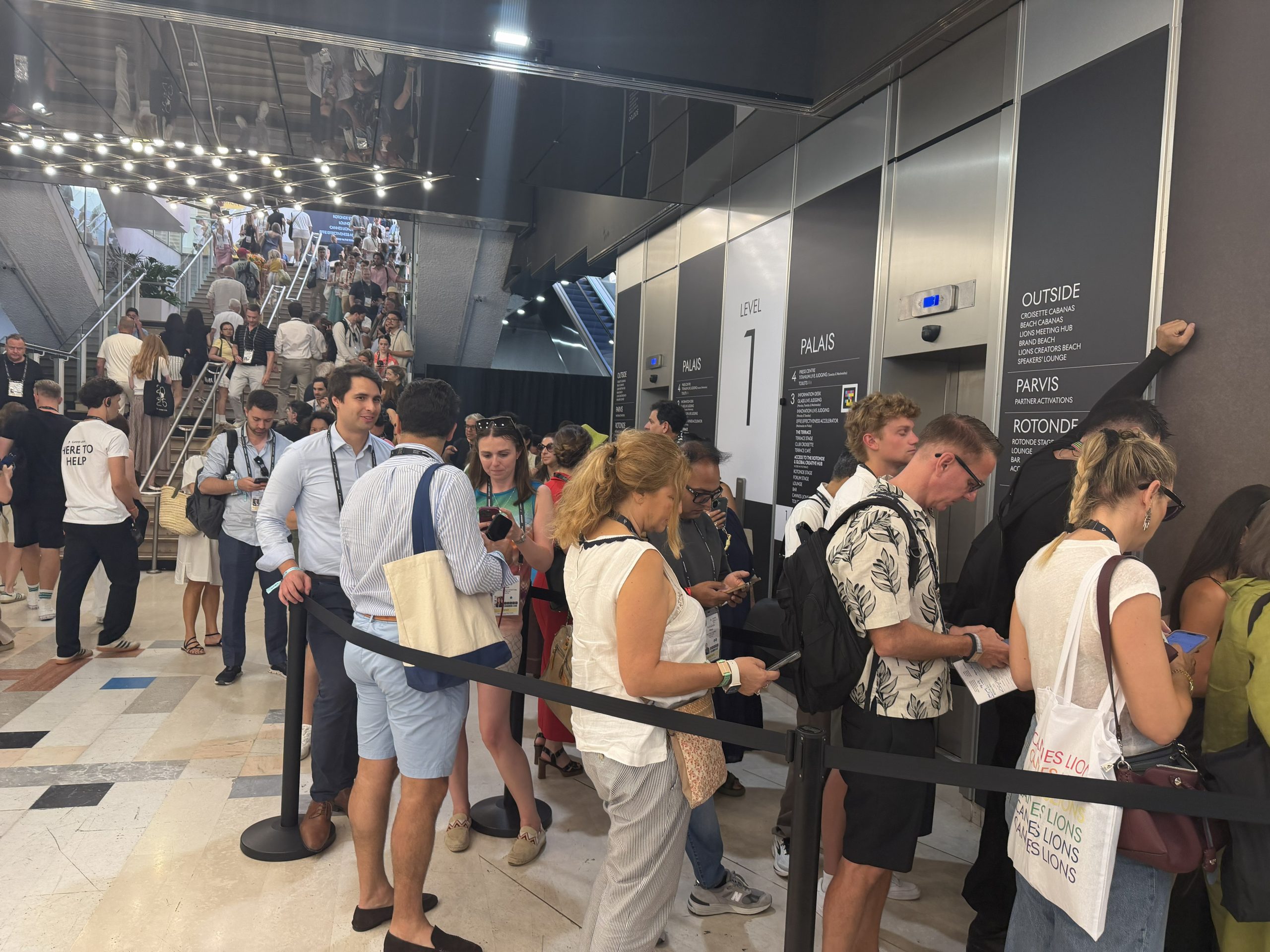
That’s why an OpenAI session drew a line outside the Debussy Theatre at Cannes Lions 2026 that snaked through multiple floors of the Palais, past sessions and stairwells, even past Oprah.
By any measure, this was the most anticipated talk of the week.
OpenAI was not at Cannes Lions to announce a product, it was there to reframe an industry.
Denise Dresser, OpenAI’s chief revenue officer, joined CNBC Senior Media and Tech Correspondent Julia Boorstin to make the case that advertising is no longer a media business with AI tools layered on top. It is, as Dresser put it, a fundamental shift in how brands, agencies and consumers interact. “This is not a technology transformation,” Dresser emphasized. “This is a business transformation. This is also a societal and a human transformation.”
Clearly, the company believes it is at the center of something irreversible.
Boorstin steered the session into uncomfortable territory.
- Pressing Dresser on jobs, she asked: “We’ve seen so many layoffs, corporate layoffs recently, where the excuse or the explanation was: It’s AI. AI is driving efficiency. You can have one person do the job of many. Are you seeing that actually play out?”
- She also pushed on cybersecurity.
- She inquired about intellectual property.
- And she raised the IPO.
She went, as she put it, “through all the scary things that people are afraid of with AI.”
That kind of structured skepticism from a moderator is exactly what Cannes Lions sessions rarely get, yet the press largely ignored it. The press covered the event. But what reporters instead chose to emphasize, and what they left on the cutting room floor, reveals as much about the current state of AI journalism as it does about OpenAI’s ambitions.
What Got Covered
Joe Mandese, editor in chief of MediaPost, filed the sharpest media report of the day.
His article “OpenAI’s Dresser: Exponentiality Is The New Incrementality,” correctly identified the conceptual center of the session: Dresser’s framing of exponential thinking vs. incremental thinking as the dividing line between companies that will lead through this transformation and those that will lag behind. Mandese also surfaced a detail that every other outlet missed. Dresser cited the commercial data point: 20% of ChatGPT users arrive with commercial intent already. He also reported the Maybelline/L’Oreal virtual try-on example, which Dresser used to illustrate what utility-driven advertising inside AI environments actually looks like in practice.
This was the only coverage that treated the session as a business story vs. a technology story.
The BestMediaInfo bureau filed a straight-news account, dateline New Delhi, framing Dresser’s appearance as a direct commercial pitch and noting that this was OpenAI’s first time at Cannes Lions. The piece surfaced Dresser’s disclosure that Codex has reached 5 million weekly active users and her description of how AI-native advertising would feel “less attention-grabbing, more useful, more intelligent.”
This media coverage also captured a useful structural point that most reports missed: that the session marked a shift from an awareness economy to what Dresser called an intelligence economy, where users arrive with intent rather than waiting to be interrupted. The article closed with a line that deserved more prominence than a closing quote: “We are all learning,” Dresser said. “We’re really learning and sharing the information and using experimentation.”
That admission from the chief revenue officer of the world’s most visible AI company is more significant than any product statistic in the coverage. Yet no media outlet treated it that way.
Cynthia Littleton and Todd Spangler of Variety previewed the session as one of 10 worth watching, noting a second Dresser appearance on June 24 at the Carlton Hotel for “Winning the AI Discovery Era: Marketing To Minds and Machines” alongside Google CMO Lorraine Twohill and JPMorganChase CMO Carla Hassan. That session received less advance attention than it deserved.
Exchange4media, in Brij Pahwa’s pre-festival analysis, correctly identified the session’s framing as significant, noting the shift in language from “media operating model” to “intelligence operating model” and writing that in an AI-native environment, consumers no longer simply search, scroll or click, but ask, compare, learn, evaluate and act within conversational systems.
James Herring of Famous Campaigns and LBBOnline catalogued the session in their program guides alongside Demis Hassabis, CEO and co-founder of Google DeepMind, and Adam Mosseri, head of Instagram, contextualizing Dresser’s appearance as part of a broader industry reckoning with AI.
What Got Missed
The coverage was competent.
Mandese’s piece, in particular, showed genuine editorial judgment.
But even the best of the coverage missed the human texture of what happened in the room.
The line itself went unreported. Not a single outlet mentioned it. That is a significant omission. The queue that snaked upstairs through the Palais was not a logistical footnote. It was a cultural signal. This was the first time OpenAI appeared at Cannes Lions, and the industry showed up in a way that had not happened for a technology company at this festival in recent memory. A crowd that large, at a festival this curated, tells you something about the anxiety and urgency circulating through the marketing and communications industry right now. The press missed the story outside the door.
The fear question was underreported. Boorstin set it up directly: “What’s the biggest mistake companies make when they either try to make an investment in AI?” Dresser’s answer was not a talking point. “I think this is going to sound like a marketing line, and I promise it’s not,” she said. “But just being afraid to not get it right the first time, but staying with it.” She went further, framing AI tools as analogous to a new hire: “It’s kind of like hiring an employee. They’re highly qualified, they’ve made it through the process, but you still have to give them education, knowledge and learning.” That framing, which addressed the real psychological barrier most marketing organizations are navigating, received minimal coverage. Reporters were more interested in the product announcements.
The jobs question was largely absent. Boorstin pressed hard: “We’ve seen so many layoffs recently where the excuse or the explanation was: It’s AI. Are you seeing that actually play out?” Dresser pushed back without equivocating: “I don’t see that. I do see that companies are able to bring more creator capability. It’s not about thousands of pieces of assets now, it’s tens of thousands.” That is a materially different narrative than the one dominating most AI coverage, and it deserved more scrutiny and more space.
The IP and data ownership clarity went uncited. Boorstin pushed on proprietary data and intellectual property directly, calling it one of “all the scary things people are afraid of.” Dresser’s answer was unambiguous: “Simply put, we do not train on any customer’s data. It is their data, and we do not own any IP. When a company creates something, it is their own intellectual property.” For any CMO or general counsel reading coverage of this session, that statement matters. It appeared in the transcript. It did not appear in the coverage.
The vulnerability moment was invisible. Boorstin asked Dresser about the smartest companies deploying AI. Dresser’s answer was not a list of enterprise names. It was an anecdote: “They brought 200 of their senior executives into a meeting, and only 50% of them had actually used ChatGPT. And that was probably hard for people to admit. But once they admitted that, that’s just the opportunity to learn and grow.” That moment, and Dresser’s broader argument that creating environments where leaders can admit what they do not know is a competitive advantage right now, was absent from every piece reviewed.
The closing admission went unexamined. BestMediaInfo’s bureau piece included Dresser’s final line as a closing quote: “We are all learning. We’re really learning and sharing the information and using experimentation.” The article ran it as punctuation. It should have been the lede. The chief revenue officer of OpenAI, standing on the most prominent marketing stage in the world, told the industry that her own company is figuring this out as it goes. That is not a throwaway. It is either a moment of unusual candor from a technology executive at a festival famous for overconfidence, or a carefully calibrated signal that the partnership model OpenAI is pitching to CMOs is genuinely collaborative rather than vendor-driven. Either interpretation is worth a paragraph. No outlet gave it one.
What the Coverage Pattern Reveals
The gap between what was reported and what was said is not random. It reflects a consistent editorial tendency in AI coverage to prioritize product announcements, commercial positioning and market competition over the messier, more human dimensions of how organizations actually change.
Dresser spent considerable time at the Debussy Theatre talking about literacy, vulnerability and the pace at which human beings can absorb transformation. Boorstin gave her every opportunity to dodge those questions. She did not dodge them.
Reporters went home with the Codex user numbers and the advertising pitch.
Both things are true. Only one of them was in the press.
The industry standing in that line outside the Palais was not waiting to hear about 5 million Codex users. It was waiting to hear someone credible say that the confusion they are experiencing is normal, fear is expected and staying with it is the only path through.
Dresser said that. The press did not report it.