An analysis of the Eddy Cue and Jerry Bruckheimer seminar at Cannes Lions 2026
You know what the media didn’t report on at Cannes Lions?
That Jerry Bruckheimer and Eddy Cue were about 15 minutes late.
Perhaps I’m being curmudgeonly, but as a former producer, I like my shows to start on time.
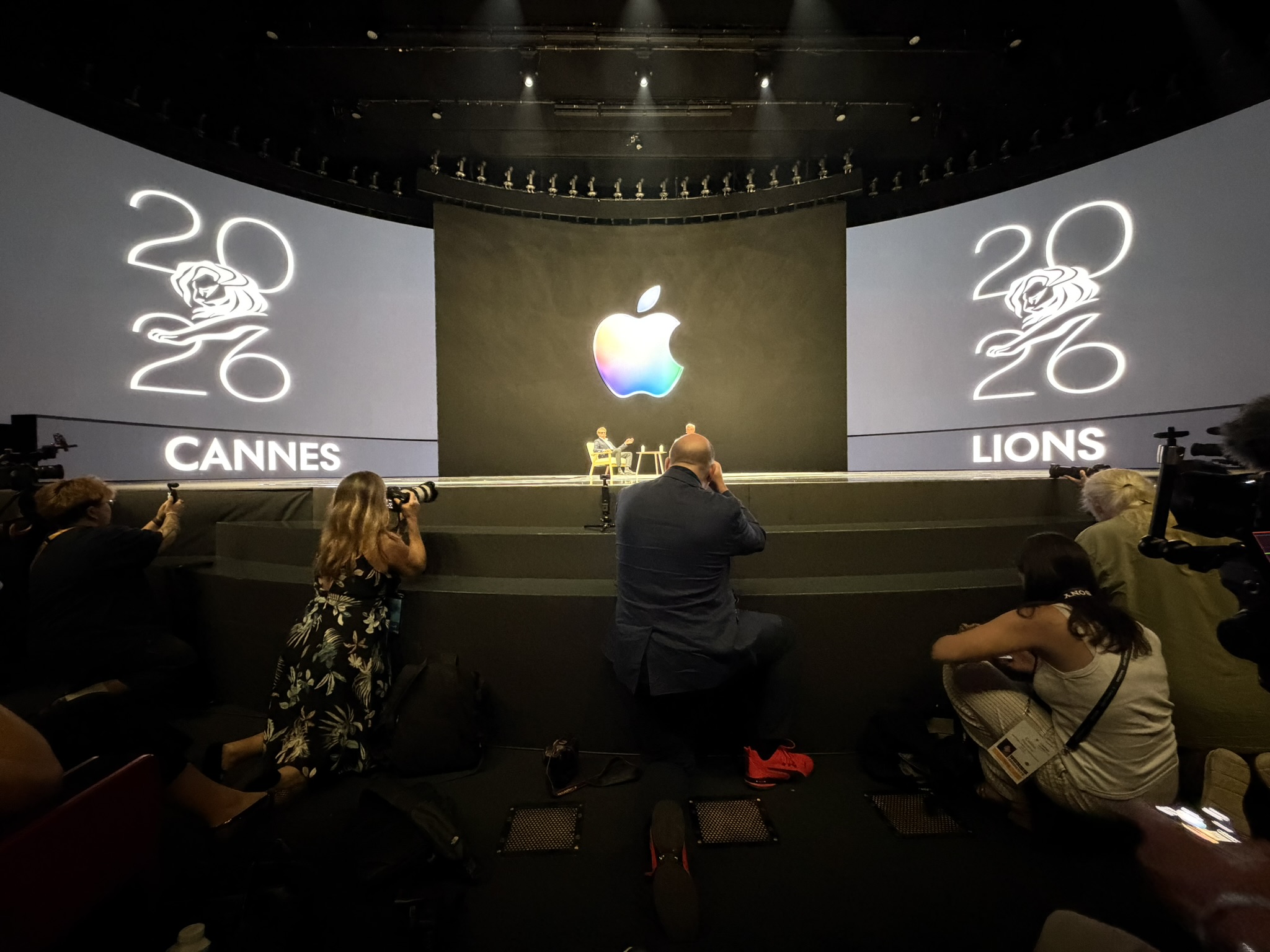
The session was scheduled for 12:15pm. They walked onto the Lumière Theatre stage at 12:28.
At Cannes Lions, where every delegate minute is contested real estate, that’s a bad look.
What followed was one of the more carefully orchestrated media events of the festival.
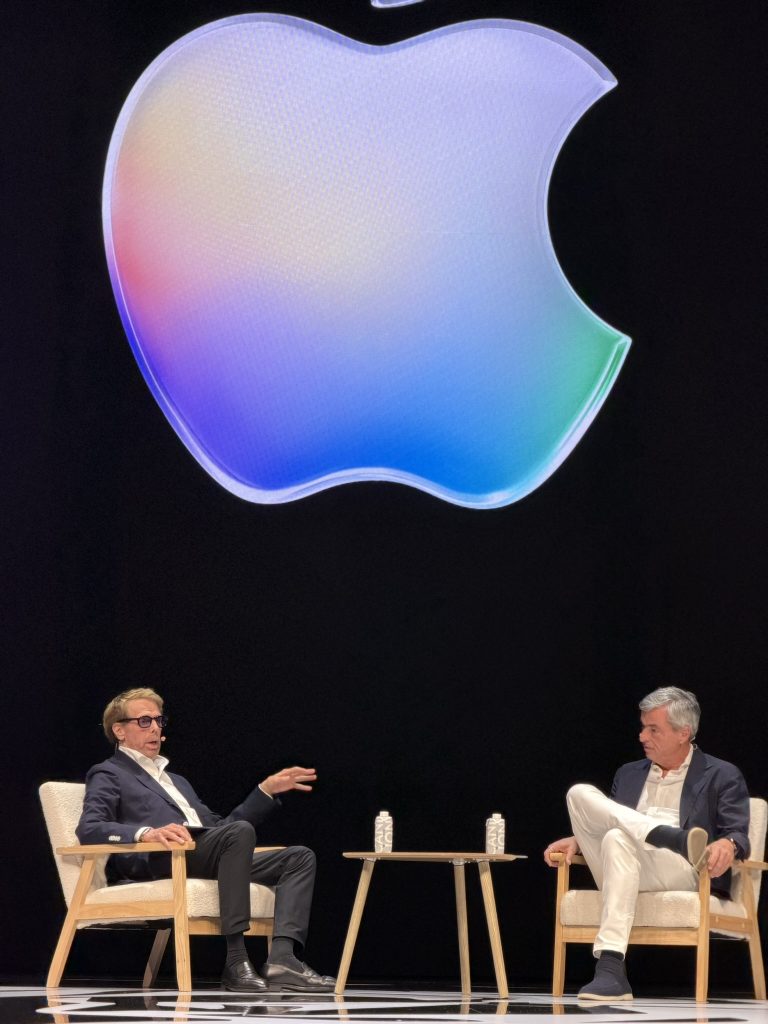
Cue, Apple’s senior vice president of services and health, who had just been named the Cannes Lions Entertainment Person of the Year. Bruckheimer, whose producing credits span Top Gun, Pirates of the Caribbean and the recently released F1, was his conversation partner.
The trade press covered it as an entertainment story.
It was also a communications strategy executed in public.
What the Trades Covered
Georg Szalai at The Hollywood Reporter and Todd Spangler at Variety both filed within hours, leading with the same two pegs: an F1 sequel is coming, and Bruckheimer and director Joe Kosinski are developing a UAP thriller for Apple. They also happen to be the two announcements Apple chose to surface, in a controlled setting, before a credentialed audience, with no press conference and no Q&A.
Spangler added two details that didn’t make it into most coverage. F1 grossed $634 million worldwide, making it Brad Pitt’s biggest film ever. And Cue noted, almost in passing, that Apple TV is now an EGOT winner: an Oscar for CODA, a Grammy for Chris Stapleton’s contribution to the F1 soundtrack, multiple Emmys including The Studio’s record 13 in a single season and a Tony for the Schmigadoon! Broadway adaptation. That’s not a streaming service. That’s a cultural institution.
Deadline also covered the session, focusing on the F1 sequel tease and Bruckheimer’s theatrical window comments.
The coverage was accurate. It was also largely what Apple intended it to be.
What the Trades Didn’t Cover
Neither Variety nor The Hollywood Reporter addressed the Apple CEO transition.
Tim Cook steps down Sept. 1. John Ternus takes over. Cue appeared on the world’s largest marketing stage 13 weeks before that handoff and the topic never came up.
Variety’s festival preview had noted the session would likely stay focused on creativity rather than the succession. It did. That kind of message discipline doesn’t happen by accident.
Also absent from the trade coverage: The Morning Show pitch. In the transcript, Cue describes cold-calling Reese Witherspoon and Jennifer Aniston, people he had never met, and making the case that Apple was the right home for the show precisely because it had nothing else.
“The reason you have to do it with us is because we don’t have any other shows, so we believe 100% in what you’re doing, and we’re going to launch our service on that.”
That’s a founder story. It’s the kind of narrative that builds institutional credibility over time.
It didn’t make the wire coverage.
The Architecture of the Event
The session was structured as a fireside chat, which by design produces quotable exchanges rather than prepared remarks. That format gives coverage the texture of spontaneity while keeping the principals in control of the narrative.
Bruckheimer’s role was specific: He provided Hollywood credibility, emotional color and the UAP announcement. Cue provided the strategic framework and the Steve Jobs invocation.
The Jobs clip opened the session. It was a deliberate choice. “It’s in Apple’s DNA that technology alone is not enough,” Jobs says in the footage. “It’s technology married with liberal arts married with humanities that yields us the result that makes our hearts sing.”
Playing that clip at Cannes, in front of a marketing and communications audience, is a reminder that Apple’s brand mythology predates the streaming era. Cue inherits that mythology. The clip made sure the room knew it.
Cue then extended the Jobs framework with a story about asking him why Pixar could produce hit after hit. Jobs told him it always begins and ends with the story. “If you don’t have a story,” Cue recalled him saying, that was the end of it. That framing did real work in the room: it positioned every Apple TV+ decision as a direct expression of Jobs’s philosophy, not as a streaming strategy built after his death.
What Cue Actually Said About the Business
On the decision not to license library content: “We’ve always felt like if we were putting our name on it, it was kind of weird if we were going to put our name on something we didn’t help create. So we said we’re going to start with nothing.”
On the competitive logic: “We got this belief that everyone was chasing a lot of quantity and not quality. We wanted to build television and movies a place where the best storytellers, the best creators, the best writers, best directors would want to come work there and do their best work.”
On Ted Lasso, which he initially doubted could travel: “My first reaction was, are people in Europe, who are huge soccer fans, going to think we’re making fun of it, or people in America, who don’t know that much about soccer, think that they’re making fun of them? Comedy doesn’t always travel well.” It did. “Not only does it travel well, it becomes this huge show coming back later this summer.”
On The Morning Show: “Somebody has to believe in you first, and the first people to believe in us were Reese Witherspoon and Jennifer Aniston in The Morning Show.” He asked for a personal meeting with both of them despite not knowing either one, told them he thought they were making one of the best shows in television history and said Apple would stake its launch on it. They said yes.
The Takeaway
“I have an amazing team of folks that I get to work with every day that have made this all possible. The great thing is we’re just getting started, so there’s a lot more to do.”
For PR and marketing professionals in the room, the session made a clear argument. Apple TV+ has never competed on catalog size. It competes on conviction, on the belief that if you say yes only to what you’d stake your name on, the audience will learn to trust the stamp.
The trades covered the announcements.
The more durable story is the communications architecture behind them.