A great feature story is a lot like a great recipe. It has all the ingredients that please the palate and delight with sensational smells, visuals and textures.
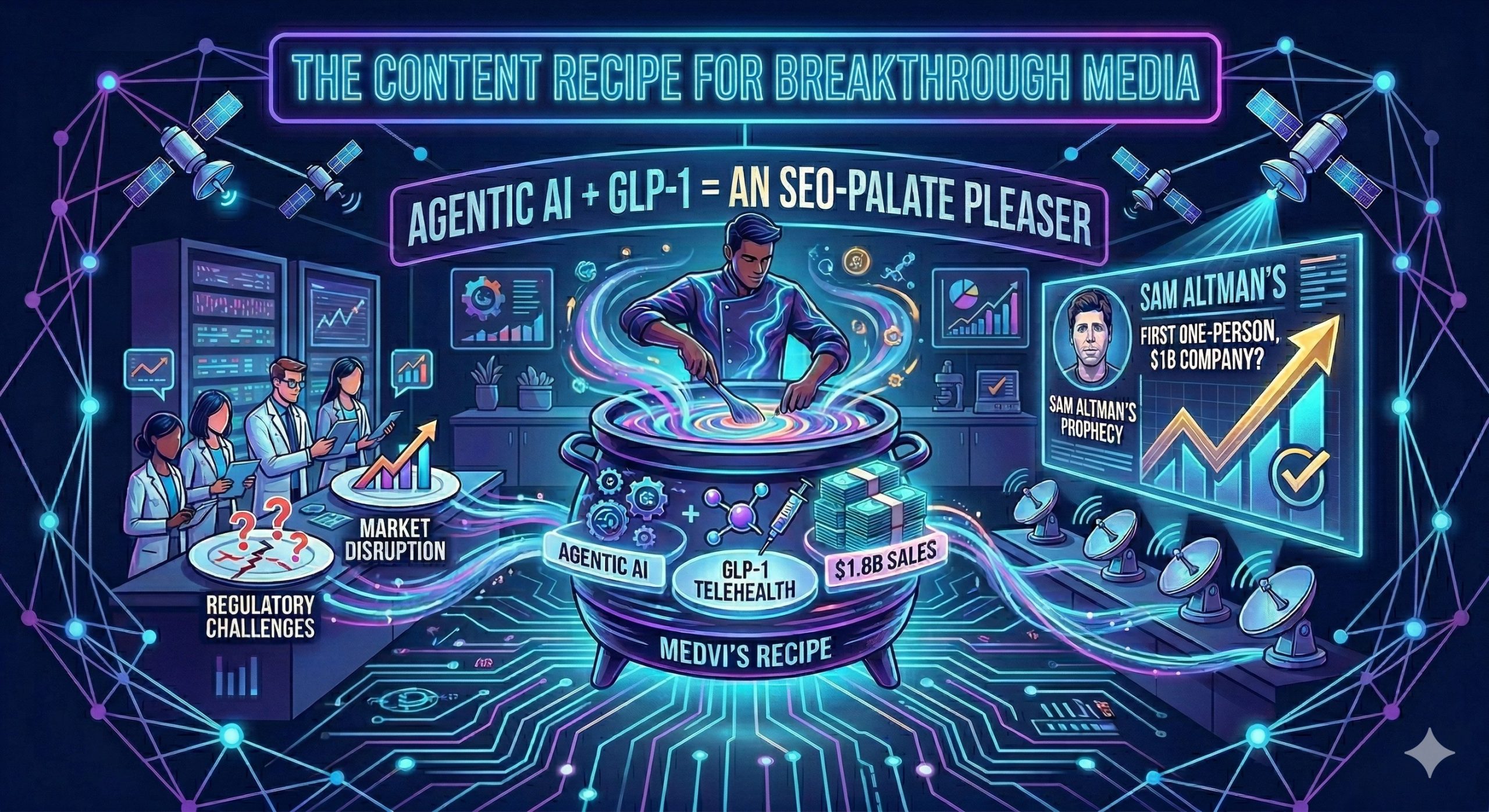
Witness exhibit A, with The New York Times reporter Erin Griffith’s article on Medvi, an agentic AI-fueled telehealth provider of GLP-1 weight loss drugs that is on track to generate $1.8 billion in sales this year.
Simply put, this content cooks with gas.
It isn’t just the thematic marriage of “agentic AI” with “GLP-1 drugs,” which is a peanut butter- and-chocolate combination fit to satisfy any SEO expert’s sweet tooth. Or the fact that questionable business practices in a highly regulated industry have elevated the company’s status across the AI business news mediascape.
What makes thiscontent compelling for media professionals targeting earned media is that it jacks into a specific narrative created by none other than OpenAI CEO Sam Altman in January 2024. You may recall when he shared with former Reddit CEO Alexis Ohanian that he had a “betting pool” going with other tech CEOs about when the first one-person, billion-dollar company fueled via AI would emerge.
This is the type of tantalizing news thread that PR professionals and the press love.
And, boy, did they gobble it up.
Nearly two years later you have Medvi, among the first if not the first company to fulfill a prophecy shared by the leader of the most high-profile frontier model maker working today.
What makes a story newsworthy to reporters
If this feature had dropped shortly after Altman made his comments, intrepid PR professionals worldwide would have seized on the newsjacking possibilities. Coming more than two years later, it rates as something else for those seeking earned media, who can take a page from the reporter who jumped on the Medvi theme.
That Griffith referred to the Altman prediction, arguably from the AI way-back machine, highlights her mastery of top AI business news. The lesson PR professionals can take from this is that by recalling and reinjecting a narrative into the mainstream, they have the potential to parlay opportunities and get their clients into a treasure trove of articles.
The secret? It’s not really a secret, but you have to put in the work by reading a lot of news content. Reading a lot of content over time will help you generate trend ideas more readily, even subconsciously.
So the next time you hear something like “CEO says he’s on track to make $1 billion-plus,” the synapse fires and you remember what CEO luminary X said two years ago, which is like ancient Greece in the positively incandescent AI era.
This is what good journalists do and how most think. They read a lot about the subject matter within the beat they own and are proficient in so that they can recognize a good theme or narrative to write about.
This combination of good editorial instincts meets editorial intelligence makes them more proficient at their jobs because they can connect the dots between something someone said years ago to something that is popping in the present.
Why this matters now more than ever
Medvi’s one-man-shop model may end up being too good to be true but it doesn’t change the fact that it’s gotten attention, which is something we could all use a little more of, right?
Ask any technology reporter what their inbox looks like right now, and you’ll get some version of the same answer: They are drowning in AI-related story submissions. Most pitches lead with product features, funding announcements or hand-wavy claims about disruption.
The blurry sensation they feel is their vision going wonky from viewing the same stock pitches.
What reporters crave is a story with stakes, relevance and a point of view they haven’t already heard, or in this case, one that fulfills a prophecy from one of the most controversial co-founders working in tech today.
The advice of leading with a trend versus a product is hardly new. But this wrinkle points to the potential of starting a trend that could lead to opportunities for clients and your own firm.
That’s a good recipe for your business and your career.