As a PR agency, one of the first questions we’re asked during the new business process is:
“Which top-tier reporters do you have relationships with?”
Closely followed by: “So how many guaranteed placements can those relationships get us?”
Both are fair questions to ask a public relations agency, especially when you’re considering a new partnership that requires a real financial investment. Clients want certainty.
They want to know their story will land. They want to know they’re not paying for vibes.
But in 2026, the answer to both sounds less like a contract and more like informed improv.
It’s not: “Yes, we know the reporter, and they owe us.”
It’s: “Yes, we know the reporter, and we secure earned media coverage if we bring them a story that combines data and thought leadership.”
Gone are the days when reporter relationships were built over an expensed steak dinner or a casual coffee. Today, they’re built on relevance. On insight. On whether your pitch aligns with a reporter’s beat and helps them write a story that will actually get read.
Why? Because reporters now have metrics just like PR people and CMOs do.
Clicks matter. Engagement matters. And credibility matters more than ever.
So how does your brand become more valuable to a reporter than a reservation at a Michelin-starred restaurant?
Here are three ways:
- Data Is King
When talent insight company SHL wanted to lead the conversation around AI in hiring, they didn’t start with opinions. They started with data.
While SHL is well known for its research, this was the first time we used a survey-driven PR campaign to gather consumer insights into how AI is affecting Americans throughout their workforce journey. Instead of telling the market what they thought was happening, they showed what was actually happening.
The result? More than 25 media placements and over 156 million impressions.
But the lasting impression was even more important.
Reporter Suzanne Blake of Newsweek had previously interviewed SHL Chief Science Officer Sara Gutierrez on AI and hiring and included her insights in a published story. Because of the value Sara brought to that conversation, Suzanne was eager to build on the relationship and later pursued a feature story based on SHL’s proprietary survey data.
Data didn’t just earn coverage. It deepened a relationship and brand authority.
- Thought Leadership > Products
A new product is always interesting.
It’s especially interesting if your company is named Apple.
But what if you don’t have a shiny launch? What if your company isn’t Apple? What if the most interesting thing about you isn’t something you just shipped, but something you understand better than anyone else? That’s where thought leadership comes in.
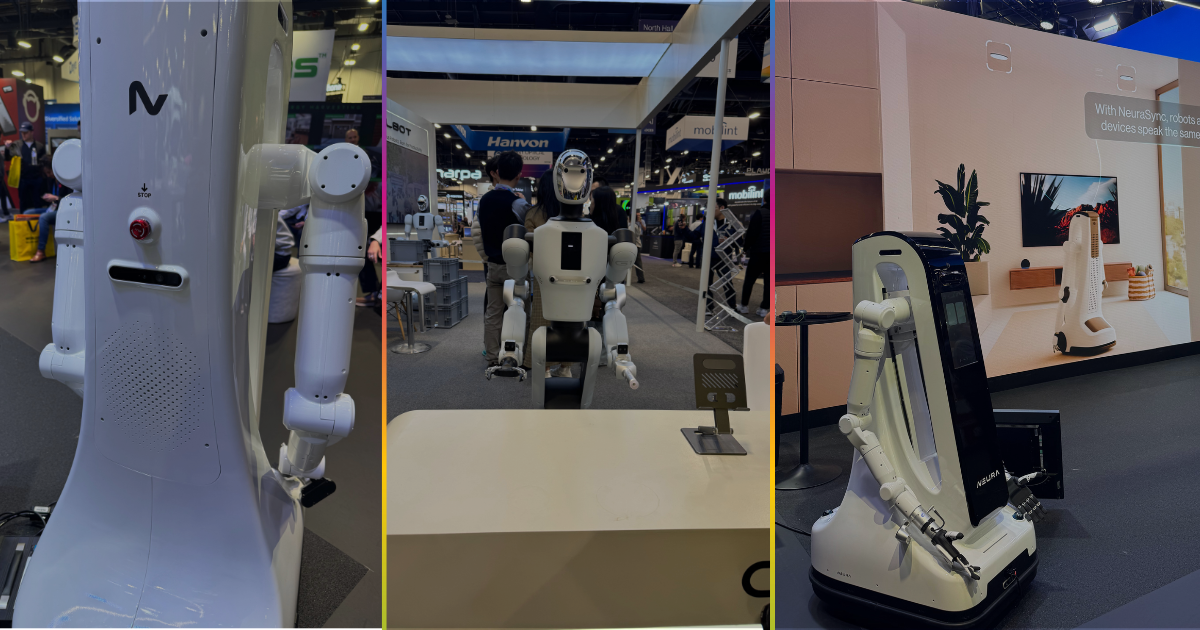
When RealSense wanted to generate earned media coverage at CES without a product announcement, we didn’t force a product story. Instead, we built a public relations strategy around predictions for the future of the humanoid industry once the CES lights went down.
It wasn’t “Look what we built.” It was “Here’s what’s coming next.”
The result?
A Bloomberg Q&A with Saritha Rai that was syndicated widely, solidifying our relationship with her.
Another key win came from an existing relationship with The Robot Report, stemming from a one-on-one interview with Nadav Orbach, CEO of RealSense, following the company’s spinout from Intel in July 2025.
That early engagement, combined with a sustained thought leadership strategy, led Mike Oitzman of The Robot Report to invite Chris Matthieu, vice president of the developer ecosystem at RealSense, to appear as a guest on their podcast to discuss RealSense’s CES and industry predictions. As a result, The Robot Report, a core target publication for RealSense that aligns with its business goals, has continued to feature our PR client as a robotics thought leader.
That kind of relationship is hard to buy, no matter how big your latte budget, and impossible to fake. It’s also incredibly valuable when the media outlet’s audience is exactly who you want to reach.
- Availability Matters a Latte
Everyone is busy. And despite what social media says, we do not all have the same 24 hours in a day, especially if you’re a reporter on deadline or a CEO running a company.
One of the simplest ways a brand can add value for a reporter is by respecting that reality.
That means:
• Being available when they need you
• Turning around quotes quickly
• Not disappearing for approvals
• Understanding that “today” actually means today
This isn’t a competition over who’s more important or who has the fuller calendar. It’s about respecting the relationship the PR team is building on your behalf.
When a reporter knows they can rely on you, they come back.
In the end, a PR person’s relationship with a reporter is only as strong as the story the client is willing to tell. And that story is only worth telling if it has the two things reporters need most: data and thought leadership.
An overpriced coffee or dinner can be satisfying.
But a compelling article that tells a real story and gets real clicks? That’s priceless.