The PR Summit in San Francisco bills itself as “where capital, code, and media align to make, measure, and move stories.” It’s where the future of influence gets tested, refined, and deployed. So, when I joined a panel last week exploring how communication agencies will be adapting to remain relevant in an AI-first landscape, the stakes were pretty clear.
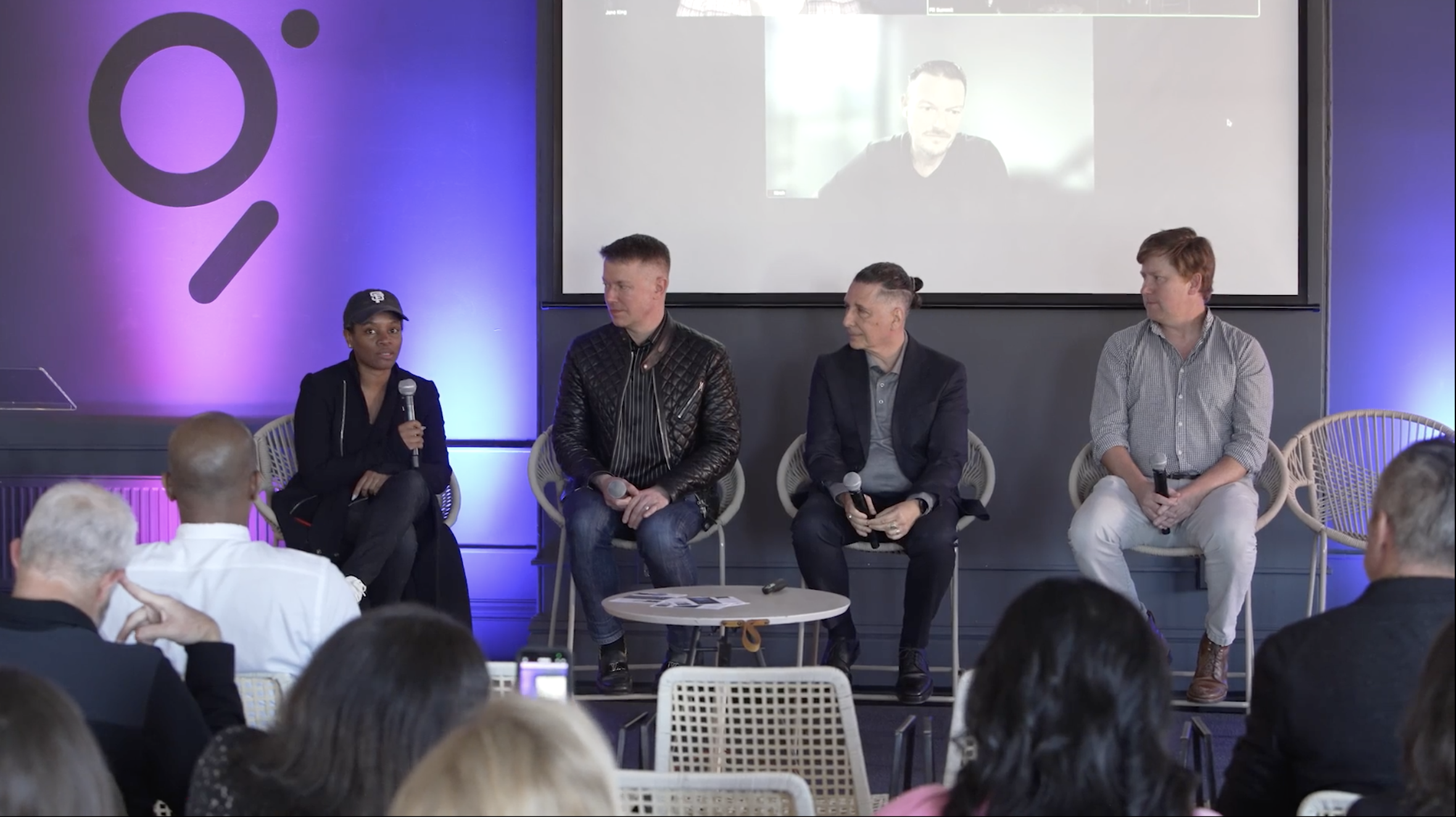
Rochelle Nadhiri, principal of TheRoCo, moderated the discussion with Grant Marek, editor in chief at SFGate; Jane King, who reports from The New York Stock Exchange (joining virtually); Marcos Campos, principal AI architect from Microsoft; and Paul Kirchoff, founder and CEO at EPX.Global (also virtual). The central question we all discussed at this PR gathering, and the one that is keeping a lot of us up at night: Are we still relevant in an AI-powered world?
My answer?: Public relations specialists are absolutely relevant, more than ever before.
Here’s why: AI uses media, especially journalistic media, to feed its understanding of the world.
CEOs and CMOs who were once dubious about public relations services have come around. They now know this is crucial, if not the most critical thing they can be doing.
It’s also causing interesting shifts in paid media, which AI engines don’t prioritize the same way.
Marcos backed this up from the tech side: “Trust is a very important element, and I think there’s a big role to be played in building brands and reputations.”
The AI Pitch Problem (And Why I Can Spot Them a Mile Away)
I’m going to be blunt. I get pitched too. We have a podcast, Politely Pushy, and I’ll get emails that say things like, “Hey Curtis, that conversation you had with Rochelle was very impactful, and if you thought Rochelle was a great guest, you should talk to so-and-so.”
It’s painfully obvious that these pitches are AI-generated.
Same formula. Same verbiage. They just plain suck.
I was on Jeff Wilser’s AI Curious podcast recently, and we even made up a fake pitch as a joke. Within 10 days, we both got that exact pitch from some PR agency or AI tool. I know journalists who look for these tells, if they see an em dash, they hit delete.
Grant made an interesting point about how the bar has technically gone up because “the majority of pitches are written by AI now, and so they’re not as clunky as maybe they would have been for someone who’s much more junior.” But cleaner doesn’t mean better.
AI can help organize thoughts, but PR people who rely on AI to write pitches do so at their peril.
When AI Actually Adds Value
Jane made a great point about AI’s limitations. She tried using ChatGPT to find local business stories and kept getting information that was two or three days old, or content from the wrong city entirely. “A human, somebody who can curate the content, is still very important,” she said.
But Jane also showed where AI can help: taking raw earnings data and adding the human context that makes it newsworthy. Delta lost money because of a government shutdown. American Eagle’s performance connects to Sydney Sweeney and Martha Stewart campaigns.
Those are the human touches that AI misses.
Grant was clear about boundaries at SFGate: “If you use AI for writing in my newsroom, you’re fired.” But they do use it strategically, analyzing government datasets, monitoring public meetings, creating timestamped summaries. It’s for research, not a replacement for journalism.
The Confidence Problem That Should Scare You
Bospar research found most executives are using the top suggestion from ChatGPT as their go-to decision. They treat it like the Oracle of Delphi, and that’s dangerous.
My biggest problem with AI? It doesn’t give you a confidence rating.
Most executives think any AI engine has 100% confidence in the information it’s giving. Wrong.
We learned this the hard way after discovering ChatGPT was saying one of our client companies was dead. This high-stakes mistake by the AI tool stemmed not from a major media outlet, but from a tiny publication that no one could reach to correct the story. To fix the problem for our PR client, we had to create a whole program to change the narrative, influence public perception and ensure a positive public image for this customer. This led Bospar to launch a product called Audit*E, which looks at how brands appear across different AI engines.
Why? Because there’s no 1-800 number to call Sam Altman. (Sam, if you’re listening, call me.)
That’s why I tell everyone: double check, double source anything, especially with AI. We need to see the sources and verify where information came from. We can’t just take it on AI’s word.
Where This Is All Heading
Paul of EPX.Global talked about how AI could fundamentally change the economics of PR and how to build effective public relations strategies. Junior public relations professionals could tap into senior expertise through AI agents, essentially democratizing institutional knowledge.
That’s interesting, but here’s my concern: If everyone’s using AI to scale their pitching, we’re just creating more noise. There are already 20 public relations people for every journalist.
Unleashing AI hordes on journalists might be the final nail in that coffin. If I were a journalist getting piled onto by all these AI sources, I’d shut down and only take in-person pitches.
Marcos had a sobering perspective on the pace of change. He pointed to coding, where most developers at large companies now work with AI assistance. His point: We need to be prepared to learn how to use AI better, faster than we expect.
Grant predicted we’ll see a rubber-band effect, with some companies backing away from AI.
Have you tried calling your cell phone provider lately? Everything is AI now, and it can’t solve complex problems. “I think there’s going to be a lot of companies that have a big come-up just simply by having a real-life person to answer those questions.”
I agree with that completely.
When to Deploy AI (And When Not To)
As a founder of an 80-person agency, I get pressure to use AI everywhere.
“Fire all your content people and use AI for writing press releases! Use agentic AI for pitching!”
I find that pretty fraught.
AI is not there yet. Even when it gets better, it’s still an algorithm.
In five or 10 years, we’ll still be seeing patterns and AI tells. PR people and journalists who rely on human relations are still going to have stronger connections and make things happen.
That’s not to say I’m Amish about AI use in public relations efforts.
Triage is a great use case. When someone gives a PR professionals an impossible task with veins bursting from their neck, it’s fine to say, “We can do it right now, but AI is going to be a critical component.” Usually people are cool with that.
AI has been great for understanding huge amounts of content. I just think there are some things where humans are better.
My Take
Here’s what I see: AI makes it easier to produce mediocre content at scale. But the premium on genuine expertise, authentic relationships, and strategic judgment has never been higher.
We’re still relevant, maybe more than ever. But only if we’re smart about when to use AI and when to rely on what makes us human: our relationships, our news judgment, and our ability to tell stories that actually resonate. The challenge is knowing which tool to use and when.
Right now, too many people are reaching for the wrong tool at the wrong time.