How Bospar Turned Learning Data into a Powerful AI Education Story
StarSpark AI is an AI-powered learning platform that gives K-12 and AP students personalized instruction, practice and intervention in math and science. Its technology is designed to function as a one-on-one teacher that adapts to a student’s grade level, knowledge and misconceptions while helping parents and educators understand where support is needed.
Challenge
The client entered a crowded and increasingly skeptical market. Generative AI had captured attention in education, but much of the public conversation focused on cheating, shortcuts and tools that supplied answers without helping students understand the material. The client needed to explain how their tool aided education and earn credibility beyond a standard product announcement.
The distinction was meaningful but difficult to communicate quickly. The client’s platform connected instruction, practice, assessment, remediation and review. It could recognize repeated errors or guessing, identify the underlying misconception and intervene with targeted guidance rather than simply reveal the answer. It also offered grade-level adaptation, Socratic teaching, multilingual and multimodal support, parent visibility and tools that could help teachers create standards-aligned learning materials. Without a clear communications strategy, this depth risked being reduced to the same ‘AI tutor’ label used by many competitors.
The client came to Bospar to establish a distinct position in the AI education conversation, translate a technically complex platform into a compelling public story and build the visibility needed by an early-stage company. The program aimed to show that the most important question about AI in education was whether it could help a student learn.
Strategy
Bospar developed a communications platform around a simple, defensible idea: the client’s differentiator was its teaching. We moved the story away from generic claims about personalization and toward specific moments that demonstrated how the technology responded when a student struggled. This gave media, educators and parents a concrete way to understand the difference between an answer engine and a purpose-built learning system.
Our team built the messaging around productive struggle, active intervention and measurable learning. We explained how the platform adapted its language and instruction to a student’s grade level, used guided questions when appropriate, supported handwriting, drawing, speech-to-equation and visual reasoning, and required students to explain their thinking. We also positioned the technology as a partner to educators. Teachers already know how to teach; our narrative showed how the platform could reduce the time required to turn that knowledge into lesson plans, presentations, worksheets and targeted remediation.
Bospar then transformed the client’s proprietary product data into a media-ready evidence base. We analyzed 9,445 real tutoring conversations involving 652 students across 11 languages, along with 31,785 solution evaluations. Rather than relying on broad claims about engagement, we identified human stories within the data.
The team translated this foundation into a coordinated content program. Bospar created data-driven media pitches, reviewer briefs and annotated product examples. We developed timely thought-leadership angles on AI literacy, student cheating, student anxiety, active learning and the limits of passive educational content. We also sharpened the voices of the client’s founder and CEO as well as the co-founder and CTO, drawing on their technical and product experience while keeping the commentary focused on the broader future of learning.
The strategy Bospar created and executed for this client generated sustained visibility across national, technology, education and local broadcast media. From May through August 2026, we secured 34 pieces of media coverage, spanning 20 online placements, 13 broadcast segments and one podcast appearance. Six placements were classified as tier-one coverage.
Bospar first inserted the client’s founder into the national debate over AI in schools. Mashable reporter Chase DiBenedetto featured his perspective in the news story “Should AI Be in K-12? Both Sides of the Debate Weigh In,” which was syndicated by Yahoo News and Flipboard.
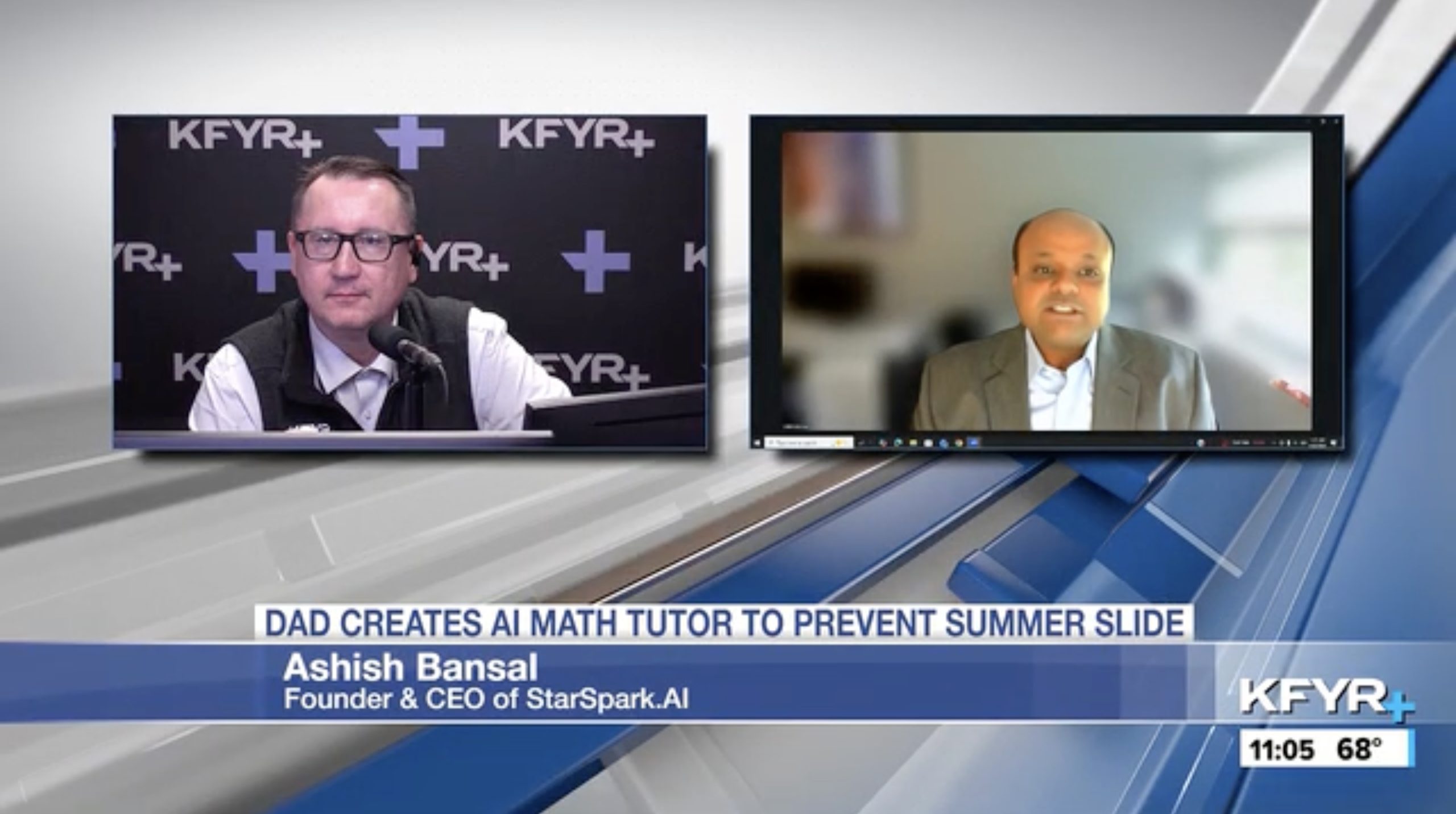
The team then used the timely “summer slide” conversation to establish the executive as a practical resource for parents. That campaign produced 20 placements, including Yahoo News, NBC Bay Area, Today in the Bay, Fox 10 Phoenix, WTOC, WALB, KFYR, KFDX, WGEM and KRBC. NBC Bay Area aired the story across several newscasts, extending the client’s message about keeping students engaged during the summer.
Bospar’s platform-launch outreach delivered another eight placements and carried the client’s teaching-first differentiation directly into the headlines.
- Forbes published “StarSpark AI Tutor Teaches the Process, Not Just the Answer,” written by contributor Ray Ravaglia.
- Tom’s Guide featured the CEO explaining that AI can serve as a patient tutor rather than a shortcut around learning in a story authored by Elton Jones. The Tom’s Guide story was subsequently syndicated by Yahoo Tech and Inkl.
- ConsumerAffairs, Flipboard and the Edtech Insiders podcast provided additional coverage.
These results moved the client beyond general AI tutor positioning and established its leadership around how educational AI should be judged by whether it helps students learn.
Campaign Results
- Secured coverage: 34
- Total UVM: 8.48 billion+
By combining proprietary data, timely media angles and disciplined executive positioning, Bospar helped the client become a recognized voice in the national conversation about AI and education. The campaign carried a consistent teaching-first message across news media, podcasts, broadcast television and top-tier publications, building the sustained media momentum the client had been unable to achieve with previous PR partners.
“As a startup, we tried a few different PR agencies before Bospar. We spent real money and had very little to show for it: a placement here or there, but nothing that ever added up to momentum. Bospar was different from the start. They actually understood edtech, and they built a real plan around it. These weren’t one-off hits, but a coordinated push across news media, podcasts, broadcast TV and top-tier publications like Forbes. They know the media landscape, and they are genuinely well connected. If you are an edtech company looking for a PR partner that can do more than land a story or two, I recommend Bospar without hesitation.”
— Ashish Bansal, founder and CEO, StarSpark AI