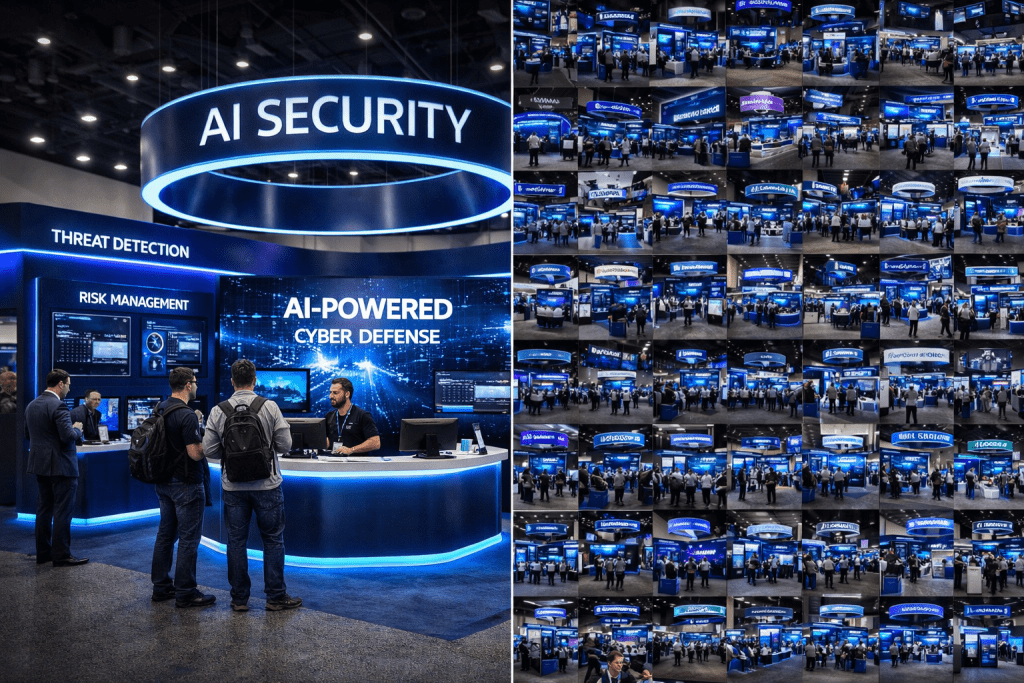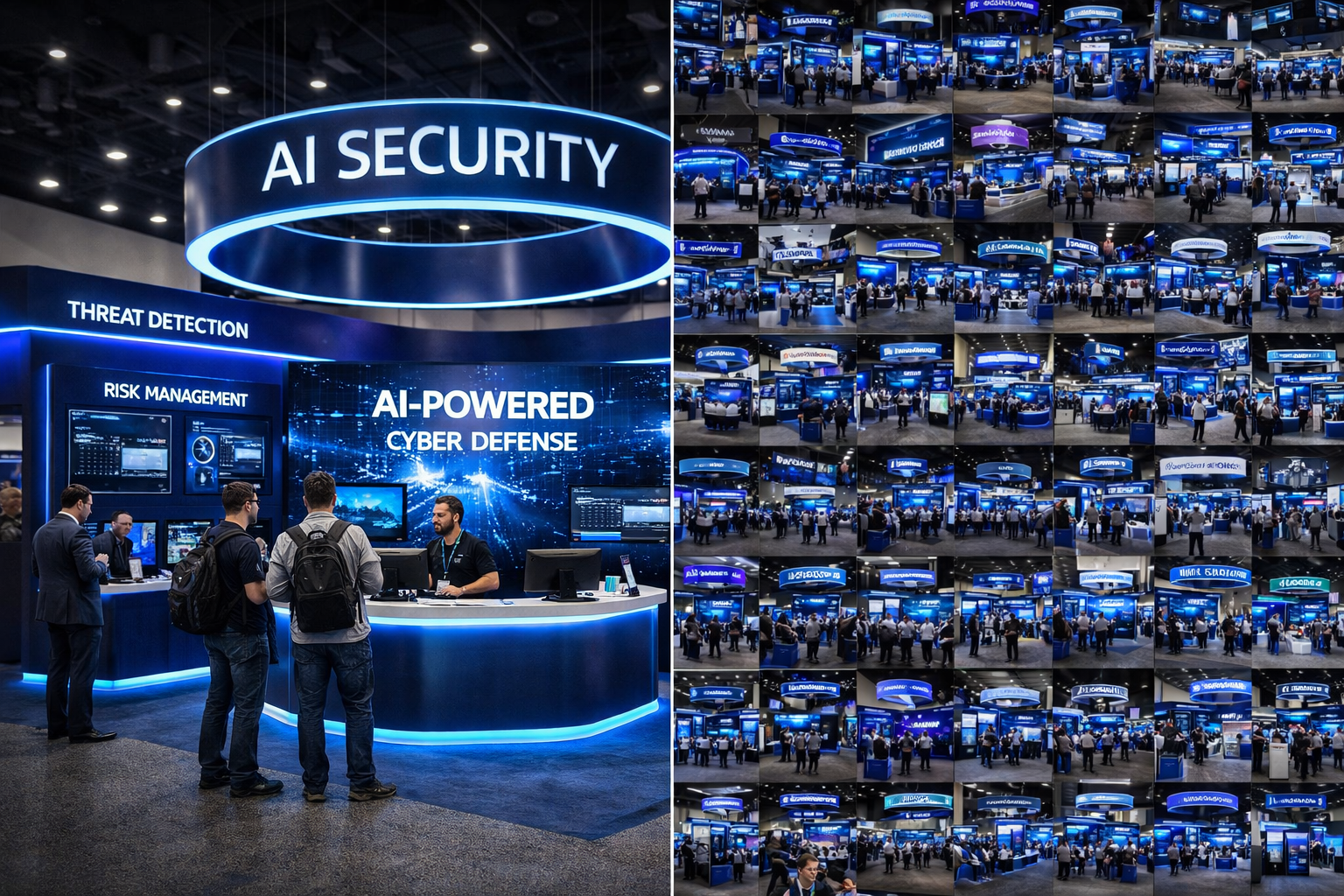
This is not a real booth.
It’s what happens when you feed 80 photos from the RSA Conference (RSAC) into AI and ask it what it sees. Deep navy walls. Electric blue primaries. Cyan glow. Purple gradients. Overhead signage. Demo counters. Screens cycling dashboards. A booth staffer waiting for the next conversation.
The model synthesized all of it into a single, plausible scene. Not a collage. The statistical center of an entire category.
And it could pass for a real booth. No one seeing it would immediately know it was synthetic. That’s not a comment on AI’s capabilities. That’s a comment on how standardized RSAC and other trade show booths have become.
Here’s what makes the analysis meaningful rather than merely interesting.
AI strips confirmation bias. It doesn’t remember which booth impressed you. It treats a $2 million Cisco installation and an $80,000 startup booth with identical indifference. It only sees what’s actually there.
What it saw: the same narrow palette repeated across dozens of companies. The same architectural blueprint. Messaging that compressed into the same tight cluster: AI-powered. AI SOC. Risk. Platform.
No one wants to look risky. So no one looks distinct.
The sameness tax
The homogeneity holds across budget levels. A company spending $2 million on its booth and a company spending $80,000 produced outputs so visually similar that AI couldn’t meaningfully distinguish them. If you can’t be differentiated at $2 million, more money is not your problem.
Consider the buyer walking that floor. After two hours at the RSA Conference, booths blur. Colors merge. Language repeats. Screens cycle. By Tuesday morning, a buyer has absorbed 40 identical brand impressions and retained maybe three company names.
Which three? The ones that broke the pattern.
Where brands broke through
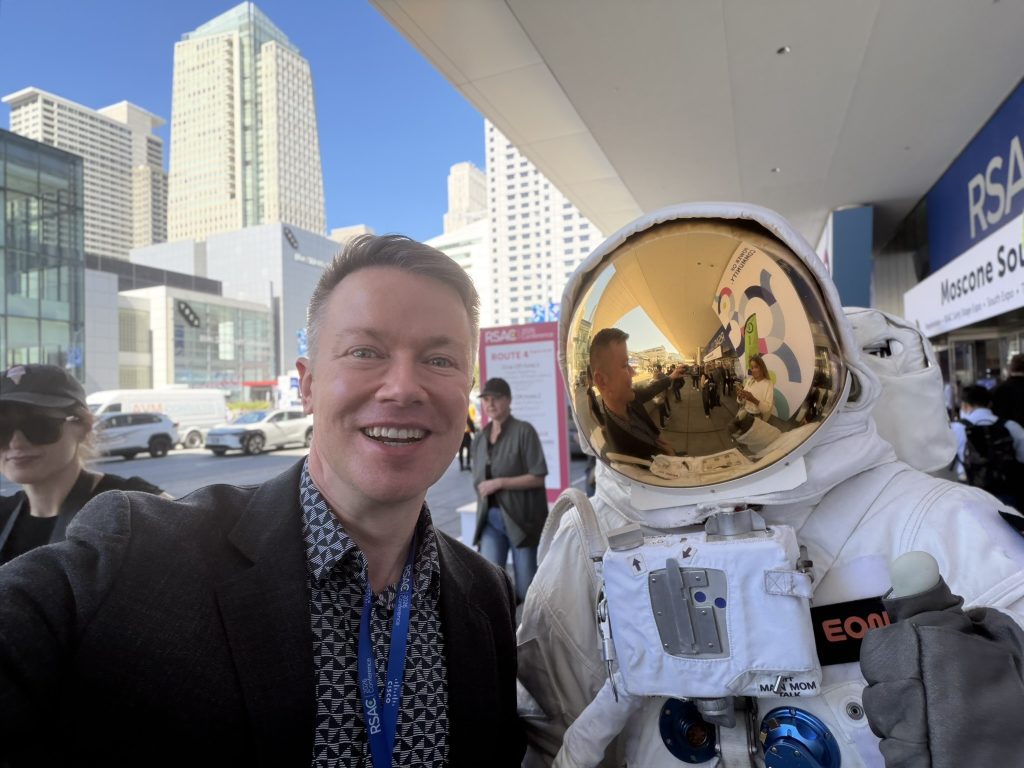
I knew something different was happening the moment I walked up and an astronaut posed for a selfie with me outside the Moscone Center.
That’s the bar. Make people stop before they even get inside.
On the floor, a handful of companies understood the assignment.
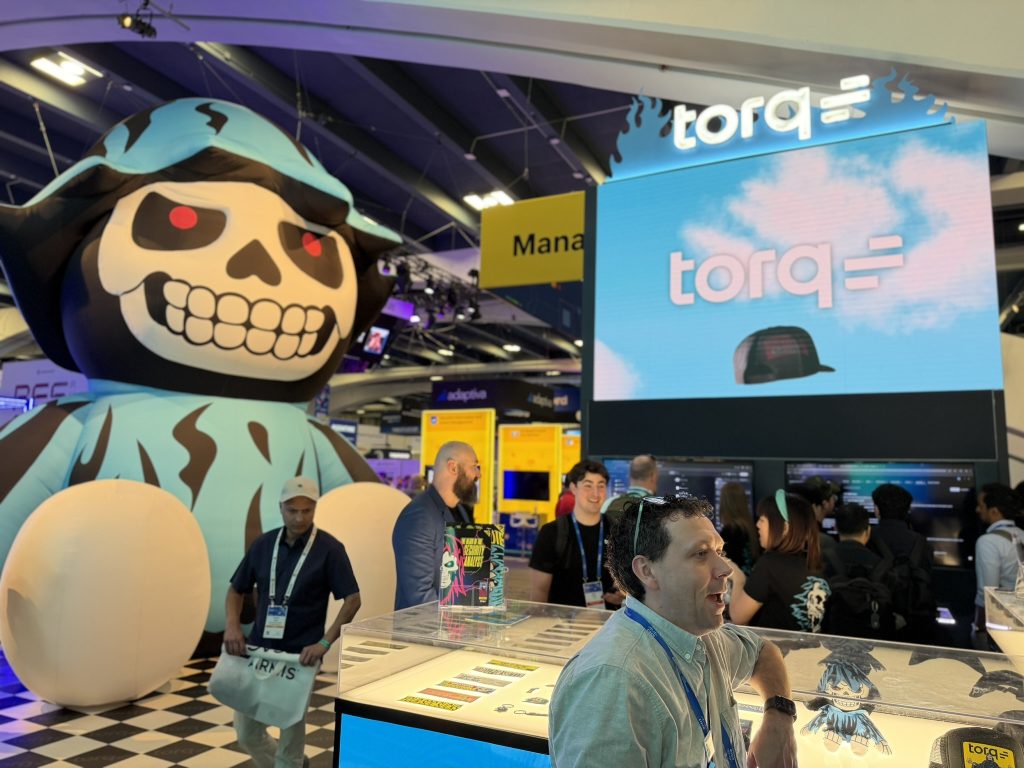
Torq deployed a giant grim reaper mascot. Menacing, irreverent, impossible to walk past. In a hall full of glowing blue panels, a skull in a hoodie is a pattern interrupt.
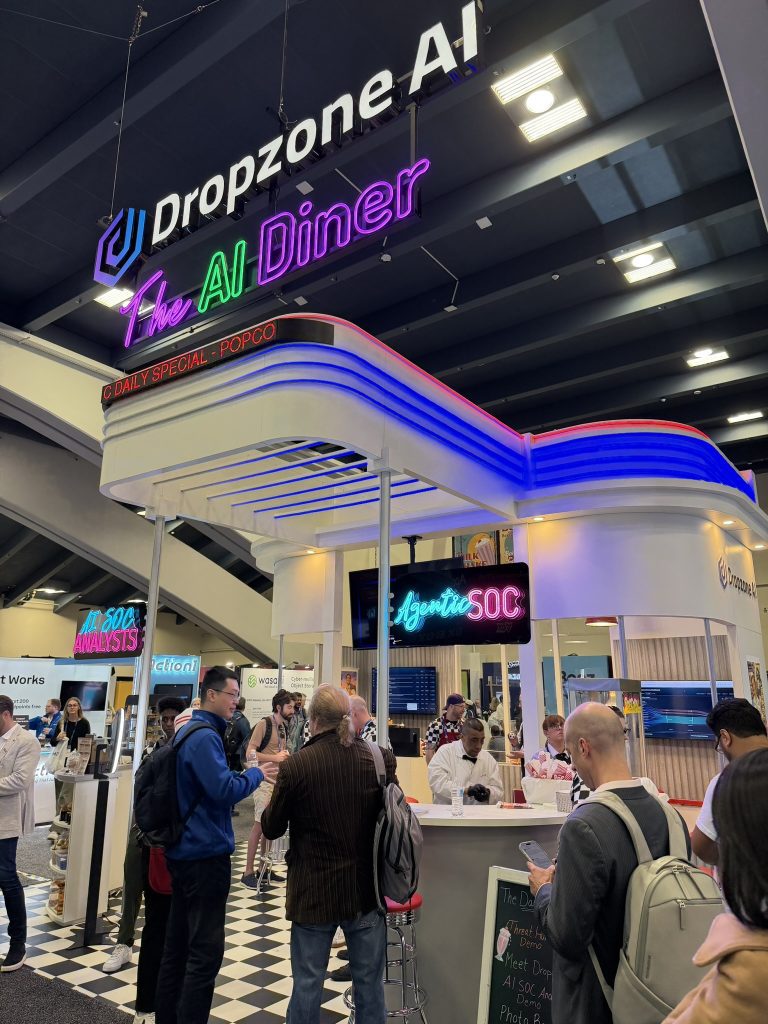
Dropzone AI built a fully realized 1950s diner, checkered floors, neon signage, staff in period costume, serving food. The company’s product is an AI SOC analyst. The booth said: We’re confident enough in our credibility to spend zero time proving it visually.
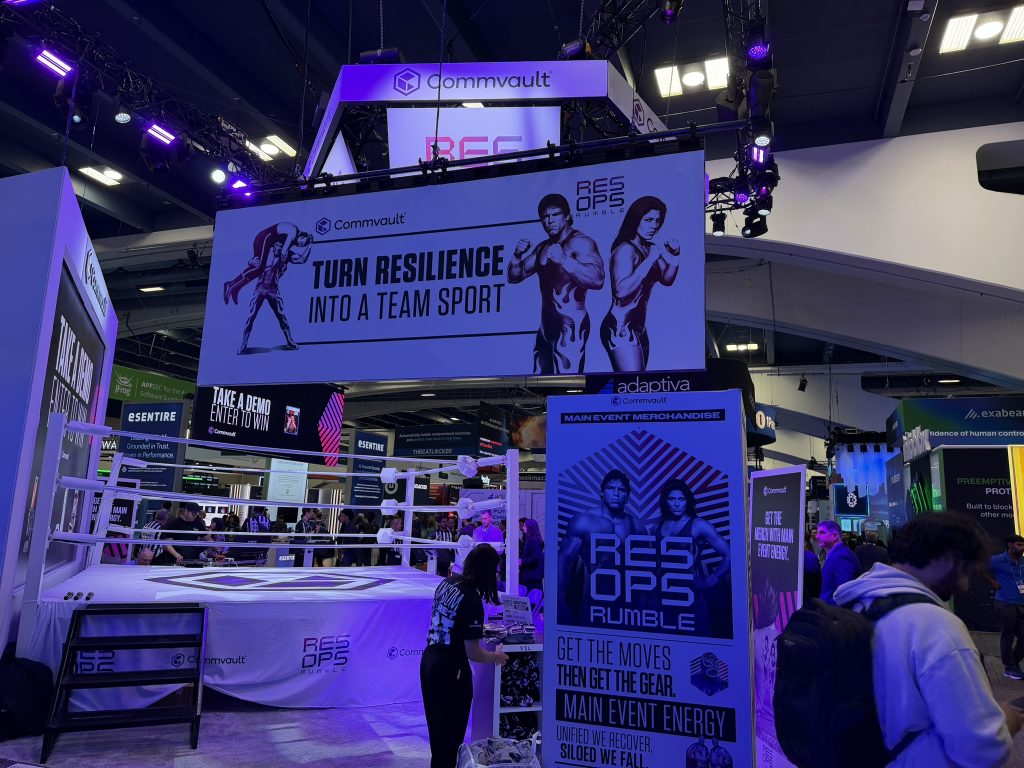
Commvault built a literal boxing ring, announcing: “Turn Resilience Into a Team Sport.” You didn’t have to read the messaging. You understood it with your body the moment you saw it.
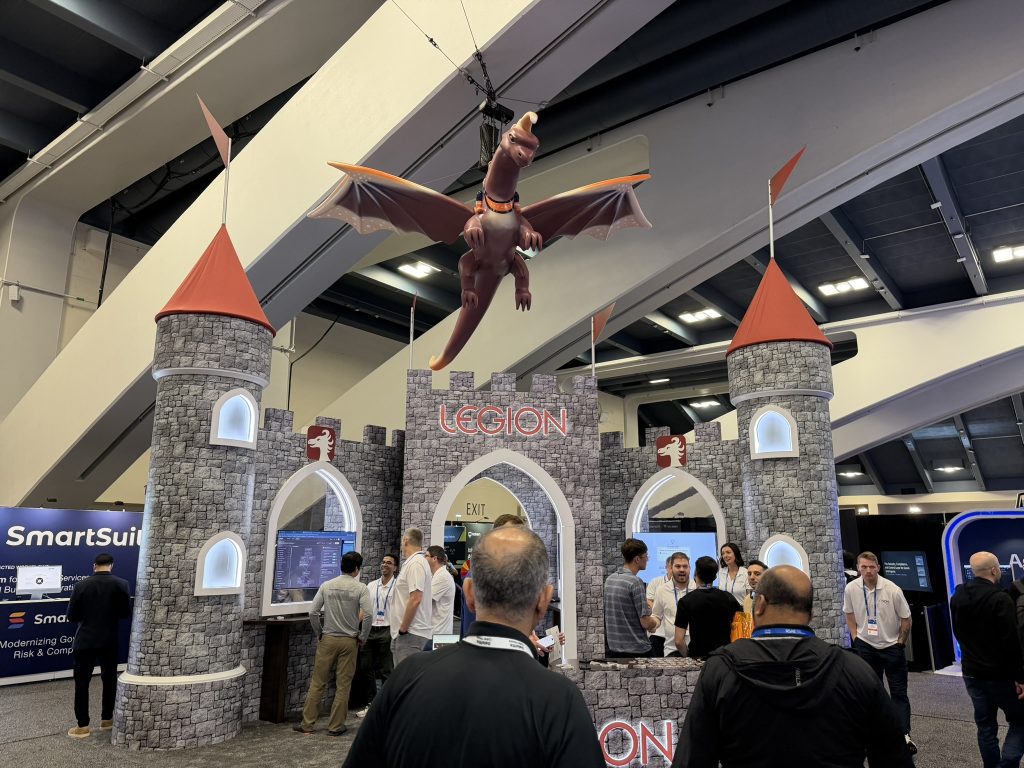
Legion built a medieval castle complete with a flying dragon overhead. In a hall of dark navy and purple gradients, stone turrets and pennant flags stopped foot traffic cold.
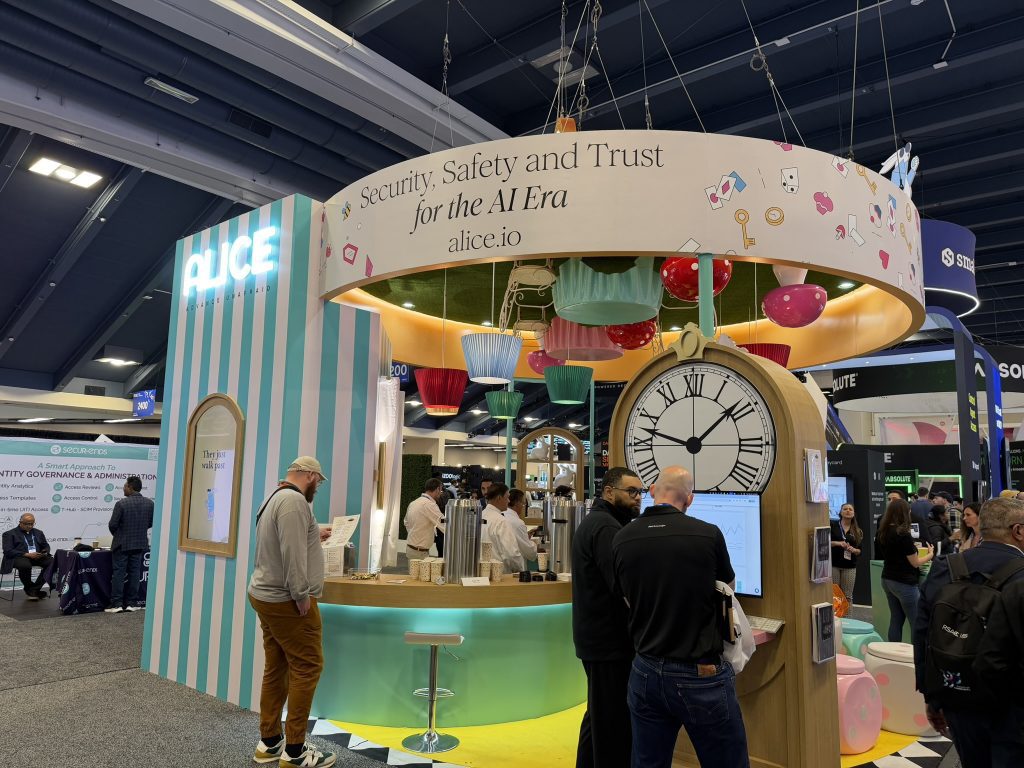
Alice went full Wonderland. Pastel stripes, oversized clocks, mushrooms, tea party details and a message that read “Security, Safety and Trust for the AI Era.” The contrast with everything around it was eye-popping.
Every one of these worked for the same reason. They didn’t abandon credibility. They added sensory contrast, narrative specificity or physical experience to it.
Most booths were designed to be seen. These were designed to be remembered.
What PR and marketing teams should do differently
Ask yourself this: What is the single sentence a journalist will use to describe your booth to a colleague who didn’t see it?
If the answer is “a really nice blue booth with great screens,” start over.
Journalists at RSAC are pre-booked before the doors open. The booths that get covered aren’t the biggest. They’re the ones with a story angle that isn’t “we added AI to our platform.”
A diner. A dragon. A boxing ring. These gave reporters something visual to write around and something specific to say.
Your CMO wants presence. Your CFO wants ROI. Your PR team wants a story. Most booth strategies satisfy the first two and make the third nearly impossible.
One more thing: What your booth says matters at RSAC. What AI says about your company the other 51 weeks of the year matters more. Buyers are running vendor queries through AI platforms before they ever book a flight to attend RSAC and other events related to cybersecurity and other domains and industries. If your brand isn’t showing up accurately in those responses, no amount of electric blue lighting closes the gap.
The irony
RSAC was saturated with AI messaging.
So I used AI to analyze the RSA Conference.
What it revealed wasn’t who was best. It showed something more useful: what happens when an entire industry tries to win the same way, at the same time, in the same room.
And then, unprompted, the model put the summary right on the counter.
Differentiation not included.