You’ve gone through the fundraising grind, come out the other end and finally raised your round. Now you’re ready to get amazing media coverage of your story.
But where are all the stories?
To understand what coverage you are and aren’t getting, let’s back up and look at what’s happening in the industry.
First, let’s look at the funding market.
Concentration of capital from fewer venture firms into fewer startups is growing ever larger.
- Mega funds over $500 million held 44% of all capital raised in 2018-2019.
- By 2024, that had climbed to 79.4%, the highest on record.
- In Q1 2026, the top five VC firms alone now capture more than 70% of all commitments.
At the same time, the size of deals is concentrating in larger rounds. Deals of $100 million or more were 87.5% of the $412.7 billion deployed in the first half of 2026. Five deals accounted for 73% of all venture deal value in Q1 2026.
Meanwhile, on the media side, there are fewer reporters than ever covering venture funding. The media industry has been consolidating for years. That means there are fewer outlets covering funding and fewer reporters at those outlets covering funding.
In addition, media outlets and reporters are less interested in covering funding overall. They’re recognizing that funding in and of itself is not always “news”. It doesn’t necessarily mean that a given technology or company is proven or will change the world. It doesn’t even always provide the detailed information that will show why it could move the needle. It’s a bet that investors are making on a company. But on its own, that’s it.
Is a mid-size funding round newsworthy?
Usually not, at least not on its own, and that’s the part most startups get wrong. What does this have to do with getting coverage of your funding round?
Most startups are looking to get press coverage for a mid-size raise. This could be anywhere from $5 million to $50 million, often a Series A or Series B round.
Often this amount has been determined by a variety of factors, including how much the startup needs, its burn rate, what investors are willing to pony up, what the competitive dynamics were in the round and so on. However, often companies with these mid-size funding rounds have trouble getting funding coverage, whether they’re early-stage or growth-stage startups looking for press coverage.
How do journalists decide which funding rounds they actually cover?
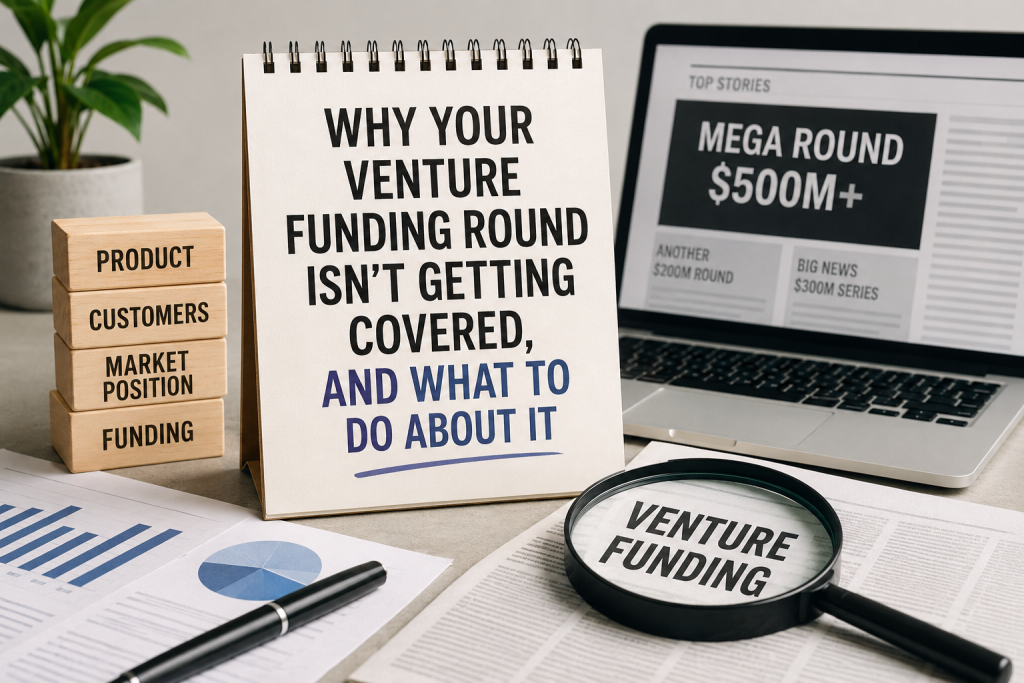
The funding rounds reporters cover tend to be the larger ones. These are typically $100 million or more, such as OpenAI, Anthropic and so on.
Of course, many reporters will cover smaller rounds, but the competition to secure that media coverage is fierce. Journalists will typically only cover them if they relate to a specific story or topic they are working on or if there is something =unique about the story in terms of the founder or underlying trend.
So what does this mean for getting coverage of your funding story?
First, don’t assume reporters will cover your funding just because you succeeded with your raise. Try to find the broader story, perhaps something about an industry trend or a particular aspect of the company.
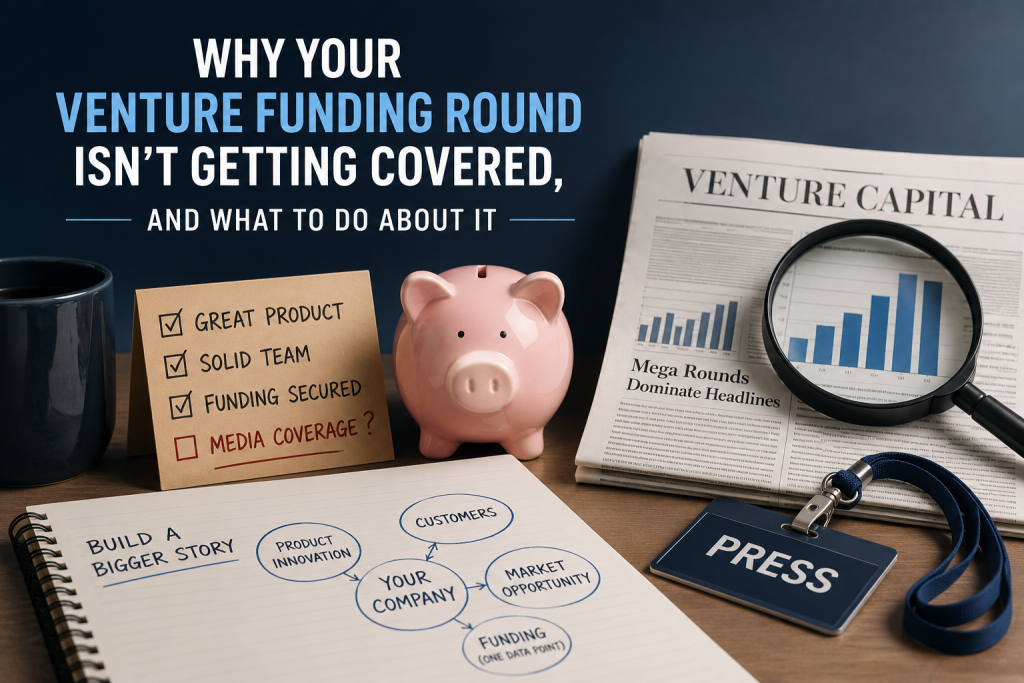
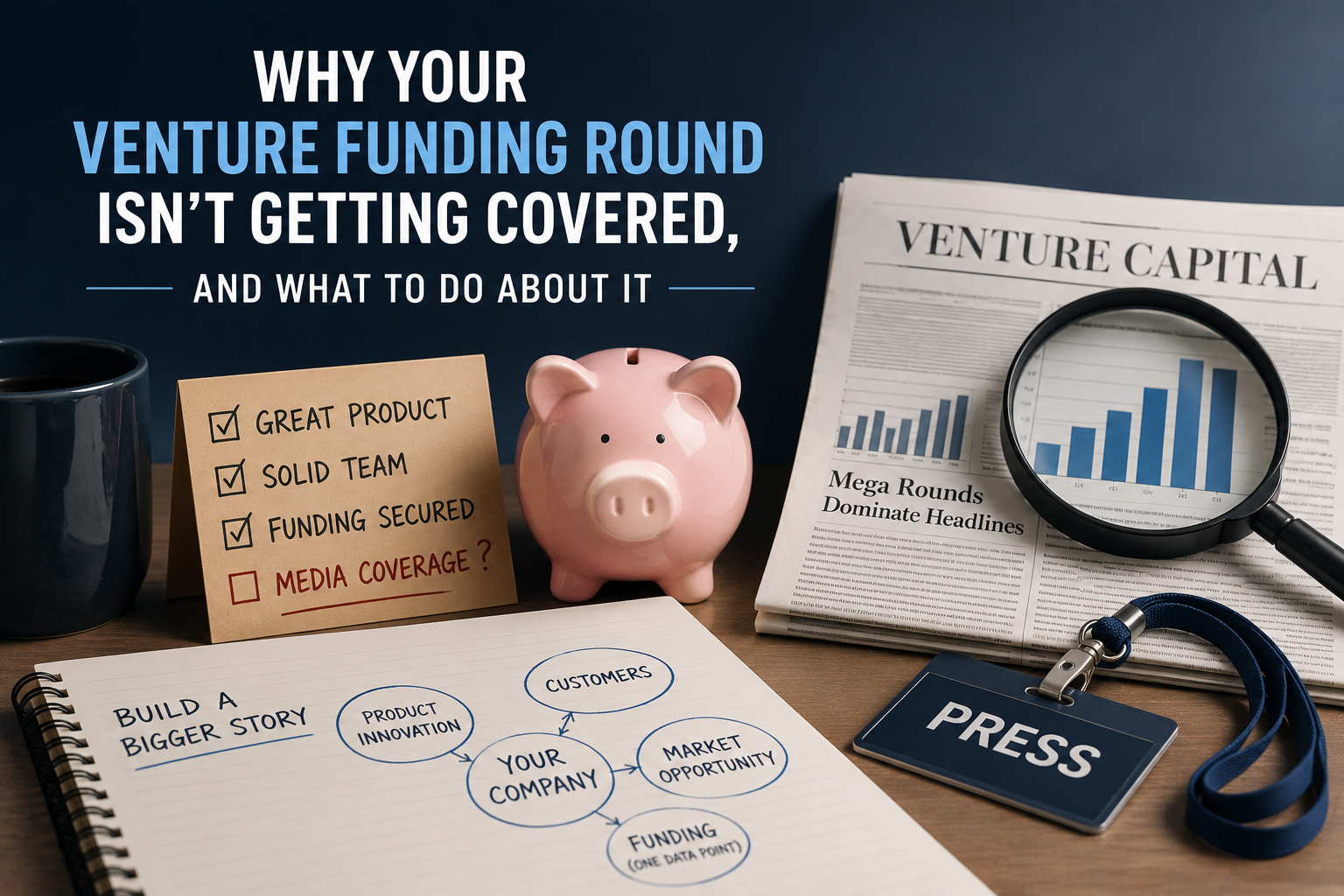
More importantly, think of funding as just one data point about your company in an ongoing story. It’s part of a bigger story, which also includes product innovation, customers and your position in the market. You can and should include funding as part of a larger pitch for coverage, whether that’s for a specific story or broader outreach.
This is the core of good startup media relations and earned media for startups more broadly: The round supports the story, it doesn’t carry it alone.
While you work on the big story and the best coverage you can get, you should also look broadly at media opportunities. This is critical as the media landscape is changing. Consider pitching trade press and vertical newsletters. These outlets can have strategic value and also drive a large audience. They also often are not chasing the mega funding rounds.
If you raised $20 million and are wondering why TechCrunch hasn’t responded, the problem isn’t you. It’s the math. There just aren’t enough reporters to cover all the funding today, and the ones that are left are chasing the mega rounds.
That doesn’t mean you should skip the announcement. But don’t rely on funding as the entire news or the whole plan. Build the larger story around your product, customers and differentiation. Think of the funding as the support, but not the main news. Then make an effort with the outlets that are truly interested in that story.
The round still matters. But it’s one chapter now, not the whole book.